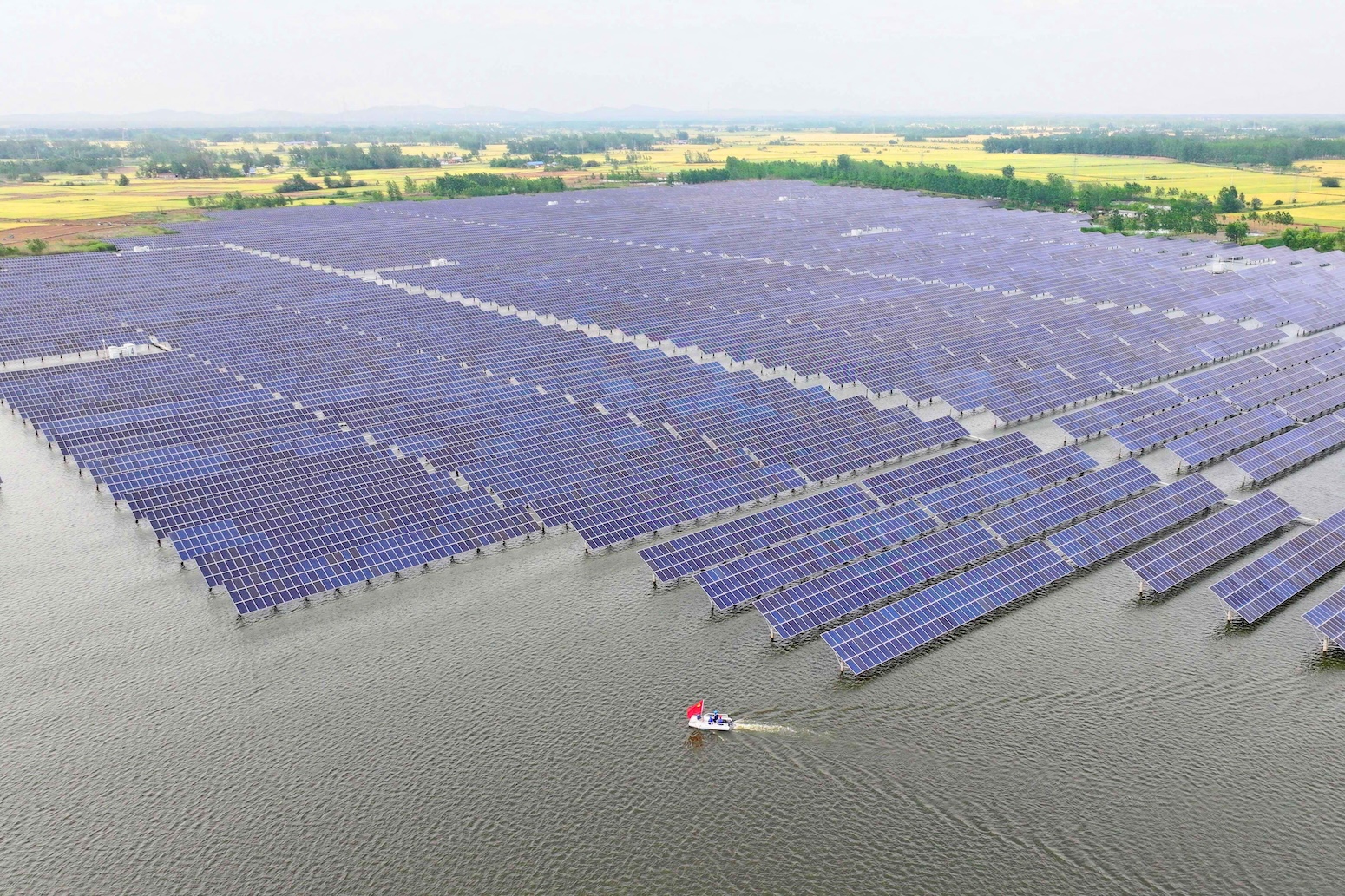
China installed 315 gigawatts of solar capacity in 2025 and added more than half of all new solar energy deployed globally that year—a remarkable milestone for a renewable energy revolution that has reshaped the country's power landscape. Yet the early months of 2026 tell a starkly different story: solar installations in March plummeted 56 percent year-on-year to just 9 gigawatts, and April saw a devastating 79 percent drop compared to the same month in 2025. The sudden brake on growth reveals not a weakening appetite for solar power, but rather the grinding friction created when policy support suddenly shifts.
For years, China's solar boom was propelled by guaranteed pricing mechanisms that promised developers stable revenue streams. When the government announced in February 2025 that new projects would transition to a market-driven "contract for difference" system—where power would be purchased at a fixed strike price significantly lower than previous guarantees—developers scrambled to complete installations before the June 2025 deadline to lock in the old terms. Solar additions spiked dramatically: 45 gigawatts in April 2025, then 93 gigawatts in May 2025, before collapsing to 14 gigawatts in June. The rush created an artificial surge that masked deeper structural challenges now surfacing in 2026.
"The real challenge is that developers and banks are still figuring out how to finance and build projects without policy-backed revenue guarantees," says David Fishman, principal at energy consultancy the Lantau Group. This is not, as some reports have suggested, evidence of flagging demand for solar in China. Yang Biqing, energy analyst for Asia at thinktank Ember, frames the slowdown differently: the new system has created "greater uncertainty" for developers competing fiercely in an industry increasingly focused on consolidation rather than rapid capacity expansion.
The government targets 200 gigawatts of combined solar and wind capacity additions in 2026—an ambitious goal many believe will be difficult to achieve. Fishman estimates current solar installations may reach roughly 120 gigawatts by year's end, requiring 80 gigawatts of new wind power to hit the overall target. The China Photovoltaic Industry Association forecasts a wider range of 180 to 240 gigawatts of solar alone, suggesting more optimism than some analysts share. But virtually no observer expects 2026 to match 2025's breakneck pace. Yang notes the industry narrative has shifted fundamentally: "China's solar industry is no longer a story of capacity expansion," but rather one of integrating existing generation capacity into the grid.
What's not slowing is China's role as a global solar exporter. In April 2026, China exported nearly 1.2 million tonnes of solar cells—down from a record high in March, yet still 60 percent higher than April 2025. Global demand remains robust, driven partly by rising energy prices linked to the Iran-US conflict. Solar installations are surging across Europe, Asia, and Africa, with the Philippines experiencing particular momentum. As one analyst told the Associated Press about the ground-level appeal of solar energy in an era of energy uncertainty: "People want solar and people want solar now." That global hunger offers China's industry a safety valve as domestic policy transitions create short-term friction.