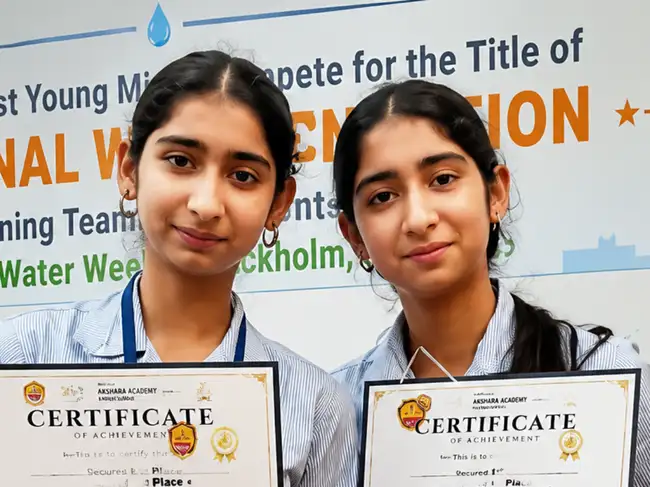
Naina and Nayantara Singh, 17-year-old twin sisters from Noida, have turned a school science project into a life-changing solution for millions who lack access to safe drinking water. While most teenagers stress over board exams, these Class XII students spent their winter holidays in a lab at IIT Delhi, perfecting a water filter made from okra, fenugreek, and rice husk—materials any Indian household might find in its kitchen or backyard. Their invention, Aqua Sattva, removes dangerous 'forever chemicals' like PFAS and microplastics without electricity, plumbing, or cost-prohibitive technology. In a country where groundwater contamination affects over 60% of districts, their innovation arrives at a critical moment.
India’s water crisis is worsening. PFAS, known for their persistence in the environment and links to cancer and hormonal disruption, have been detected in water supplies across urban and rural areas. Conventional reverse osmosis (RO) systems can filter them out, but at a steep price—both financially and environmentally. Most RO units cost between Rs 10,000 and Rs 30,000, require continuous electricity, and waste up to three litres of water for every one litre purified. For low-income families, these systems are out of reach. The Singh sisters saw this gap and asked: what if clean water could be as simple as steeping a tea bag?
Aqua Sattva works exactly that way. Each biodegradable sachet contains a blend of okra-fenugreek polymer and rice husk biochar. When placed in contaminated water for 30–45 minutes, the natural polysaccharides in the vegetables trap microplastics, while the biochar adsorbs PFAS compounds. Independent lab tests confirm it removes up to 93% of 20 different PFAS chemicals and significantly reduces microplastic density. Best of all, it costs just Rs 100 for 10 sachets—enough to purify 50 litres of water. The materials are sustainable too: rice husk, typically burned as farm waste, is repurposed into a powerful filtration medium.
The sisters developed the prototype at IIT Delhi’s biomass lab under Professor Vivek Kumar’s guidance, balancing research with board exam prep. Their dedication paid off. In 2024, they were named Water Champions 2026 at the Stockholm Junior Water Prize India and secured third place among 350 teams at the national finals. They also earned a distinction at the Conrad Challenge, a global innovation competition. With a patent pending, they’re now exploring partnerships to scale production.
Their story is more than a triumph of youth ingenuity—it’s a blueprint for inclusive innovation. As Nayantara put it, 'We wanted to develop something that could work for ordinary households.' In a world where water scarcity and pollution are escalating, solutions don’t always come from high-tech labs or billion-dollar startups. Sometimes, they come from two sisters, a school project, and the humble bhindi in your kitchen.