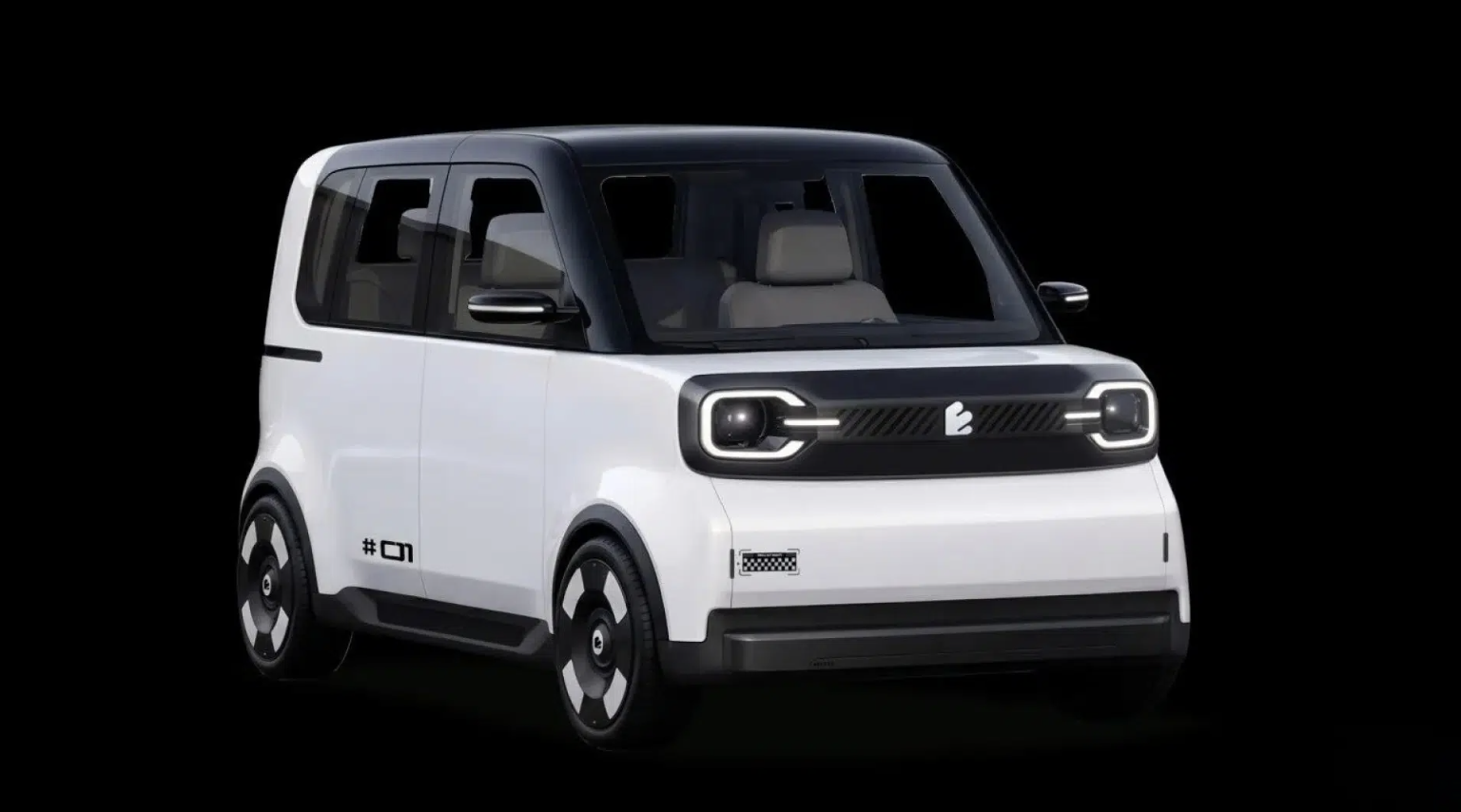
When a boxy compact car with rectangular headlamps and the marking "#01" rolls off the line in 2027, it will represent something quietly significant: a Chinese automaker finding its foothold in Japan's notoriously protective kei-car market through a carefully orchestrated partnership. Electric Mobility Technologies, operating under the EMTA brand, is preparing to launch its first model in Japan, backed by Chinese manufacturer Chery and supported by Japanese retail giant Autobacs Seven—a move that signals how global competition in electric vehicles is reshaping even Japan's traditionally insular small-car segment.
The kei-car category, defined by strict size regulations that keep vehicles under 3.4 meters long and 1.48 meters wide, has long been a stronghold of Japanese manufacturers. Yet as major Chinese automakers expand their footprint overseas, Japan's compact EV market is beginning to open. Chery's new venture arrives as BYD prepares to launch its Racco kei EV at around 2.5 million yen—roughly $15,670—creating direct competition in a segment where affordability matters enormously to consumers.
The EMTA partnership brings together unlikely collaborators: Chery and Jiangsu Yueda Automobile Group each hold 27.27 percent stakes, while Autobacs Seven and battery supplier Gotion High-Tech each own 18.18 percent, with Japanese manufacturer Anest controlling the remaining 9.09 percent. This structure allows Chery to provide core EV technology and engineering—electric drivetrains, platforms, and driver-assistance systems developed in China—while Japanese partners handle what matters most for market entry: retail distribution through Autobacs Seven's nationwide network, quality control through Anest, and after-sales service that Japanese consumers expect.
The leadership team reflects this cross-border approach. Chief Executive Officer He Xiaoqing previously led Changan Ford, while Chief Marketing Officer Susumu Uchikoshi is the former general manager of Nissan China. Additional executives drawn from Honda and Mazda bring decades of experience in vehicle design and product planning. Manufacturing will occur at Yueda's facility in Yancheng, China—a factory previously used for Kia and HiPhi vehicles—transforming it into a Japan-focused export hub rather than the local production facility that industry speculation had initially suggested.
The prototype reveals a thoughtfully engineered compact vehicle: roughly 3.4 meters long with five doors, rectangular headlamps, blacked-out roof pillars, and camera-based side mirrors. Company officials emphasized that the vehicle was engineered to deliver crash protection comparable to larger passenger cars, addressing a legitimate concern about smaller vehicles. Pricing remains unannounced, though executives indicated the model would remain competitive with gasoline-powered kei vehicles—a critical positioning as Japan's automotive market shifts gradually toward electrification.
EMTA's ambitions extend beyond a single model. By 2029, the company plans to expand to four models, adding a hatchback, SUV, and minivan to its lineup. More significantly, the partnership is studying the feasibility of local manufacturing in Japan after 2030 if sales volumes justify further investment—a signal that this is not a test-and-retreat strategy but rather a long-term commitment to Japan's market.
The timing places Chery and BYD in direct competition just as Chinese automakers are proving their export muscle. In April 2026, Chery exported 177,573 vehicles globally, maintaining its lead among Chinese exporters, while BYD shipped 135,098 units. Japan's kei-car market, once untouchable, is beginning to feel the effects of that manufacturing prowess and EV expertise.