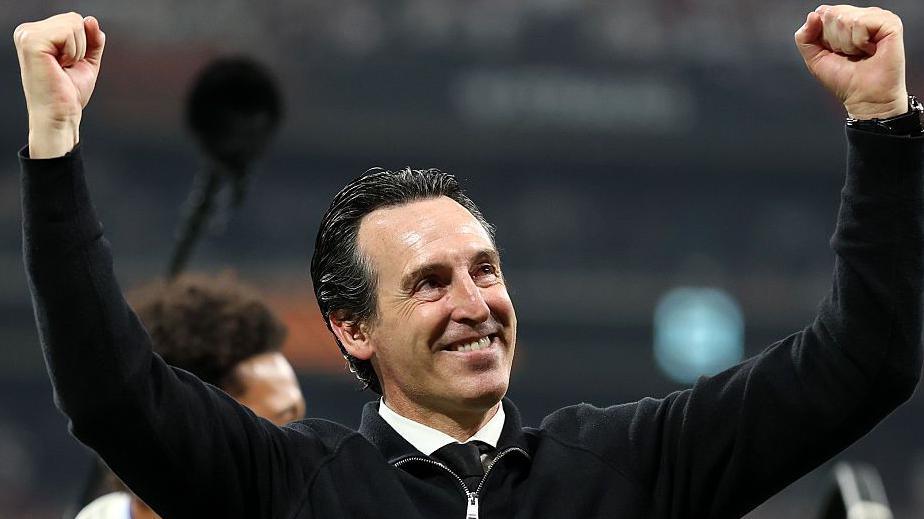
At 2am, while most football managers sleep, Unai Emery might be watching a lecture on physics or philosophy, studying footage of a Spanish team that has just been promoted to the top flight, or playing three-minute chess games under his own name against strangers online. It's a rhythm that would exhaust most people. For Emery, it's a lifestyle — one that has just transformed Aston Villa into continental champions.
The trajectory has been stunning. When Emery arrived on November 1, 2022, Villa sat 16th in the Premier League, teetering just one point above the relegation zone. Within two and a half years, he has guided the club to Champions League football for the first time since 1982–83, secured three consecutive European competition spots, and delivered Aston Villa's first European trophy in 30 years. It's a revolution that feels almost improbable in its scope and speed.
Part of Emery's method is visible in training — the obsessive attention to body shape, tactical precision, and the demand that players dedicate 70 percent of their time to football itself. But the deeper architecture of his success lies in his refusal to switch off. He studies opponents regardless of their pedigree. He watches lectures at unconventional hours to expand his frame of reference. He believes that mastery requires an almost monastic devotion, something embedded in him by his parents and their sense of personal responsibility.
This intensity extends to decision-making. When Villa faced criticism for resting key players in a home defeat to Tottenham before the Europa League semi-final second leg against Nottingham Forest, Emery didn't blink. He had calculated that the Champions League points his side needed would materialize elsewhere — and they did. Villa Park, he has said, gives him energy. That ability to ignore external noise while trusting his own analysis has proven decisive.
The numbers tell the story. In his first partial season, Emery won 15 of 25 league games to finish seventh and earn European football for the first time since 2010–11. In his first full campaign, he secured Champions League qualification and established a club record that speaks to both consistency and excellence: 15 consecutive home league wins — the most in Villa's 151-year history. Now, as Champions League football returns once more, European silverware has too.
Former Villa players have recognized the magnitude of the shift. Mark Albrighton observed that Emery has "taken Villa to the next level," while Ashley Young placed him alongside Ancelotti and Mourinho as a winner in European competition. "If you had said when we were in 16th position in the Premier League that he would come in and win the Europa League, not one player would think that would be true," Young said. "He's just got a way."
Emery himself credits his parents for instilling in him a belief that whatever you do, you do completely. Soon, he'll return to Hondarribia, his home town, or walk by the sea in Mallorca with friends who have nothing to do with football. He might even join his mother for her daily swim on the Basque coast. He'll sleep a little more than usual. But the preparation for next season, the lectures at 2am, the chess games under his own name — that will return. For Emery, there is no switching off. There never has been.