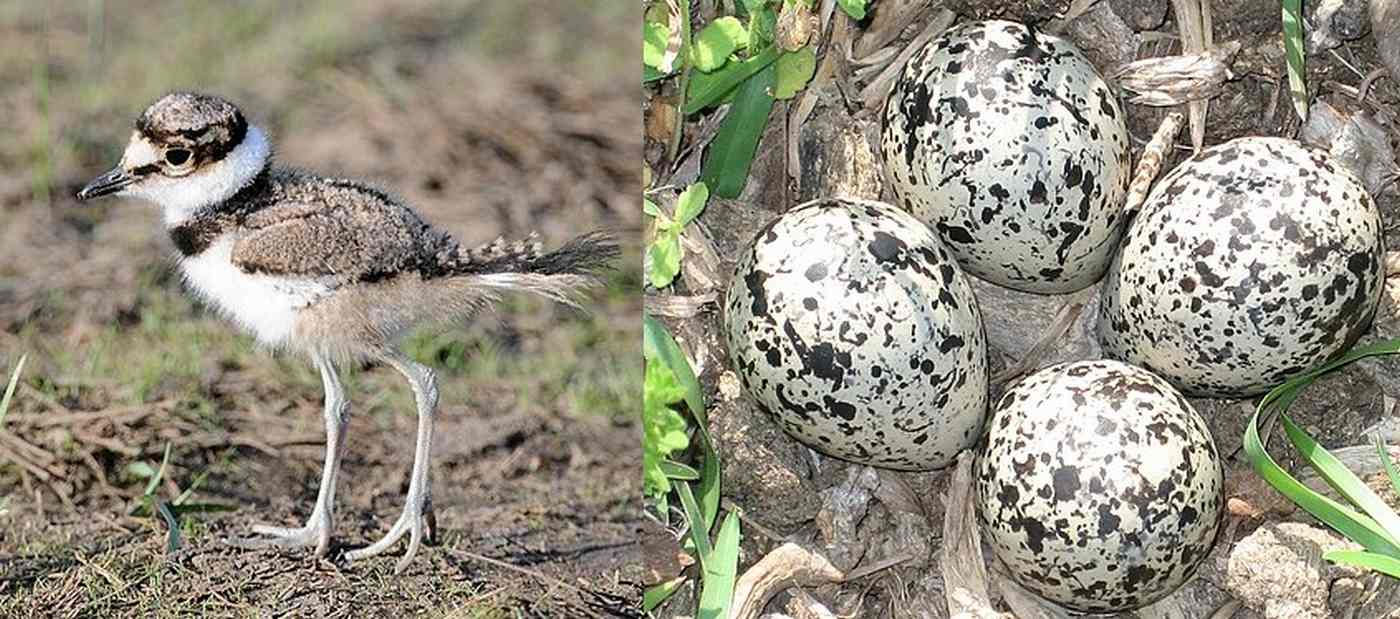
Ray and Shelly Romolt never expected their wish for new neighbors to collide with a clutch of speckled eggs, but one afternoon among the weeds of an empty lot in Lockport, Illinois, they found exactly that: four killdeer eggs nestled in a protective nest, just yards from where bulldozers were scheduled to dig. It was a choice that would test their patience and, ultimately, their community's commitment to shared responsibility for the creatures we live alongside.
The Romolts had recently developed a keen eye for local birdlife. Following the media attention around endangered Great Lakes piping plovers discovered along Lake Michigan's Montrose Beach, the couple began noticing two adult killdeer frequenting the vacant lot adjacent to their home. When they learned that the empty parcel had been sold and construction was imminent, they realized the birds were in danger. A bulldozer crew was already mobilizing when the couple decided to act, requesting a temporary halt to the work—just a month or so, Shelly Romolt asked, to give the birds time to hatch and fledge.
What happened next speaks to the power of informed neighbors and corporate responsibility. Ray Romolt explained the legal protection status of killdeers to the construction crew on-site, citing the federal Migratory Bird Treaty Act. When the crew listened but remained uncertain, he escalated the concern to D.R. Horton, the building contractor overseeing the development. Rather than dismissing the request, the company suggested the Romolts verify the bird's protected status with the Illinois Department of Natural Resources—a gesture that turned into a critical confirmation. Shelly made the call and received official word: killdeers are indeed federally protected, and any construction proceeding without a special permit would expose the developer to legal penalties.
Within a day of that exchange, the site supervisor arrived at the lot, placed caution tape and orange cones around the nesting site, and assured the couple that the scheduled "dig date" would be postponed until the birds had hatched. It was a straightforward but significant victory for the killdeer family and a reminder that protection sometimes requires only attention and persistence.
The timing of the Romolts' intervention carries deeper significance. In 2024, the International Union for the Conservation of Nature reclassified the killdeer from "Least Concern" to "Near-Threatened" after reviewing scientific reports predicting a 20 percent population decline over the next three generations. The shift reflects a species under mounting pressure from habitat loss and human development—exactly the kind of scenario the Romolts worked to prevent in their own backyard. While the killdeer remains relatively common compared to other species, the trajectory is troubling enough to warrant caution.
The Romolts expressed confidence that D.R. Horton would honor its commitment, and their story has become a small but resonant example of how ordinary citizens can advocate for wildlife without derailing progress. The builders still intend to construct their home once the killdeer have fledged. No one lost. The couple waited a little longer for their new neighbors—the human kind—but the birds got the chance to leave their own mark on the lot first.