Across Rwanda, Kenya, Nigeria, and Senegal, 940 people are about to participate in one of Africa's most ambitious vaccine development efforts—a clinical trial that could reshape the continent's relationship with its own health infrastructure. Institut Pasteur has launched ACT-CHIK, a four-year research project backed by €15.3 million in European Union funding, to advance a homegrown chikungunya vaccine through rigorous testing while simultaneously laying groundwork for African-led manufacturing.
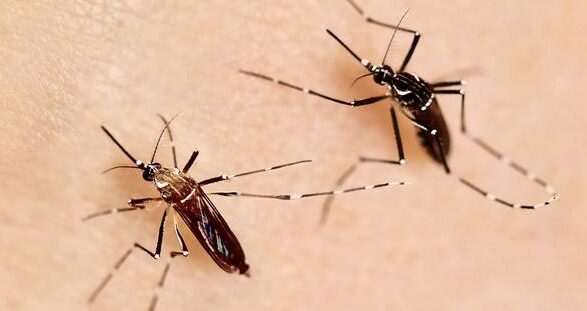
Chikungunya, transmitted by Aedes aegypti and Aedes albopictus mosquitoes, has long been dismissed as a disease that mostly affects travelers. But the reality in Africa tells a different story. Over the past two decades, reported cases have surged across the continent. The disease itself is brutal—high fever, debilitating joint pain that can persist for months or years, rash, and exhaustion. Yet in many African regions, chikungunya remains underdiagnosed and underreported, hidden beneath the shadow of malaria and other arboviruses. Climate change is now expanding the geographic range of the mosquitoes that carry it, making prevention increasingly urgent.
The MV-CHIK vaccine candidate is elegantly engineered: a live-attenuated, recombinant vaccine built on the well-established measles virus Schwarz vaccine strain—a platform technology developed at Institut Pasteur in Paris. Previous trials across Europe, the United States, and Puerto Rico with approximately 600 adult participants demonstrated satisfactory safety, tolerability, and immunogenicity. Now, ACT-CHIK will expand that evidence base by enrolling 940 participants in Africa, spanning both endemic and non-endemic areas, testing the vaccine in adults, adolescents, and children. This matters profoundly: existing chikungunya vaccines remain largely confined to travelers, out of reach for the populations that need them most due to cost and access barriers.
What distinguishes ACT-CHIK is its explicit commitment to more than clinical data. The project is preparing for technology transfer of the vaccine manufacturing process to Institut Pasteur de Dakar, Africa's only WHO-prequalified vaccine manufacturer. The Fundação Oswaldo Cruz in Brazil, another member of the Pasteur Network, will prepare clinical trial materials and contribute its manufacturing expertise. In parallel, ACT-CHIK will develop a regulatory pathway for licensure across Africa, engaging with national authorities and the World Health Organization's prequalification teams.
This approach directly advances the African Union's goal to produce 60 percent of the continent's vaccine needs locally by 2040. Ibrahima Socé Fall, CEO of Institut Pasteur de Dakar, framed it plainly: the vision is "an Africa that develops, evaluates, and produces its own vaccines—for the populations that need them most." That vision extends beyond a single vaccine. The consortium unites seven partner institutions, including the University of Rwanda, pooling expertise in clinical trials, virology, immunology, and vaccine manufacturing.
The timing reflects the escalating threat. Climate change is expanding where mosquitoes can survive and breed. Chikungunya will not stay confined to historically endemic regions. By building African-led capacity to develop, test, and manufacture vaccines—rather than simply importing them—ACT-CHIK offers a model for how the continent can reclaim agency over its health security. The 940 participants enrolled across four countries are not merely subjects in a trial; they are part of building infrastructure that will serve Africa's health needs for decades to come.