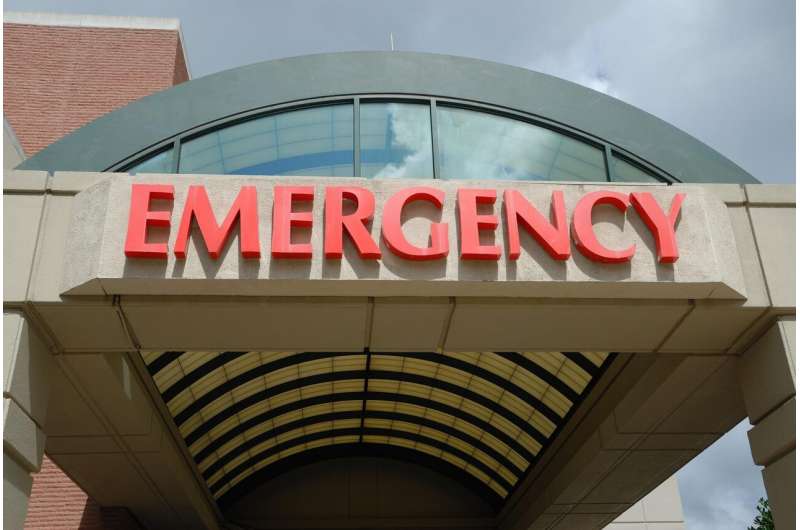
When a child needs emergency care, the closest hospital isn't always the best one. New research from the University of Missouri School of Medicine found that where a child lives can decide how far their family must travel to reach an emergency room truly ready to treat them — and that gap is painfully wide for kids in poorer communities.
The study, led by Dr. Mary Beth Bernardin, looked at something called the Child Opportunity Index, or COI. It's a measure of how good an area's conditions are for the kids who live there — things like quality schools, safe housing, and access to parks and health care. The researchers found that families in well-resourced, high-COI neighborhoods had notably shorter travel times to so-called "pediatric-ready" emergency departments. But families in low-COI, under-resourced areas had to travel 4.6 times farther to reach one.
So what makes an ER "pediatric-ready"? Dr. Bernardin explains it simply: it's a hospital with specialized staff, properly sized and tailored equipment, and the right medications on hand for children. Those details matter enormously. Research shows that emergency departments with high levels of pediatric readiness have a 76% lower death rate for child patients. That single number shows just how much is at stake.
Low-COI communities tend to be rural and to have high poverty rates. Alarmingly, Dr. Bernardin's earlier work found these same areas also see low bystander intervention when children go into cardiac arrest. She believes that education — on pediatric readiness and on what to do in an emergency — can help bridge these gaps.
The good news is that the solution doesn't require building a single new hospital. "Instead of building new facilities, we can focus on training and equipping existing EDs to be ready to treat pediatric patients," Dr. Bernardin said. "This is one of the most cost-effective and immediate actions we can take to help children in under-resourced areas."
That work is already underway. MU Health Care, which partners with the Mizzou School of Medicine, is home to the region's only Children's Emergency Room and runs Missouri's Emergency Medical Services for Children program. The academic health system collaborates with hospitals and EMS agencies across the entire state to strengthen pediatric emergency preparedness through training, education, and quality improvement. These efforts reach communities that often lack specialized pediatric resources on their own.
The study, "Child Opportunity Index Levels and Disparities in Access to Pediatric-ready Emergency Departments," was published in the Western Journal of Emergency Medicine. Co-authors include Paul Schuler, Emily Morales, Elizabeth Kendrick, Danielle Zoellner, and Dr. Timothy Staed.
The message at the heart of the research is simple and powerful: a child's chance of survival shouldn't be decided by their ZIP code. With training and commitment, the gap can close — and lives can be saved.