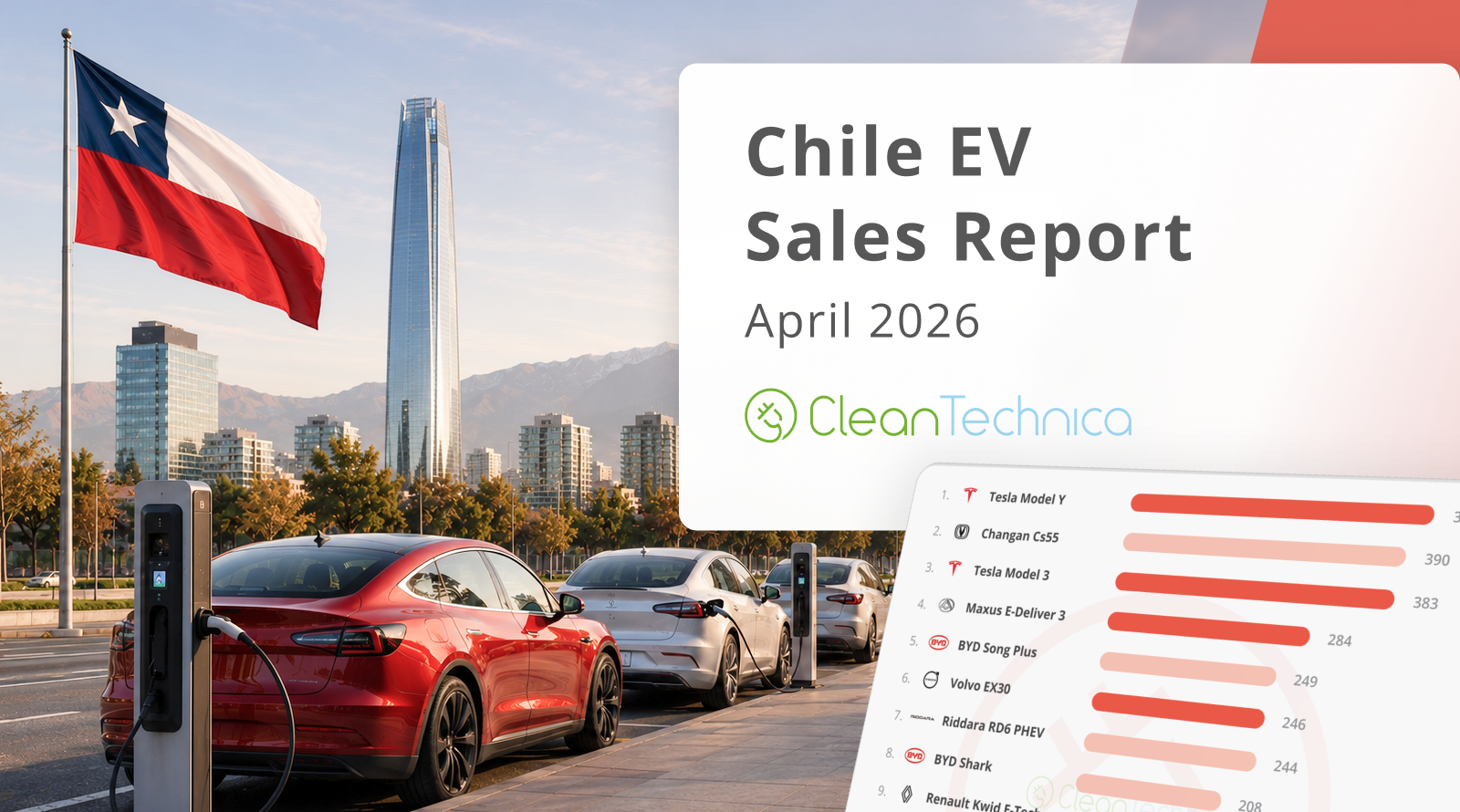
In April 2026, Chile's electric vehicle market nearly tripled in a matter of months, rocketing to 9.9% market share — a staggering leap from just 3% a year earlier and evidence that fuel prices can reshape consumer behavior overnight.
For a country that seemed destined to lead Latin America's EV transition, Chile's passenger vehicle segment had been stubbornly slow to electrify. Despite pioneering EV legislation, deploying one of the region's most comprehensive public charging networks, and having the world's second-largest electric bus fleet after China, Chile limped through 2025 with only 3.3% EV market share. The puzzle deepened when considering that Chile produces almost no oil and depends entirely on imports — making electric vehicles an obvious choice — yet adoption crept forward at a glacial pace. Some neighbors like Uruguay had already surpassed 30% EV market share while Chile languished below 5%.
Then global oil geopolitics changed the calculus. As fuel prices spiked across the world following geopolitical tensions, Chile felt the impact acutely. Gasoline that had cost $1.3 per liter in early 2026 jumped to $1.7 per liter — already expensive before, now genuinely painful at the pump. The arithmetic shifted instantly: an electric vehicle was no longer a nice-to-have environmental choice but a practical economic decision. Starting in March, EV sales began accelerating, and by April they had reached almost 3,000 units, nearly triple the volume from April 2025.
What emerged was a market transformed not just in scale but in character. Chile's EV adoption had historically favored battery electric vehicles, which represented roughly 75% of sales last year. This year, plug-in hybrids surged to near parity, with PHEVs exploding at a remarkable 535% year-over-year growth compared to BEVs' more modest 150% increase. This shift reflected how affordability drives adoption: cheaper PHEV options appealed to cost-conscious consumers facing rising fuel prices.
The competitive landscape proved equally revealing. Changan, a Chinese automaker virtually absent from Latin American leaderboards, took the April crown with its affordable CS55 PHEV — a model few would have predicted as a top seller. BYD and Tesla followed, with brands like Volvo and Riddara rounding out the top five. Across the year, BYD leads overall, though the distribution remains notably balanced compared to other Latin American markets. The tenth-bestselling model had less than twice the sales of the first, suggesting genuine market diversity rather than the extreme concentration seen in places like Colombia, where the top model outsells the tenth by a factor of twenty.
The acceleration carries larger significance. Chile remains the only Latin American country with comprehensive efficiency regulations requiring automakers to improve fleet emissions over time — a standard that tightens further in 2027. The recent surge suggests these regulations, combined with economic incentives like fuel costs, can together create meaningful change. Whether April represents a sustainable shift or a temporary spike will become clear in coming months, but the numbers demonstrate an undeniable truth: when the math changes for consumers' wallets, the market responds with striking speed.