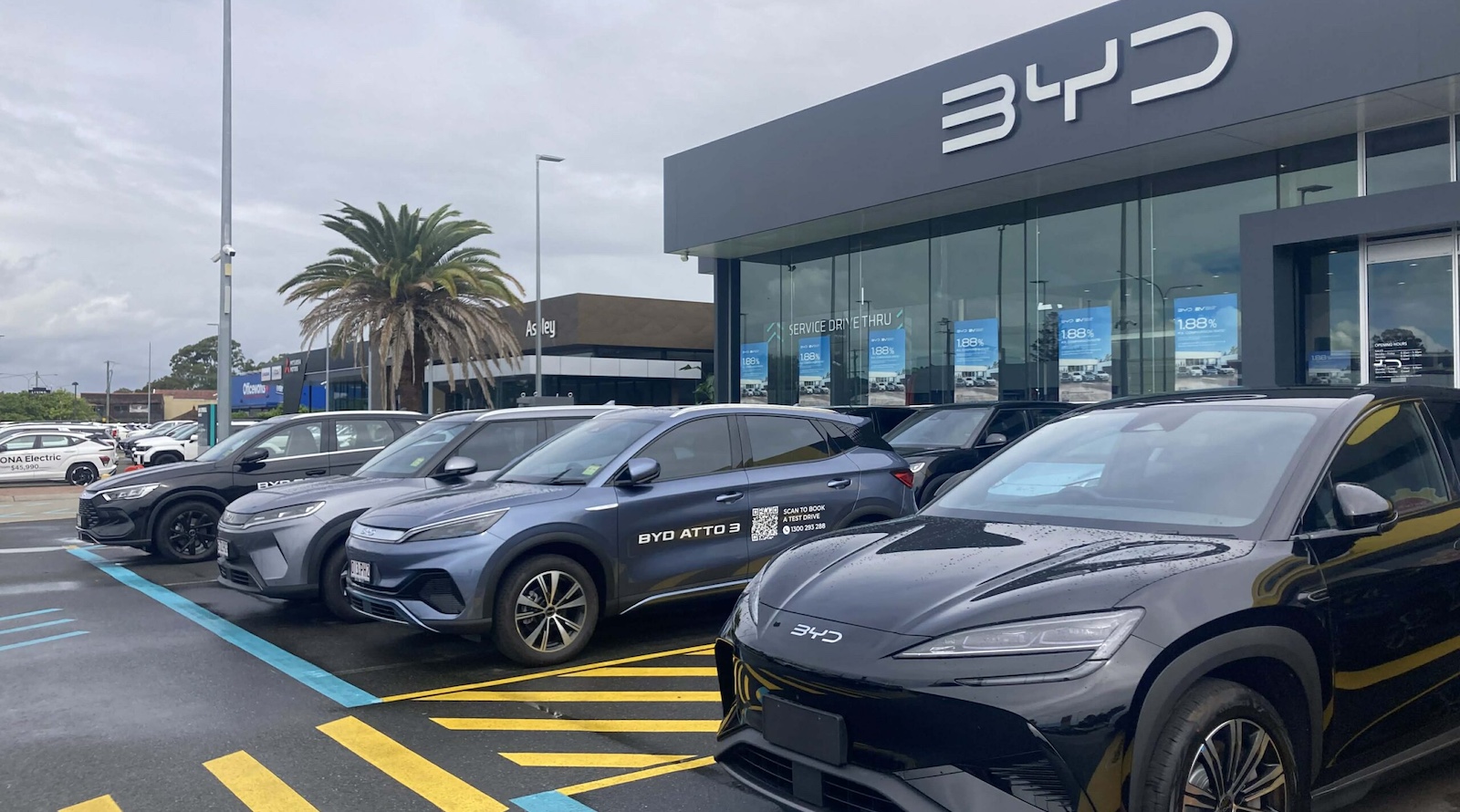
In a single year, China sold more plugin vehicles globally than Americans purchased vehicles of every type combined—a milestone that reshapes how we think about the world's automotive future. China's plugin vehicle market moved 16.49 million units in 2025, with 12.8 million sold domestically, while the entire US vehicle market, spanning sedans to trucks to SUVs, reached just 16.38 million sales. That comparison matters because it shows the scale and speed at which electric and plug-in hybrid technology is transforming transportation in one of the world's largest economies.
The numbers point to a deeper shift in global automotive innovation. Plugin vehicles—cars that can run on battery power, either exclusively or alongside a combustion engine—represent the fastest-growing segment of the global auto market. In China, they now account for 48% of all new vehicle sales, a remarkable penetration for technology that was still considered niche just a decade ago. The market grew by 28% in 2025 compared to 2024, showing sustained momentum rather than a flash of early-adopter enthusiasm.
What makes this story particularly telling is the gap between the two countries' domestic plugin adoption. China sold 12.8 million plugin vehicles at home in 2025, while the United States saw only around 1.5 million such sales—a difference of more than eight times. This disparity reflects not just consumer preference but also industrial strategy, infrastructure investment, and policy support that have aligned in China to accelerate the transition away from fossil fuels in transportation.
The broader context matters too. China's automotive sector produced 34.4 million vehicles last year, dwarfing US production of 10.2 million vehicles. Yet China sold even more cars domestically than it produced—a sign of voracious appetite for new vehicles as middle-class incomes rise and automotive ownership becomes aspirational across the country. This domestic market, already the world's largest, is expected to continue growing, though growth rates may moderate as fleet saturation increases over the coming decade.
For a world watching the transition to electric mobility, China's performance is a wake-up call and an inspiration. The country has built manufacturing capacity, battery supply chains, and charging infrastructure at a pace that other nations are still struggling to match. It has also proven that consumer demand for cleaner vehicles is real and powerful when supported by accessible pricing and convenient technology. Meanwhile, the US remains the world's second-largest new vehicle market by volume, but its plugin share lags far behind, suggesting that the gap in this critical segment will only widen without substantial policy shifts or industrial investment.
The implications extend beyond sales figures. A global automotive industry increasingly shaped by Chinese innovation in batteries, electric motors, and software could reshape trade patterns, supply chains, and which companies and countries lead on the technologies of the coming decades. For climate goals, the rapid scaling of plugin vehicles in the world's most populous nation represents genuine progress, even if challenges remain in grid decarbonization and the supply of critical minerals. The 2025 numbers don't represent an ending—they signal the trajectory of a transformation already well underway.