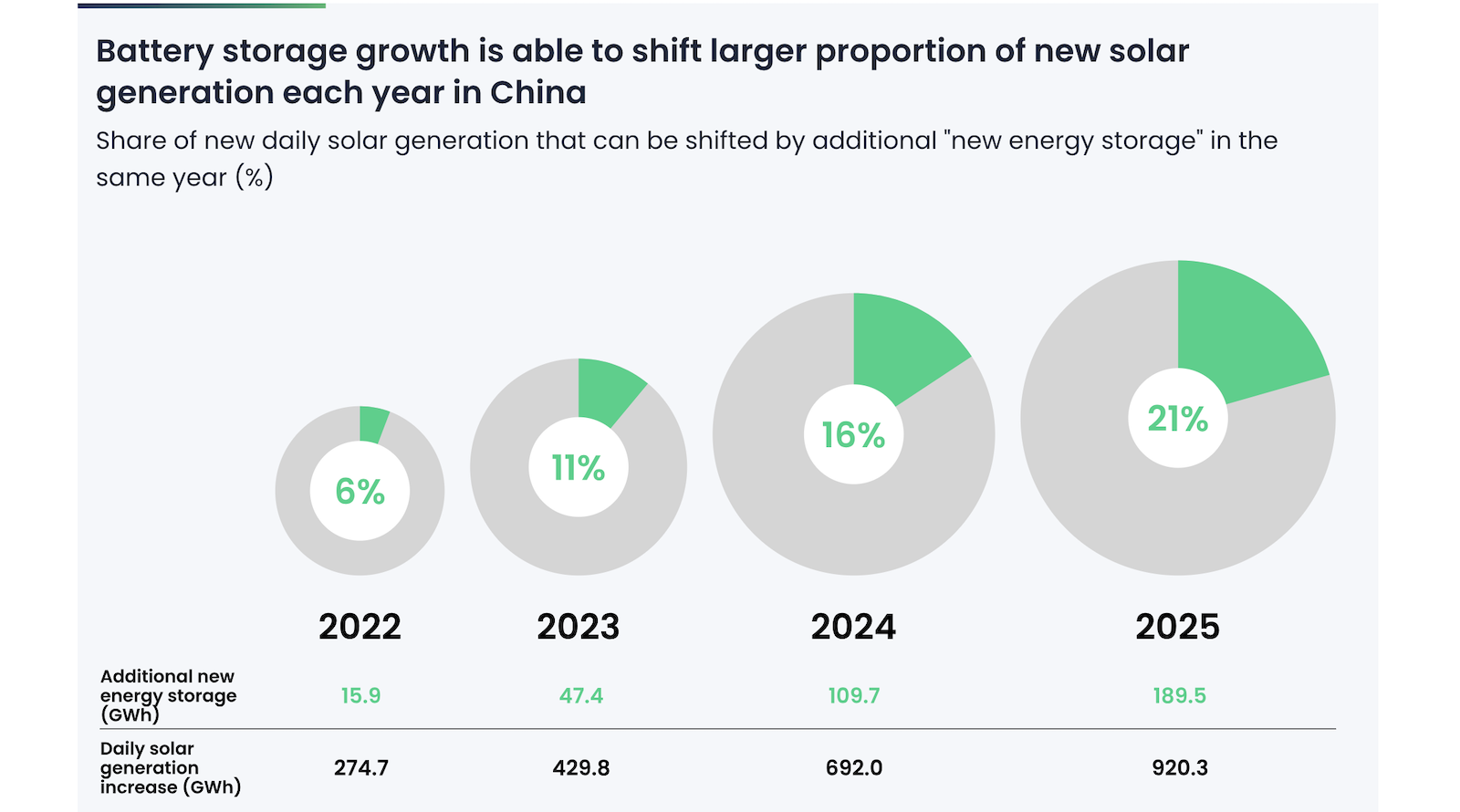
Deep in the outskirts of Shenzhen, rows of lithium-ion batteries hum quietly in a facility that would have seemed impossible a decade ago. China is now home to the world's largest fleet of big batteries — called battery energy storage systems, or BESS — with nearly 150 gigawatts installed by early 2026. That's more than half of all the battery storage capacity on Earth.
The numbers are staggering. In December 2025 alone, China added 18.76 gigawatts of new storage in a single month — more than the United States installed in an entire year. By June 2026, the country raised its 2030 target to 300 gigawatts, essentially doubling down on a technology that didn't even exist at scale 15 years ago.
So why does this matter for regular people? Here's the thing about wind and solar power: the sun doesn't always shine and the wind doesn't always blow when you need electricity. That's where these batteries come in. They store clean energy when it's abundant and release it when demand peaks. It's like a giant rechargeable battery for an entire country's power grid.
But here's the hopeful part: experts say China could be doing much more with what it already built. A new analysis from Ember, an energy think tank, found that if China's existing battery fleet were used more efficiently, it could have shifted an additional 23 terawatt-hours of clean electricity in 2025 alone. That's enough to power Singapore for five months.
"China has built the world's largest battery storage fleet in record time — but having the batteries is not the same as using them," said Siming Liu, a senior manager at TrinaSolar, a major solar company. "The next phase will be defined not by how many gigawatts are added, but by how well they can support the new power system."
The good news is that China is already making changes. For years, most batteries were built right next to wind and solar farms, tied to specific projects. Those batteries now account for less than 16% of new installations. Instead, standalone batteries — large facilities run directly by grid operators — are taking over. They made up 84.7% of new capacity in the first four months of 2026. These standalone systems are used nearly twice as much as their co-located cousins.
The shift matters because a battery sitting idle is like a hospital bed no one uses. China has built an incredible infrastructure. Now, the challenge is making sure it works as hard as possible for the clean energy future everyone is counting on.