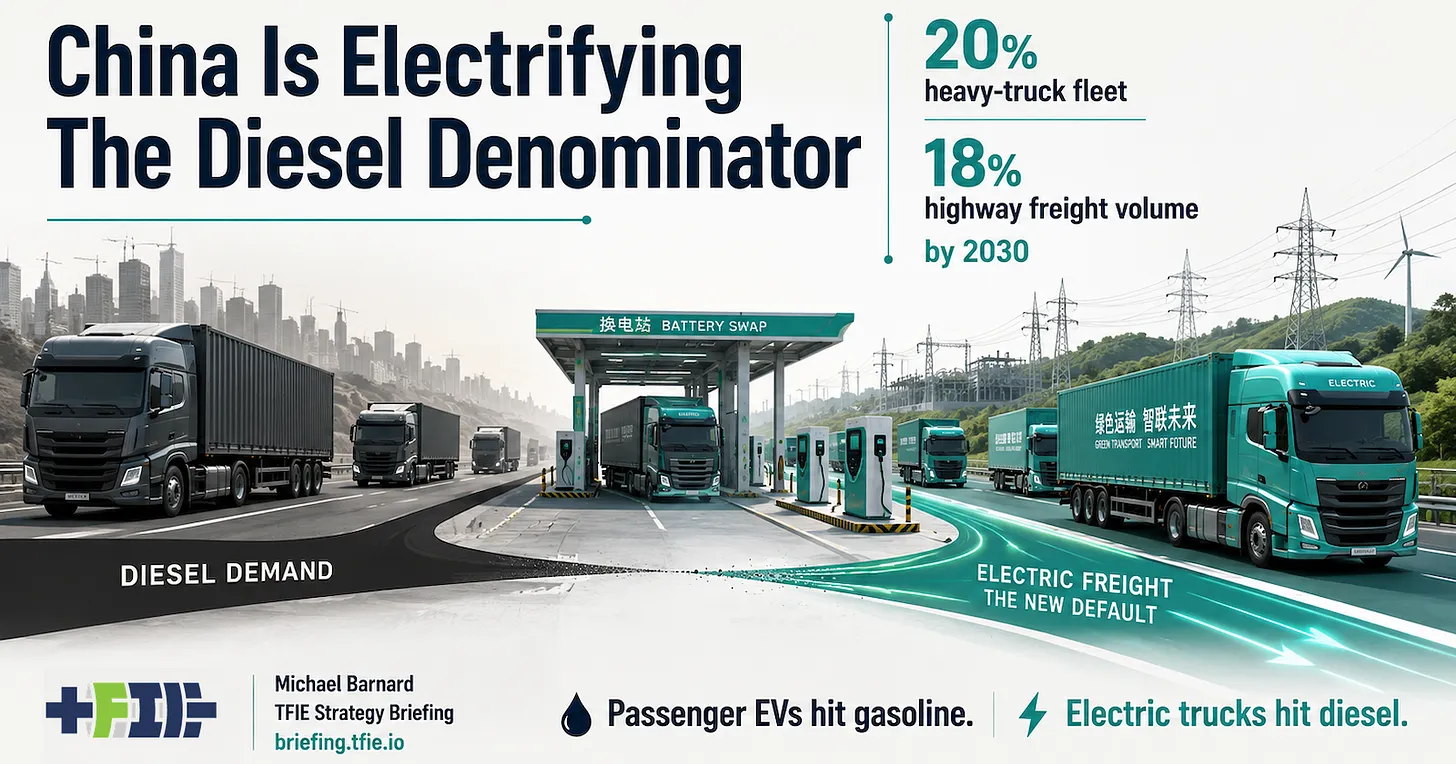
In the first half of 2025, electric heavy trucks made up roughly one-quarter of all new truck sales in China. That's a big shift for the trucks that move most of the country's goods — and it could reshape forecasts for how much oil the world will need.
China's heavy-truck electrification programme aims to get 40% of all new heavy-truck sales running on clean energy by 2030, which would put more than 1.6 million electric and low-carbon trucks on the road. But the really revealing number is 18% — that's the share of highway freight volume China plans to capture, meaning the country isn't just swapping out engines. It's targeting the busiest, most fuel-hungry trucks first, the ones that burn the most diesel every day.
To make that happen, China is building a whole new infrastructure system. The plan includes roughly 30,000 kilometres of zero-carbon highway freight corridors — special routes designed for electric trucks — and about 3,000 heavy-truck charging and battery-swapping stations scattered across logistics parks, ports, mines, and highway rest stops. Grid companies are being told to plan their power networks around truck-charging needs. Trucks are being tied into depots, repair networks, and distribution planning, so operators can charge or swap batteries quickly and get back on the road.
The thinking is practical: fleet managers care about keeping trucks running, not just about buying electric. So instead of relying only on purchase subsidies, China built a system that handles the everyday headaches of running electric trucks. That approach matters because commercial trucks operate for longer hours, carry heavier loads, and burn far more fuel per vehicle than passenger cars — meaning even a minority of electric trucks can remove a disproportionately large share of diesel demand.
The potential impact on oil markets is significant. One estimate puts the diesel displaced by these trucks at several hundred thousand barrels per day by 2030 — large enough to affect national oil-demand forecasts, not just the truck market. LNG trucks, which run on natural gas rather than diesel, could replace an additional 775,000 barrels per day of diesel by 2030. Meanwhile, passenger electric vehicles are already displacing an estimated 582,000 barrels per day of gasoline.
The International Energy Agency has taken notice. China added nearly 6 million barrels per day of oil demand between 2015 and 2024, accounting for about 60% of global growth over that period. Now, the IEA expects China's oil demand to peak this decade — a major reversal. OPEC is more optimistic about long-term demand, but even its near-term forecasts are shifting downward.
The story is no longer whether China's road-fuel growth will slow. It's how fast the shift away from diesel will spread — and what that means for an energy system still figuring out its future.