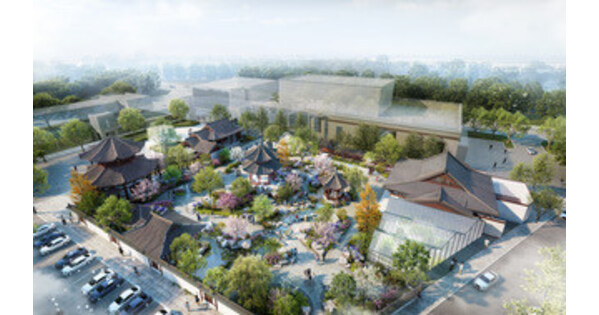
On a winter afternoon in Scarborough, shovels broke earth for a dream that has been thirty years in the making. The Chinese Cultural Centre of Greater Toronto turned a ceremonial first dig into a celebration of heritage, culture, and belonging—groundbreaking on what will become Ontario's largest Asian Garden, a 1.5-acre sanctuary of traditional Chinese design set to welcome visitors by the end of 2028.
The project carries weight far beyond horticulture. Since its founding in 1988, the CCCGT has served as a multicultural hub in Scarborough, anchoring Chinese-Canadian identity and community life. The Asian Garden represents the Centre's most ambitious vision yet: a living classroom where flowing water, symbolic rocks, hand-crafted pavilions, and carefully chosen plants will teach visitors about Chinese landscaping, architecture, and philosophy. It is simultaneously a gathering place and a teacher, a green space and a cultural statement.
The vision dates back to 1994, when the Centre first imagined this space. Founding Chairman Dr. Ming-Tat Cheung sees it as an extension of the organization's core mission: "The Garden will serve as a living representation of Chinese heritage, showcasing traditional Chinese landscaping, architecture and horticulture." The ambition reflects a truth that often goes unspoken—that public spaces designed with cultural intention become more than themselves. They become vessels for storytelling, for belonging, for the kind of understanding that happens in a garden just as much as in a classroom.
The ceremony itself drew over 200 people, including federal, provincial, and municipal leaders. Senator Pau Woo, Toronto's Mayor Olivia Chow, North Scarborough MP Shaun Chen, and MPP Raymond Cho all gathered alongside Consul General Luo Weidong from the People's Republic of China. It was a rare alignment of political will behind a single cultural vision. That political support translated into concrete investment: in 2021, federal and provincial governments jointly committed $5.2 million to the project through the Investing in Canada plan, demonstrating how public funding can nurture cultural infrastructure.
Yet the garden is also a community achievement. The CCCGT has raised nearly $3 million from patrons and donors across the Greater Toronto Area, representing grassroots belief in the project's value. Tony Quan, Chairman of the Garden Project Design Committee, frames it this way: "The Asian Garden will serve as a symbol of multiculturalism, a valuable one-of-a-kind asset and attraction within the GTA." He points to its ripple effects—tourism, local business support, educational partnerships—but there's something deeper in his words: the recognition that beauty, thoughtfully designed, becomes community property.
The Centre is building the garden as a model of sustainable development, in line with Toronto's environmental goals. Once complete, ongoing operations will be funded through membership donations, cultural events, venue rentals, and partnerships with tourism boards, local schools, and businesses. It's a model that expects the garden to sustain itself through the generosity of the community it serves.
By 2028, when visitors walk through those hand-crafted pavilions and stand beside the framed vistas, they'll be walking through thirty years of patience and intention. They'll be in a space that says: this culture belongs here, this heritage matters, and we built this together. In a city as diverse as Toronto, that message is worth its weight in stone.