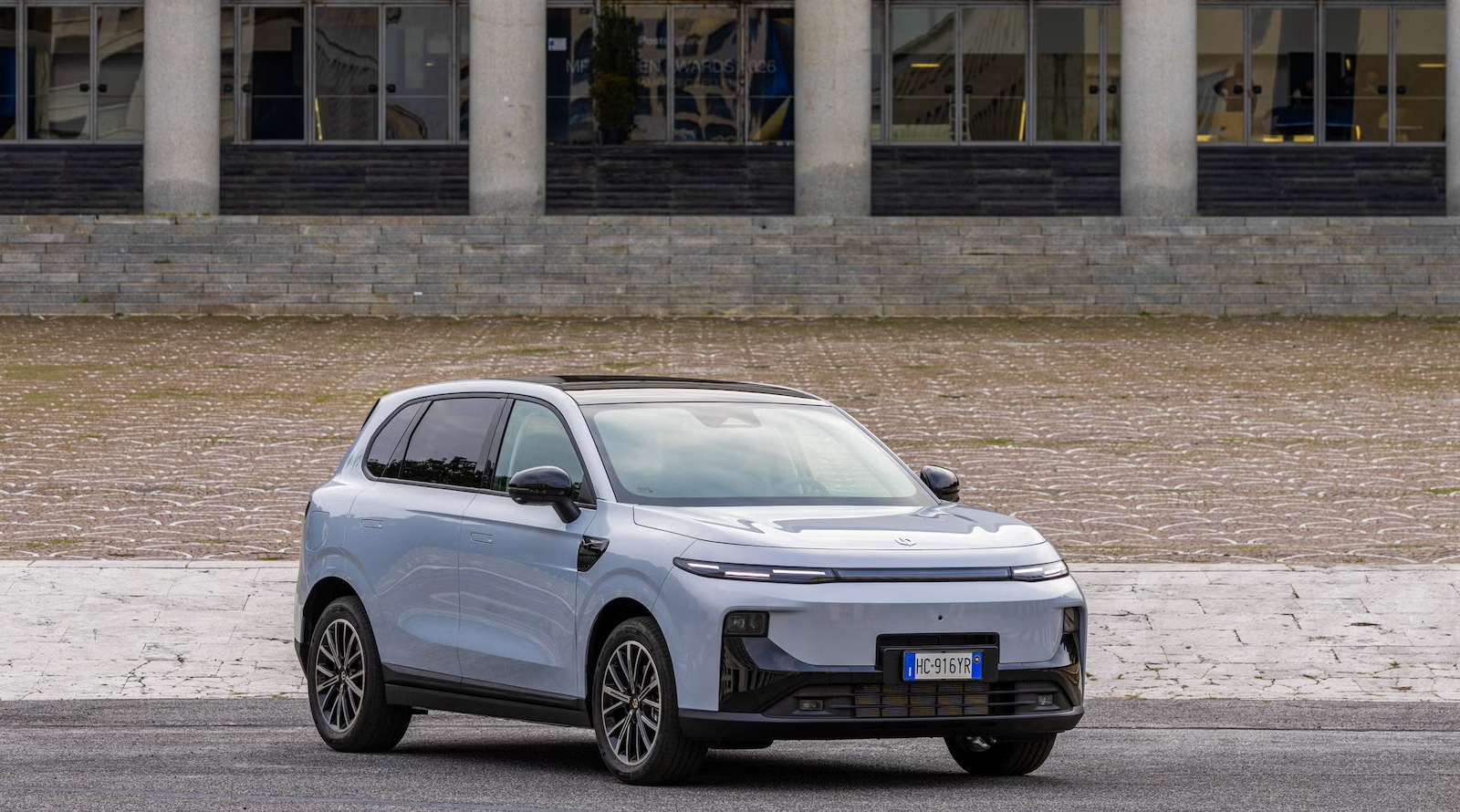
In a dusty Mexico City showroom, a glossy red SUV catches a customer's eye. The price tag reads roughly $33,000 — affordable for many Mexican families. What's unusual is where this car came from: a factory thousands of miles away in China, brought south with help from a giant automaker you might already know.
Leapmotor, a fast-growing Chinese electric vehicle company, just launched its B10 model in Mexico through a partnership with Stellantis, the company behind brands like Jeep, Ram, and Chrysler. Stellantis doesn't just distribute the cars — it owns 51% of Leapmotor, giving it a major stake in the company's international ambitions.
The B10 isn't a fully electric vehicle in the traditional sense. It's what the industry calls an extended-range electric vehicle, or EREV. That means it runs mainly on battery power — a 18.8 kWh pack — but carries a small 1.5-liter gasoline engine that acts as a generator to boost the range when the battery runs low. The starting price of $32,895 puts it within reach for middle-class Mexican buyers looking to spend less on fuel.
Before the first B10 reached a showroom, it spent more than a year being tested and tweaked at Stellantis' engineering center in Mexico. Engineers adapted the suspension for bumpy Mexican roads, adjusted the climate controls for hotter temperatures, and made sure it met local safety rules — work that smaller companies like BYD, the world's leading EV maker which is also now in Mexico, might struggle to do alone.
"Before the B10 reached showrooms, it spent more than a year undergoing validation and testing at Stellantis' engineering center in Mexico, where it was adapted for local roads, climate and regulations," Autoblog reported.
Leapmotor has already proven itself in China and Europe, where it has sold hundreds of thousands of vehicles. Now the company is betting that Mexican drivers, many of whom drive long distances between cities, will appreciate the flexibility of an EREV that can switch seamlessly between electric driving and its gas backup.
For Mexico, this launch signals something bigger: more competition in a market hungry for cleaner, cheaper transportation. For Stellantis, it's a way to stay relevant as electric vehicles reshape the global auto industry. And for Leapmotor, it's a foothold just south of the American border — closer than ever to the world's second-largest EV market, even if the US itself remains off-limits for now.
The partnership shows how the auto industry is shifting. No single company can go it alone anymore. Sometimes, even old rivals team up to get cleaner cars into more hands.