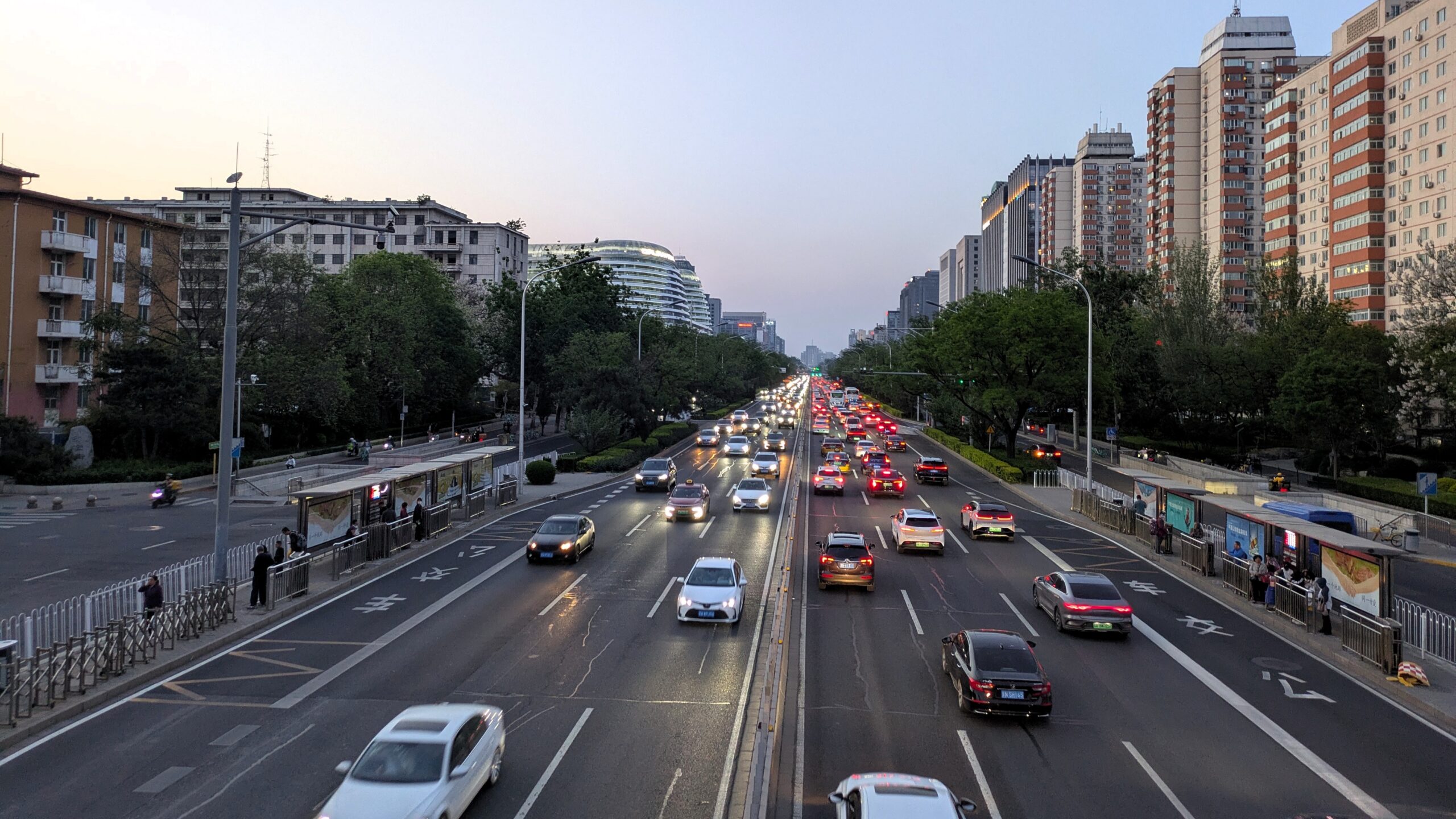
In May, Chinese automakers sold 974,000 new energy vehicles at retail—a staggering 63% of all passenger cars purchased that month—signaling a market transformation that rivals any automotive shift in history. This milestone, paired with wholesale figures reaching 61% (1.36 million units), represents far more than a statistical victory: it marks the moment when electric and plug-in hybrid vehicles stopped being the future and became the present across the world's largest car market.
The significance cannot be overstated for a global audience watching transportation's tectonic plates shift. China's dominance in NEV adoption widens the gap between its market and the United States, where EV penetration remains sluggish. But what makes May's numbers particularly striking is how they reveal an industry at an inflection point—one where supply constraints are actually the limiting factor, not consumer demand.
BYD, the Chinese battery and automaker giant, accounts for 27.7% of wholesale NEV sales nationwide. The company's May performance illuminates both the headwinds and tailwinds reshaping China's automotive landscape. Their wholesale shipments reached 376,990 units—up 19.41% month-on-month—yet their retail sales in China fell 24.7% year-over-year to 222,809 units. At first glance, this seems contradictory. The answer lies in one of the industry's most aggressive product transitions ever attempted. BYD is launching vehicles with the Blade Battery 2.0, technology that allows mainstream electric cars to charge as quickly as gasoline cars refuel while costing less to buy than comparable conventional vehicles.
The gap between wholesale and retail reveals something crucial: BYD's exports surged 80.4% year-over-year to 160,644 units in May alone. Domestically, the company is managing massive order backlogs as new models launch. The Datang accumulated over 100,000 orders after presales began in April. Other models like the new Yuan Plus and a forthcoming high-volume Han variant haven't even reached showrooms yet. Some buyers face wait times measured in months, prompting BYD chairman Wang Chuanfu to recently offer an additional day of free fast charging for every day of delay.
This supply crunch extends beyond BYD. XPeng's new GX model carries a 35-week wait time as customers queue for the company's next generation of vehicles. Across the market, manufacturers have introduced "far more compelling" new EVs and plug-in hybrids than any conventional vehicle launches could match, according to industry observers—a quiet acknowledgment that the technology itself is now winning on merit, not subsidy alone.
Structural forces amplify the trend. China imports most of its oil, much of it from the volatile Middle East, making energy supply vulnerable to geopolitical disruption. Rising fuel costs and persistent uncertainty are making petroleum vehicles economically and strategically unappealing to Chinese drivers and policymakers alike. The government sees electrification as both an environmental imperative and a hedge against energy insecurity.
As new models ramp into production—including vehicles equipped with advanced AI chips for Level 3 and Level 4 autonomous driving—the 63% market share figure may look conservative in retrospect. BYD has projected overall sales growth for the year despite year-to-date declines, a forecast that hinges on new product momentum. When that bottleneck breaks, and these vehicles flood into showrooms across China, the nation's transportation system will have already crossed the threshold into a post-combustion future.