In just fourteen days, a team of scientists unlocked more of the ocean's secrets than many expeditions manage in years. Working aboard the research vessel Falkor (too) in the South Atlantic off Brazil's coast, two dozen international researchers discovered 31 species completely new to science—and they believe the speed of identification may be a world record. Among the haul: nine jellyfish, seven siphonophores, seven comb jellies, four larvaceans, two giant rhizarians, a swift-moving gossamer worm, and a crustacean related to crabs and lobsters. Dr. Karen Osborn of the Smithsonian National Museum of Natural History, who led the expedition, described the experience simply: "The midwater is chock full of incredible animals that we don't know much about." The midwater zone—the vast realm between the seafloor and the sunlit surface—represents roughly 90 percent of Earth's habitable space, yet remains one of our planet's least explored frontiers. "This must be close to a record for discoveries of new animals in a short space of time," Osborn said. The expedition brought together experts from the United States, Australia, Brazil, and Japan, with support from the Schmidt Ocean Institute and the University of Western Australia. Departing from Salvador, Bahia, the team deployed cutting-edge technology that fundamentally changed how quickly species could be observed and classified. Chief among these breakthroughs was a spinning wheel confocal microscope nicknamed "the Squid," which used lasers to scan the microscopic architecture of living organisms—cells interacting, exchanging material, building skeletons—while still aboard the ship. "Usually it takes a couple of weeks of staining and mounting to see anything," Osborn explained. "That opens up a whole new world of exploring." Alongside prototype imaging systems and genetic analysis, the researchers assembled a dedicated team of taxonomic experts to verify identifications in near-real-time. Beyond the excitement of discovery, the expedition shed light on how life distributes itself across the oceans. "I think about it as a layer cake," Osborn said, noting that the same species often appear at similar depths in distant locations—Japan, California, Brazil. Yet at night, a vast vertical migration occurs as deep-dwelling creatures ascend toward the surface to feed, a movement with significant implications for how oceans absorb carbon from the atmosphere. Osborn sees this expedition as proof of what becomes possible when bright minds share a common purpose. "What humanity has found so far is just the tip of the iceberg," she said. "There is an immense amount of life out there solving life's challenges in unusual ways. Imagine what we can learn from them."
← News
Science Breakthroughs Science Breakthroughs Knowledge
‘Chock full of incredible animals’: marine expedition uncovers 31 new species in two weeks
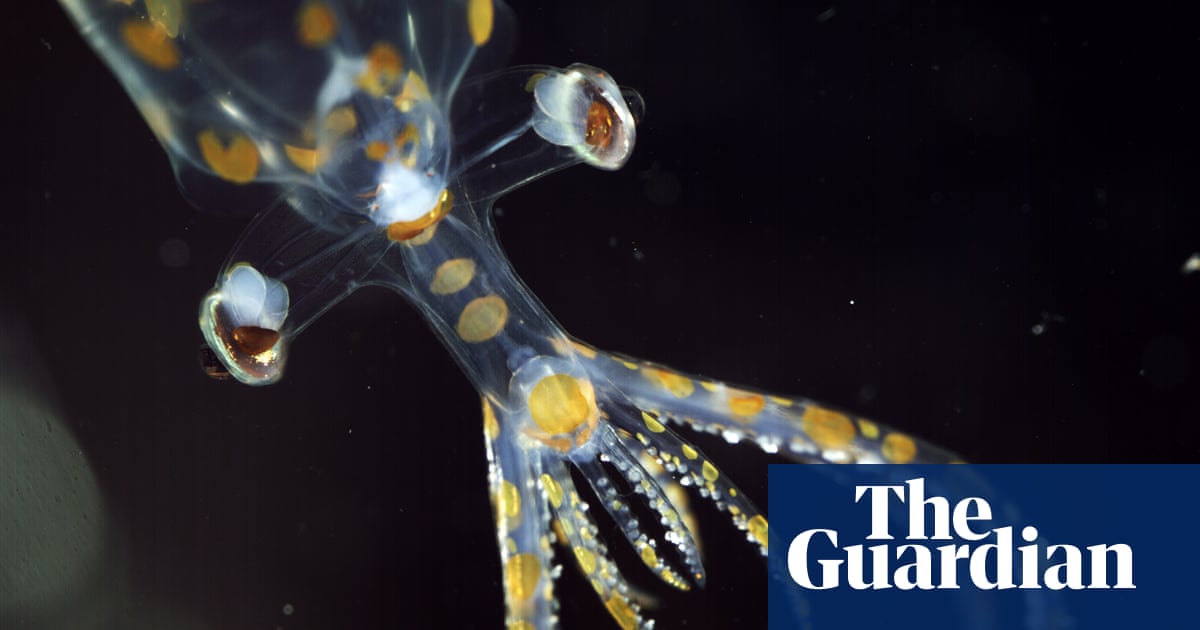
31 New Species Species found
2 Weeks Timeframe
24 Experts Scientists on board
4 Nations Countries involved
90% Of Earth'S Living Space Habitat explored
31 species discovered
90% ocean habitat coverage