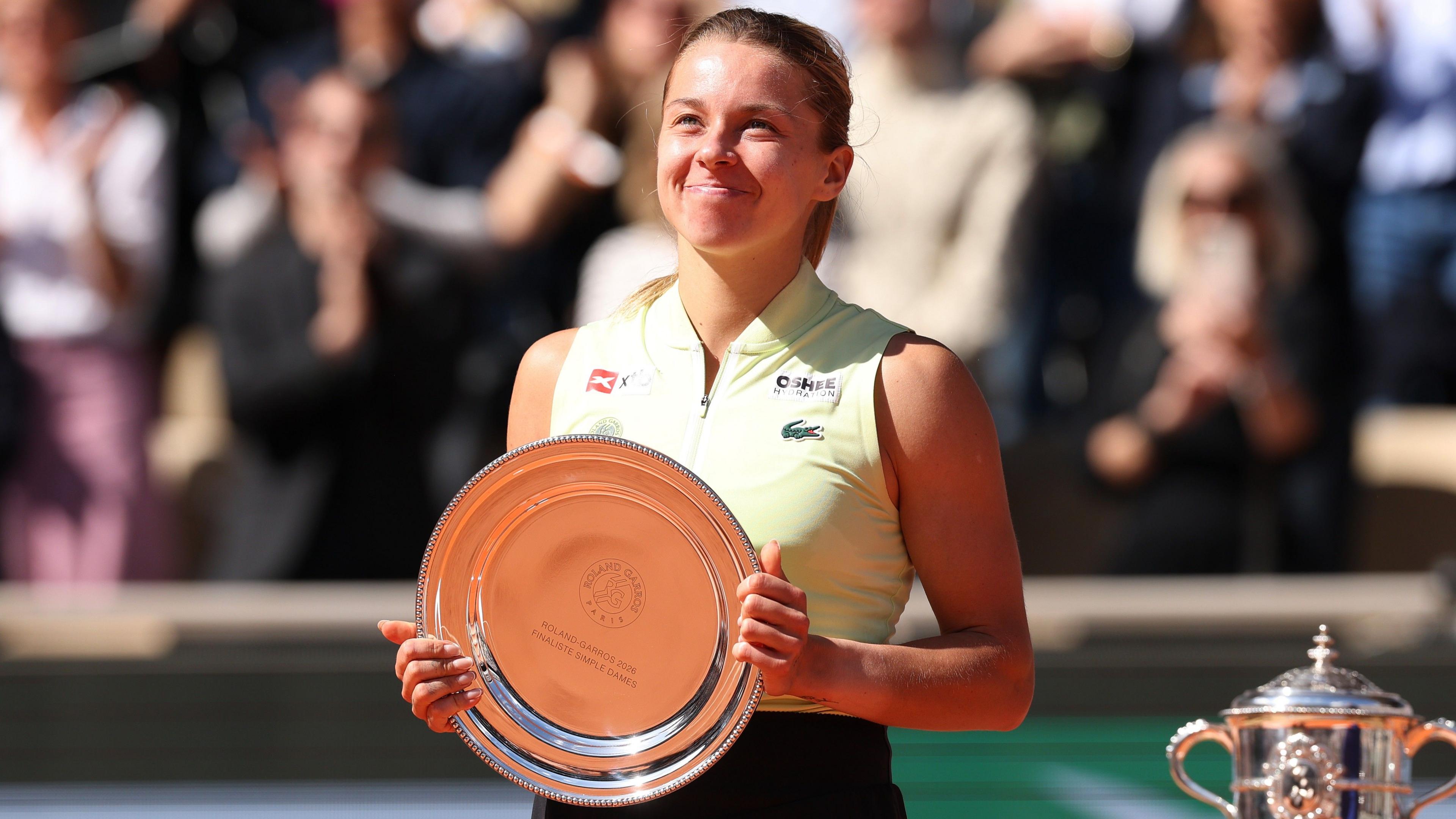
Maja Chwalinska entered Roland Garros as a 114th-ranked qualifier facing three weeks of grinding tennis just to reach the main draw—and she kept going, winning nine consecutive matches to crash through to the French Open final. The 24-year-old Polish player, who had battled depression early in her professional career and spent the spring playing second-tier European events, refused to accept the modest expectations that came with her ranking. In the final, she met 17-year-old Mirra Andreeva, and while Chwalinska fell 6–3, 6–2, the runner-up finish has transformed her life and career in ways that extend far beyond tennis.
The numbers tell the story of a woman whose perseverance finally broke through. Chwalinska will climb from 114th in the world to a new career high of 21st in the rankings—a seismic shift driven by a single tournament run. Her €1.4 million in French Open prize money is almost double everything she had earned in her entire previous career, a tangible measure of how dramatically this fortnight changed her circumstances. For a player who has been playing professional tennis since her teenage years, this injection of resources and recognition represents something close to a fresh start.
Her path to the final reveals the depth of her resilience. Chwalinska is a former Australian Open junior doubles finalist who once partnered with fellow Polish player Iga Swiatek—a comparison that underscores both the talent in her generation and the divergent trajectories that careers can take. The depression she experienced early in her professional life was serious enough to pull her away from the sport, yet she returned and rebuilt herself through years of grinding work on the lower rungs of professional tennis. By the time she arrived in Paris for qualifying, she was still chasing breakthrough moments while playing against elite opponents in tournaments that offer minimal financial reward.
That three-week run—starting with her first qualifying-round match on Monday, May 18—became the validation of everything she had endured. Nine wins took her from obscurity to the sport's biggest stage. The teenager Andreeva proved to be too much in the final, but Chwalinska's achievement in reaching it stands alone. She became just the second qualifier to reach a Grand Slam singles final in the Open era, and her journey represents something rarer still: a reminder that professional tennis, for all its brutal economics, still occasionally rewards those who refuse to give up.
Chwalinska herself seemed almost grateful for the chance to simply be there. "It's been 18 years of hard work, patience and perseverance," she said, reflecting on a career that began when she was a young girl discovering the sport. "I had to go through so much to be in this position. Life is weird sometimes and you've just got to do your thing and believe it will click someday, and I'm happy that it did." Her gratitude was not performative—it carried the weight of someone who had genuinely doubted whether the moment would arrive. The French Open runner-up prize money, the ranking leap, the confidence that comes from competing at the highest level: these were not things she had taken for granted.
Moving forward, Chwalinska enters a new chapter with resources, ranking points, and the self-knowledge that she belongs among the world's best players. The final itself is already behind her; what lingers is the proof that her 18 years of patience and perseverance were not in vain.