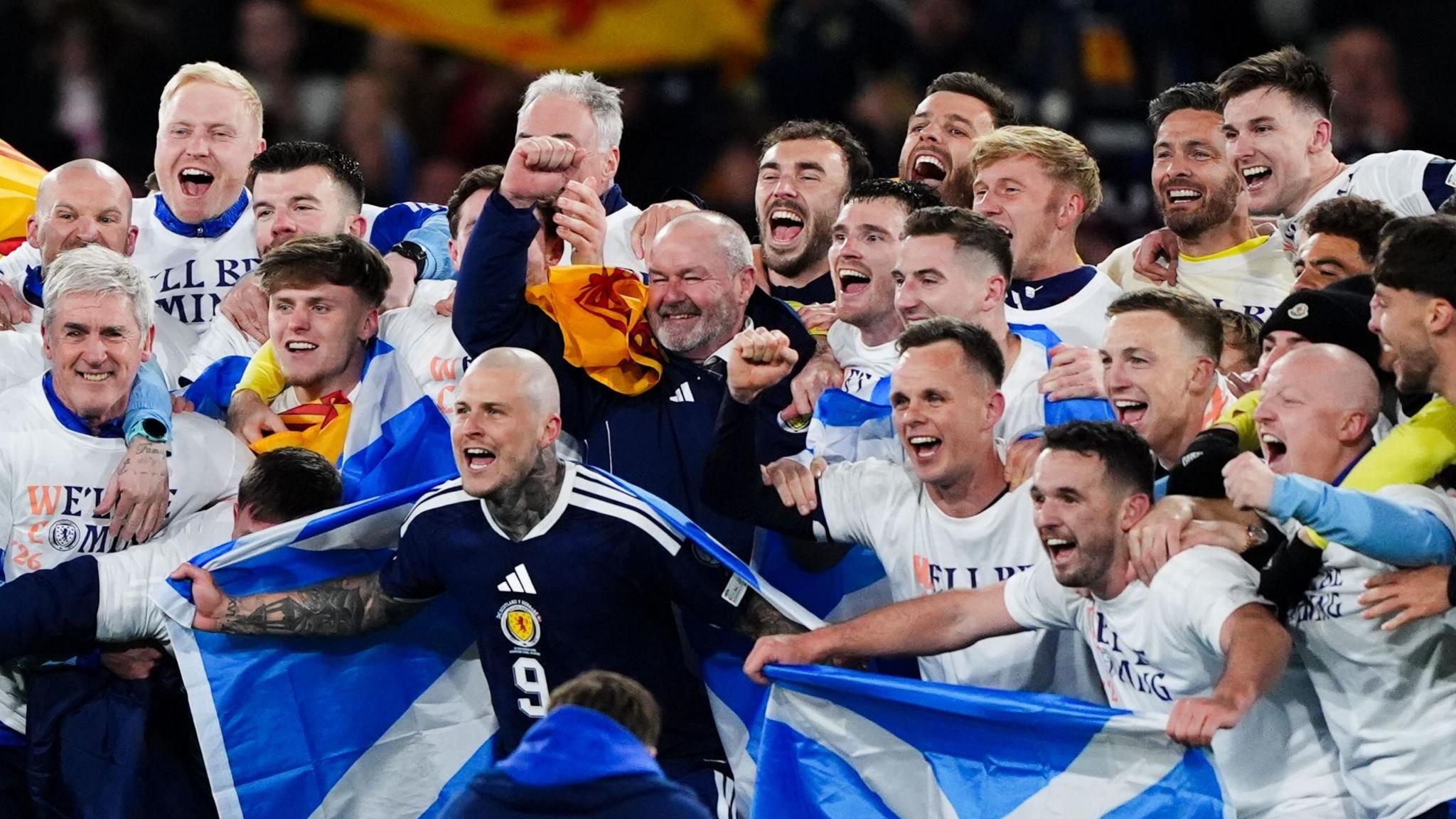
Steve Clarke has secured his place at Scotland's helm through the 2026 World Cup and 2028 Euros with a fresh four-year contract, bringing a period of uncertainty to an end just weeks before the nation's first men's World Cup tournament in 28 years. The 62-year-old's commitment signals that the Scottish Football Association has wagered its near-term hopes on sustained success, betting that a strong showing in America this summer will validate the decision to lock him in for the long term.
Scotland's qualification for World Cup 2026 marked a watershed moment after nearly three decades outside football's grandest stage. Clarke has overseen back-to-back Euros qualifications and delivered the World Cup berth that eluded his predecessors since 1998. When his future hung in the balance following the conclusion of the Euros, the decision to extend hung on a delicate calculus: commit now with conviction, or wait until after the tournament and risk losing a coach who has proven himself a "serial qualifier for major tournaments," as observers noted.
"I know the Scotland supporters appreciate the achievements of this group in qualifying for back-to-back Euros and equally sure the whole nation rejoiced in our qualification for World Cup 2026 after such a long time," Clarke said upon signing. He emphasized the importance of building foundations and creating a stable environment for the squad to evolve. Scottish FA chief executive Ian Maxwell praised Clarke's vision for the road ahead, pointing to "a renewed purpose and focus over the next four years" rather than mere continuity.
The timing matters. Clarke had shifted from uncertainty about his future to actively pushing for a decision before the tournament, and his players—names like Scott McTominay and John McGinn—have made clear their preference to continue working with him. That player backing proved significant; the Scottish FA would have faced an "almost reckless gamble" in attempting to recruit a replacement without guarantee of finding someone stronger. The available candidate pool for elite international posts simply isn't deep.
Yet the decision carries risk. If Scotland stumbles in America this summer, the Scottish FA will face intense scrutiny for committing to four more years before results were in. The 2024 Euros aftermath showed how quickly supporter sentiment can turn when outcomes disappoint. Some observers suggested the prudent path would have been to defer the contract decision until after the World Cup tournament concluded.
The Scottish FA's choice to commit now reflects confidence in Clarke and recognition of a harder truth: stability itself has value for a national team. Building toward 2026 and 2028 requires continuity, a clear vision communicated to players and supporters alike, and the certainty that allows squad development to accelerate. Clarke has articulated a focus on evolving the group, increasing the pipeline of talent, and making improvements across the board.
Whether the gamble pays off depends on performances in Boston and beyond. But the Scottish FA has decided that the certainty of Clarke—a proven tournament architect—outweighs the uncertainty of change. For Scotland's supporters, the next tournament becomes not just about qualification, but about vindication.