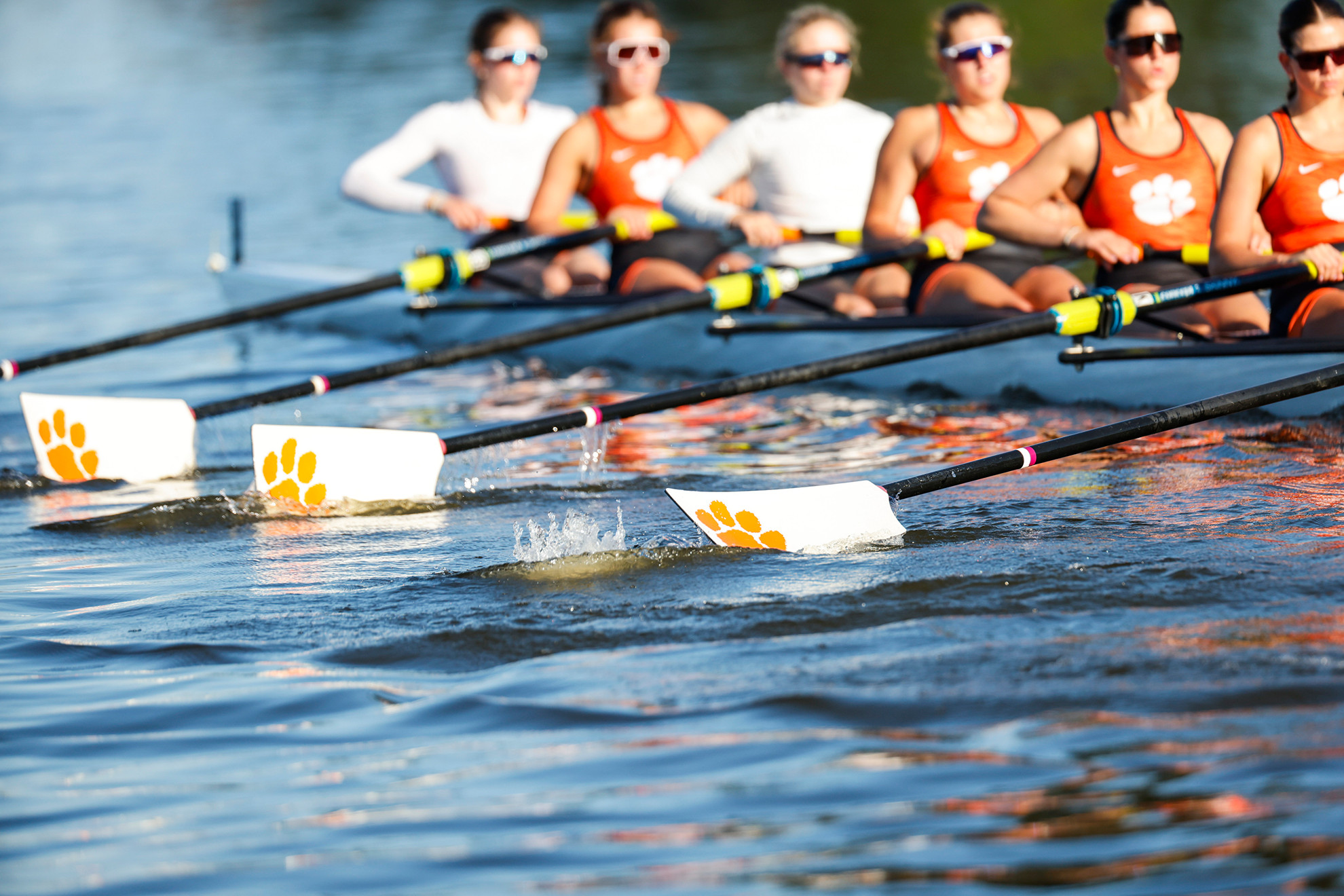
Seven Clemson University rowers have earned 2026 CRCA Scholar-Athlete honors, a recognition that celebrates the rare blend of athletic precision and academic discipline required to excel in one of college sports' most demanding disciplines.
The award, announced by the Collegiate Rowing Coaches Association, underscores a reality often overlooked: competitive rowing demands the kind of commitment and time management that can only coexist with genuine academic rigor. These student-athletes must balance intensive training schedules with rigorous coursework while maintaining cumulative GPAs of 3.50 or higher—a threshold that separates honor students from the broader student body. For Clemson's honorees—Georgie Ericsson, Avery Goldknopf, Isabel Greving, Stephanie Hampton, Caroline Hill, Katherine Odeen, and Jessica Ream—the distinction reflects years of sustained excellence on both fronts.
Three of the seven have now earned this honor twice. Ericsson, Goldknopf, and Hill are repeat recipients, testament to their consistency across multiple competitive seasons. Their majors span from marketing and accounting to animal veterinary sciences and biological sciences, suggesting that this isn't a narrow band of academics but rather student-athletes distributed across Clemson's broader intellectual ecosystem. Hampton's political science background and Greving's marketing focus sit alongside Odeen's veterinary sciences and Ream's biology work—a roster as diverse in their scholarly pursuits as they are unified in their athletic commitment.
The CRCA Scholar-Athlete criteria are deliberately exacting. To qualify, rowers must be in their second through fifth year of eligibility, have maintained that 3.50 GPA through the end of fall semester or winter quarter, and meet specific athletic benchmarks: either competing in at least 75 percent of spring races in an NCAA or IRA lightweight eligible boat, or racing in an NCAA boat at conference championship. These aren't ceremonial standards—they reflect genuine competitive participation at the collegiate level. The result is recognition that only truly committed dual achievers can claim.
What makes these awards significant for Clemson extends beyond individual achievement. The rowing program's depth of scholar-athletes signals something about the culture being built within the team. This isn't a single standout managing excellence in two domains; it's a cohort of seven—nearly an entire boat's worth—doing it simultaneously. That speaks to coaching priorities, peer culture, and institutional support that treats academic excellence not as an afterthought to athletic success but as central to the program's identity.
The CRCA's focus on scholar-athletes addresses a persistent tension in college sports. Rowing, in particular, is grueling—long hours on the water, early morning practices, and the intense coordination required to move a boat as a unified crew. That these seven managed to layer serious academic work on top reflects something meaningful about their character and Clemson's environment. Ericsson, Goldknopf, Hill, and the four first-time honorees are modeling what collegiate excellence can look like when both domains are taken seriously. As the rowing season progresses and these student-athletes continue their campaigns on the water, they carry with them recognition that their dedication extends far beyond the finish line.