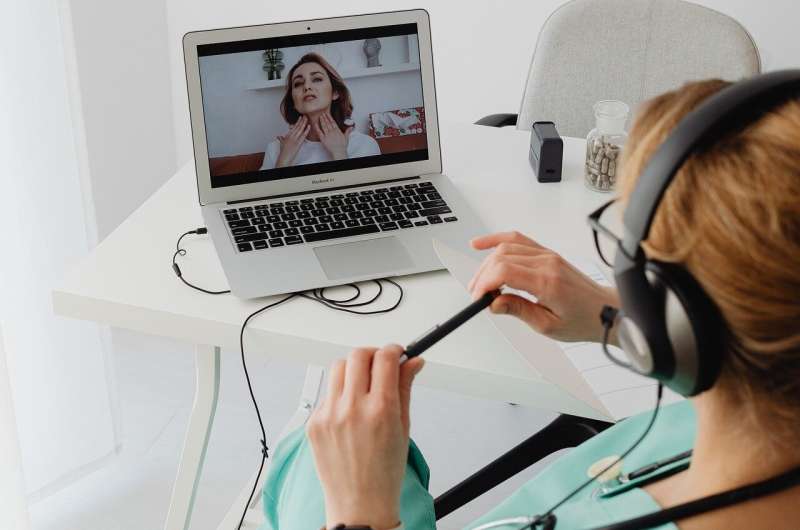
When Sarah walks down the stairs in her home now, her legs feel stronger than they did weeks ago—and she didn't have to leave her living room to get there. The iRehab Trial, a UK-wide study managed by Warwick Medical School, has found that online rehabilitation delivered at home can meaningfully improve recovery for intensive care survivors, offering fresh hope to thousands of people struggling with the aftermath of critical illness.
Intensive care leaves deep marks. Patients who've been ventilated often return home facing muscle weakness, fatigue, breathlessness, memory problems, and emotional distress that makes ordinary life feel like climbing a mountain. The body and mind both need rebuilding, yet rehabilitation has historically been underfunded and difficult to access. The iRehab program tested whether delivering care remotely could bridge that gap.
Researchers across 52 NHS hospitals worked with Warwick Clinical Trials Unit, Ulster University, and Queen's University Belfast to test a six-week remote intervention combining weekly symptom management, targeted exercise, psychological support, and peer information. The program kept patients in their familiar, comfortable surroundings while specialists guided their recovery through digital means.
The headline finding was nuanced but hopeful. While the overall program didn't show a significant boost in quality of life at eight weeks, a crucial pattern emerged: patients who had been ventilated for less than a week saw substantially greater improvements than those on ventilation for longer. This specificity matters enormously. It means the intervention works powerfully for certain patients—those with shorter, less severe critical illness—suggesting that future care can be more precisely targeted.
"The iRehab program helped many people to recover after they went home from the intensive care unit," said Professor Brenda O'Neill, Chief Investigator. "Findings from the iRehab trial demonstrate that fully remote processes in health care research and delivery are feasible from the consent stage through to intervention delivery." What she's pointing to is something larger than any single outcome number: proof that complex, serious health care can move entirely online without losing safety or effectiveness.
The implications extend far beyond the patients themselves. By enabling people to recover at home rather than traveling to clinics, the program eased pressure on already stretched NHS resources while minimizing disruption to patients' daily lives. This matters during a time when health systems worldwide are redefining what's possible through technology. "Recovery from a critical illness can be a challenging and lengthy process," noted Professor Anthony Gordon, Director of NIHR's Health Technology Assessment Program. "This research demonstrates how using remote technology and moving from analog to digital solutions can make a difference to their rehabilitation and quality of life."
The research was presented at the American Thoracic Society International Conference in Orlando and published in the Journal of the American Medical Association, lending it rigorous scientific credibility.
Yet the work isn't finished. Professor Danny McAuley, a Consultant in Intensive Care Medicine and co-investigator, emphasized that the next step requires engagement beyond the clinical sphere. "We now need to deliver this package of care for the patients who will benefit, while continuing to find better personalized treatments for others," he said. "It's not just clinicians that need to be considered; we really need to engage with policy makers."
What the iRehab Trial has shown is both clear and catalyzing: for the right patients, recovery after critical illness can happen at home, guided by human expertise delivered digitally. That's progress worth building on.