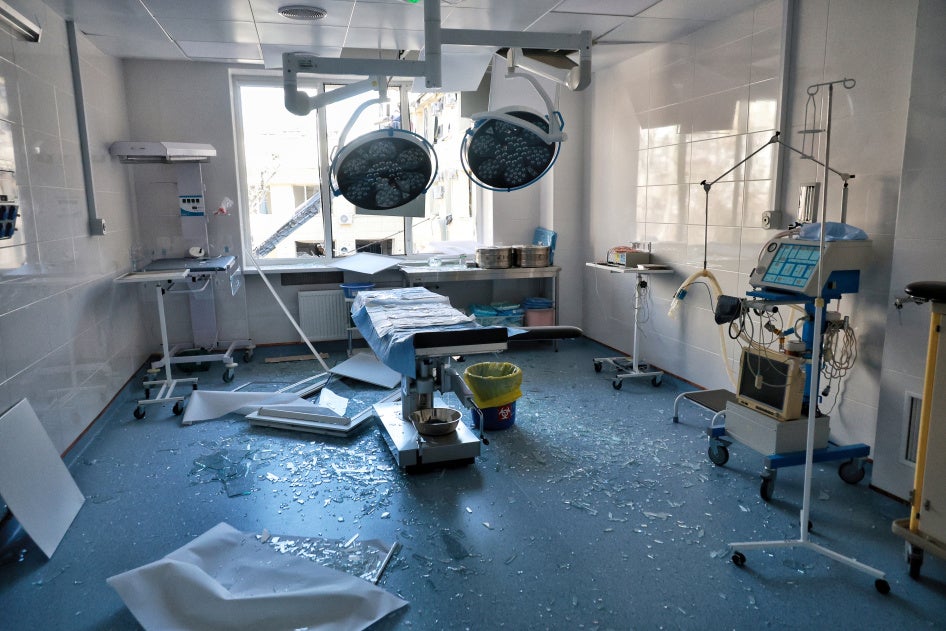
In a New York City conference room on Tuesday, representatives from UN member states and civil society organizations gathered to confront a widening crisis: the systematic targeting of hospitals, ambulances, and medical personnel during armed conflict. The meeting, convened during Protection of Civilians Week, marked a grim milestone—ten years since the UN Security Council passed Resolution 2286, which urges all parties to armed conflict to "prevent and address" attacks on health care. A decade later, the gaps between promise and practice have only grown.
The assault on medical infrastructure has become a signature tactic across multiple conflicts. Human Rights Watch has documented systematic attacks on health care facilities in Syria, Myanmar, Gaza, Ukraine, and beyond—places where the wounded have nowhere to turn. Medical personnel are protected under the laws of war as civilians or military noncombatants, and hospitals, clinics, and ambulances carry special protections that can only be stripped away if the facility is being used for hostile military purposes. Even then, the laws of war prohibit indiscriminate attacks or those causing disproportionate harm to civilians. Yet these protections, enshrined in international humanitarian law, are routinely ignored.
The Tuesday event, co-hosted by Spain and Poland, focused explicitly on what speakers called "closing the gaps"—the space between what governments promise and what they actually do, between documented violations and meaningful accountability, between laws on paper and justice in practice. As Spain's representative bluntly stated: "The gap is not narrowing, it's widening." The phrase captured the frustration of those watching legal commitments crumble in conflict zones month after month.
The consequences of this collapse are immediate and profound. When health infrastructure is targeted or destroyed, civilians lose access to surgery, emergency care, medicines, and maternal services. The damage extends far beyond the walls of any single hospital. Attacks on critical infrastructure like water and electrical plants—systems essential to any functioning health system—can violate both international humanitarian law and human rights law, compounding the suffering of populations already fractured by war.
What remains uncertain is whether Tuesday's gathering will translate into action. The resolution and the conference offered clear recommendations: states should improve data collection on attacks against health care; integrate protections for medical facilities into military doctrine and training; expand domestic law to align with international obligations; and restrict arms sales to known perpetrators of attacks on health workers and facilities. Governments are urged to report publicly and regularly on their compliance with these obligations.
But rhetoric, as the Spanish representative's comment underscored, has become cheap. The real measure will be whether governments heed the ten-year-old call of Resolution 2286 and begin closing the gaps through enforceable action. Until they do, medical personnel will continue treating the wounded in fragile facilities, civilians will suffer preventable deaths, and the foundational principles of international law will remain words on a page rather than protections on the ground.