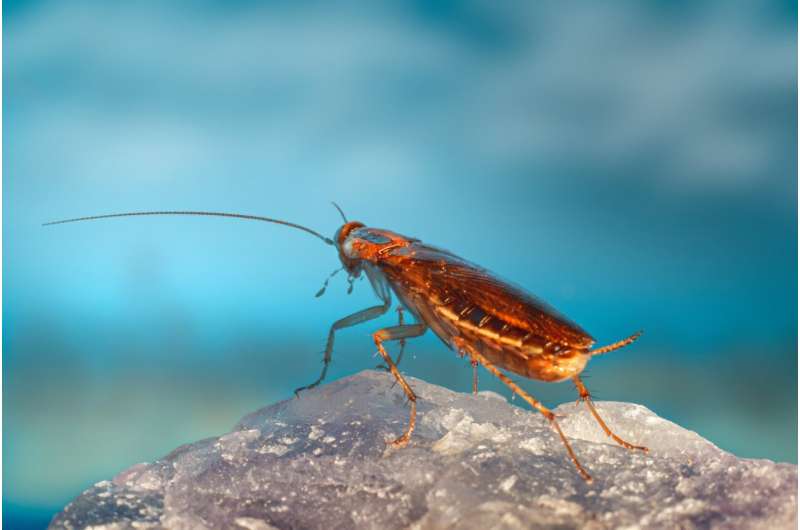
Deep in the cells of a burrowing cockroach crawling through the red soil of Western Australia, something extraordinary is happening: over 3,000 fragments of bacterial DNA, remnants of a microbial tenant turned genetic squatter, are woven into its genome. This is no isolated oddity—across 18 cockroach species, scientists have uncovered a staggering 40,485 DNA segments transferred from Blattabacterium cuenoti, a bacterium that has lived inside cockroach cells for millions of years. The discovery, published in Proceedings of the National Academy of Sciences, rewrites our understanding of how genetic material moves in the animal kingdom, revealing that horizontal gene transfer—the swapping of DNA between species—is not just for microbes anymore.
For decades, biologists believed such gene transfers were rare in complex organisms, especially animals. While bacteria routinely share genes—sometimes gaining antibiotic resistance in the process—animals were thought to guard their germlines more strictly. But this study shows that long-term endosymbionts, like Blattabacterium, which live inside host cells and are passed from mother to offspring, can leave behind a massive genetic footprint. Using advanced long-read sequencing, researchers from the University of Sydney and the Okinawa Institute of Science and Technology aligned fragmented bacterial DNA against cockroach genomes, identifying matches of at least 50 base pairs. After rigorous filtering, they confirmed that these were not sequencing errors but real, inherited insertions.
Some cockroach species, like the Australian Panesthia cribrata, carry more than 3,000 of these bacterial DNA fragments—over ten times the previous record in any eukaryote outside of rotifers. The inserts are scattered across the genome, suggesting multiple independent transfer events over time. Remarkably, some have persisted for at least 29 million years, passed down through generations like heirlooms. While most of these fragments—over 91%—are silent, not transcribed into RNA, a small fraction are active, sometimes spliced into exons, the protein-coding parts of genes. Others are chimeric, stitched together from distant regions of the bacterial genome, hinting at complex DNA repair mechanisms at play.
The functional impact remains unclear. Are these inserts neutral hitchhikers, slightly harmful baggage, or could some have been co-opted for new roles? The fact that they’ve endured for millions of years suggests they’re not severely detrimental. Future studies may reveal whether they influence cockroach metabolism, development, or adaptation.
As scientists continue to probe the hidden genetic exchanges between hosts and their microbial partners, one thing is clear: the boundaries between species are more porous than we ever imagined. In the humble cockroach, a creature often reviled, lies a testament to the fluidity of life’s code—and a clue to how evolution blurs the lines between us and the microbes we carry.