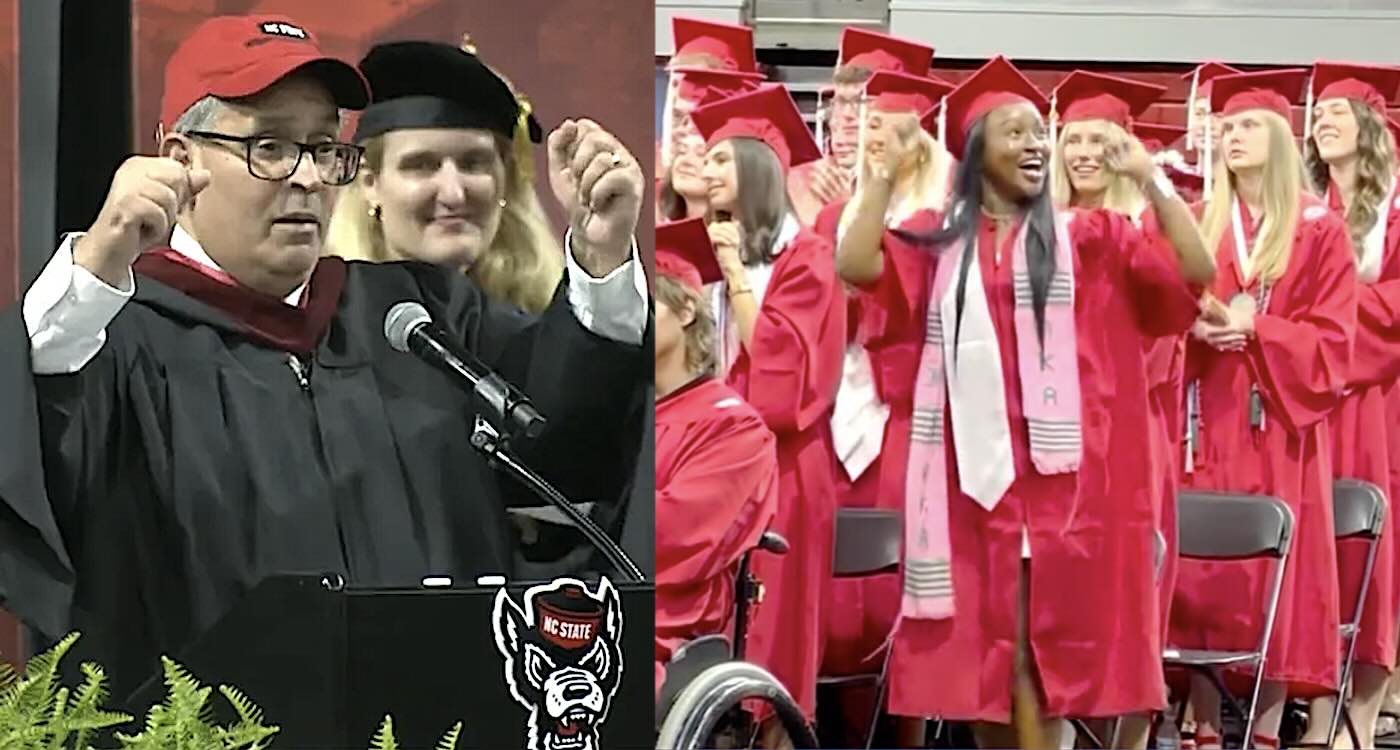
In Reynolds Coliseum at North Carolina State University, 202 graduates filed in wearing red caps and gowns, expecting an ordinary commencement. Then Anil Kochhar stepped to the microphone and changed everything. The commencement speaker, honoring his late father, announced that he and his wife Marilyn would cover the final-year student loans for every graduate from the Wilson College of Textiles—instantly erasing an entire year of education debt for 176 bachelor's degree recipients and 26 master's degree students.
The gift carries profound weight not just for its generosity, but for what it represents: a full-circle moment spanning generations and continents. Anil's father, Prakash Chand Kochhar, arrived in Raleigh from India 80 years ago to study textile manufacturing, believed to be only the second student from India ever to enroll at the university. He earned his bachelor's degree in textile manufacturing in 1950 and his master's degree in 1952, then built a successful career that took him across multiple states while working for a global textiles company. Though Prakash passed away in 1985, his influence never faded—a scholarship bearing his name has supported students for 40 years.
Standing at the same institution where his father once pursued an improbable dream, Anil reflected on the generational bridge his father built. "My father could not have imagined this moment. Not just me standing here, but all of you sitting here," he told the assembled graduates. "A new generation, shaped by a different world, but connected by the same spirit of possibility that brought him here decades ago."
The announcement triggered what witnesses described as raucous cheers and sustained applause. For students like Alyssa D'Costa, a fashion and textile management major, the moment held particular resonance. "As a daughter of immigrants myself, this money helps me and my family a lot, and I'm really fortunate to have an opportunity like this," she said. The debt relief provided these graduates something more than financial breathing room—it offered what Anil described as "greater freedom to pursue your goals, take risks, and build the lives you've worked so hard to achieve."
The gift fundamentally alters the immediate trajectory of these young professionals. Rather than entering the workforce burdened by final-year loan payments, they can direct their energy and resources toward launching careers, pursuing additional education, or taking professional risks that might otherwise feel impossible. For children of immigrants especially, the message resonates deeply: education is not just accessible, but supported by those who understand its transformative power.
What struck Anil most about his father was his spirit and unshakable conviction. "The look in his eyes told me anything is possible," he reflected. That same conviction now ripples through 202 new graduates entering a world that often feels uncertain, carrying both their hard-earned degrees and the tangible knowledge that someone believes in their potential enough to remove barriers. In honoring his father's legacy and that original journey from India to American possibility, Anil Kochhar has created a new chapter in the Wilson College of Textiles story—one where the next generation starts not just educated, but unburdened.