Remington Ochoa, a high school senior from Jersey City, didn't trust AI at first—his friends were using it to cheat in ninth grade. But when he learned to ask the technology for research suggestions instead of answers, something shifted. "If AI can do something like that, it's really a teacher in a sense," he said, standing in a tour of Drexel University's brand-new undergraduate AI major. His transformation mirrors a larger moment unfolding on American campuses this fall, where colleges are betting that education—not anxiety—is the answer to students' uncertainty about a technology reshaping the job market.
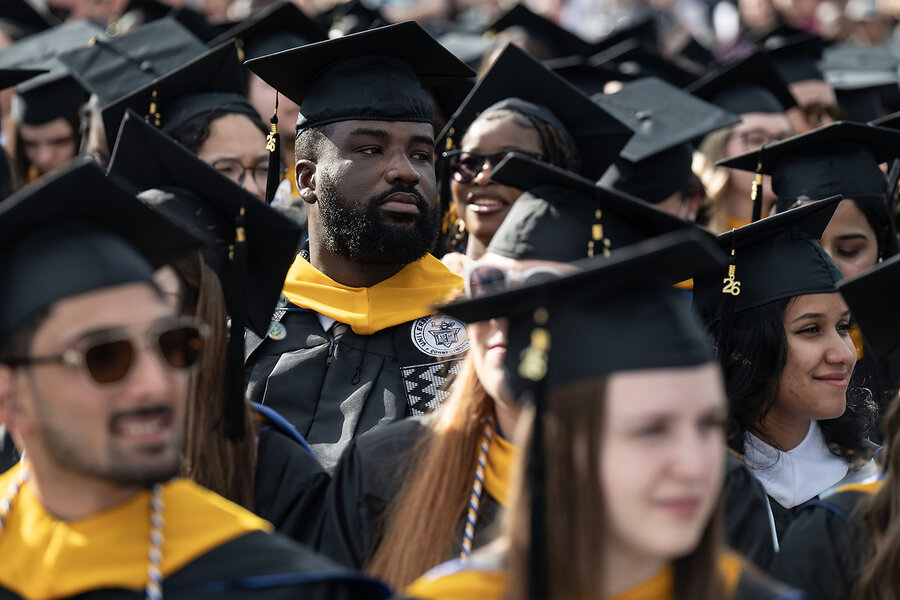
The stakes are real. A survey of nearly 10,000 prospective college students found that 42% expect AI to influence their career choice, with 10% already having changed their major because of the technology. Half of those surveyed expressed uncertainty about how AI could impact their futures, while many signaled concern and nervousness. This spring, some commencement speakers at U.S. colleges even heard boos when they mentioned artificial intelligence to graduating students worried about their employment prospects.
Yet rather than retreat, universities are moving forward with remarkable speed. U.S. schools now offer nearly 200 AI bachelor's degree programs and more than 300 master's degree programs in the field, according to Programs.com, a cybersecurity education platform. The University of Southern California is launching a $200 million AI initiative this fall. Drexel University in Philadelphia, where Ochoa toured the AI major that began recruiting this year, is integrating AI throughout its signature cooperative education program—which places students directly into jobs related to their concentration.
The urgency behind these expansions is unmistakable. Ali Shokoufandeh, interim dean of the Drexel School of Computer and Information Sciences, framed it bluntly: "In three years from now, if you don't know AI/ML you won't have a job. They will not hire you." Employers themselves have reached out to colleges demanding that graduates understand how to work with the technology. For universities, it's both a market opportunity and an economic necessity—the direction where hiring and innovation are heading.
The pitch to students has shifted accordingly. When Drexel hosted prospective AI majors and their parents, students in the room spoke of AI not as a threat but as a practical tool. "It helps you simplify everyday tasks, so you can work on bigger things," one student observed. This reframing—from existential worry to everyday utility—seems designed to help incoming students graduate with a fundamentally different relationship to AI than their older peers did.
But not all faculty members are convinced. The University of California, Berkeley, School of Law recently announced a strict anti-AI policy prohibiting its use for most academic work and exams. English instructor Justin Raden at the University of Mississippi argues that colleges have moved too fast. "Faculty have a special responsibility to kind of naysay the technology," he says, urging schools to show students "all the ways in which it will sell them out." He worries particularly about partnerships between universities and tech companies like OpenAI, where corporate interests in intellectual property and labor may not align with educational goals.
For students like Remington Ochoa—who learned to use AI thoughtfully rather than dismissively—the debate feels less urgent than the practical question of what comes next. He sees AI education not as capitulation but as literacy, a skill that matters regardless of whether you trust the technology. As campuses expand their offerings and students enter college viewing AI as a learnable tool, the question is no longer whether AI belongs in higher education, but how to teach it wisely.