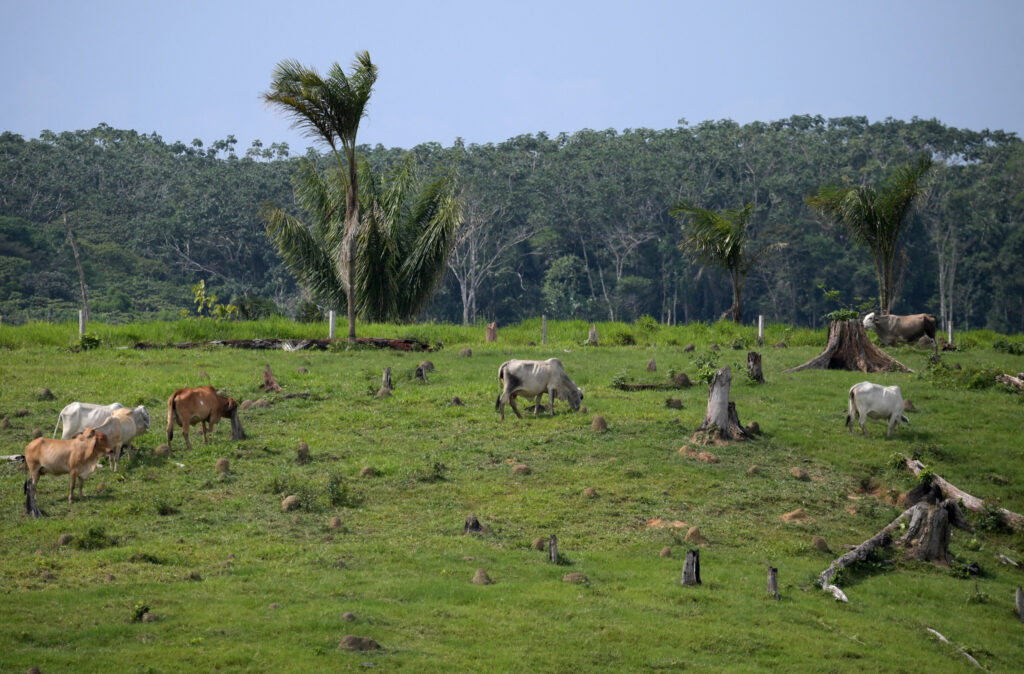
When a steak lands on a dinner plate in Bogotá or Barcelona, it may soon carry more than just flavor—it could carry a story of origin, one that traces back to a specific Colombian pasture, satellite-monitored and legally accountable. This month, Colombia enacted a groundbreaking law requiring full traceability of beef from birthplace to market, a move aimed squarely at halting deforestation in national parks and Indigenous territories where illegal cattle ranching has long flourished unchecked. For a country home to 14% of the Amazon rainforest—a vital carbon vault for the planet—this law marks a turning point in the fight against forest destruction driven by one of the region’s most entrenched industries.
Cattle ranching has long been a leading cause of deforestation across the Amazon, but in Colombia, the problem is tangled with armed conflict and land speculation. Ranchers often graze livestock on protected land to claim ownership, while armed groups linked to drug trafficking collect up to $300,000 annually in per-head "protection" fees, according to a 2021 investigation by the Environmental Investigation Agency (EIA). These groups issue illegal permits to clear forests, knowing that without a tracking system, the origins of cattle can be easily obscured through a chain of sales and relocations. Between 2020 and 2024, EIA found, more than 200,000 cattle were sourced from protected areas—regions where ranching is outright illegal.
That era of opacity may now be ending. Colombia’s new law, rolling out over the next two years, mandates that every cow be tracked from its birthplace, with data linked to real-time deforestation monitoring. Slaughterhouses, auctions, and retailers will be required to verify the legality of each animal’s origin, creating a transparent supply chain that could become a model for the entire Amazon basin. The European Union’s 2022 deforestation regulation, which demands proof that imported commodities like beef are forest-safe, adds urgency—and opportunity—for Colombia to lead by example.
"By requiring traceability from farm to slaughterhouse and linking cattle movement data with deforestation monitoring, Colombia is taking a critical step toward ensuring that beef and leather are no longer associated with forest destruction," said Boris Patentreger, senior director at Mighty Earth, which has tracked Amazon deforestation for years. The law arrives as voluntary efforts elsewhere, like Brazil’s once-successful Soy Moratorium, have faltered, and as Pará’s own traceability initiative stalled despite early promise.
If enforced with transparency and consequences, Colombia’s system could disrupt the financial lifelines of illegal actors while empowering sustainable ranchers. It also sends a signal to neighbors like Bolivia, where forest pressures are rising, and Brazil, where momentum has slowed. As the world watches, Colombia isn’t just tracking cattle—it’s redefining responsibility.