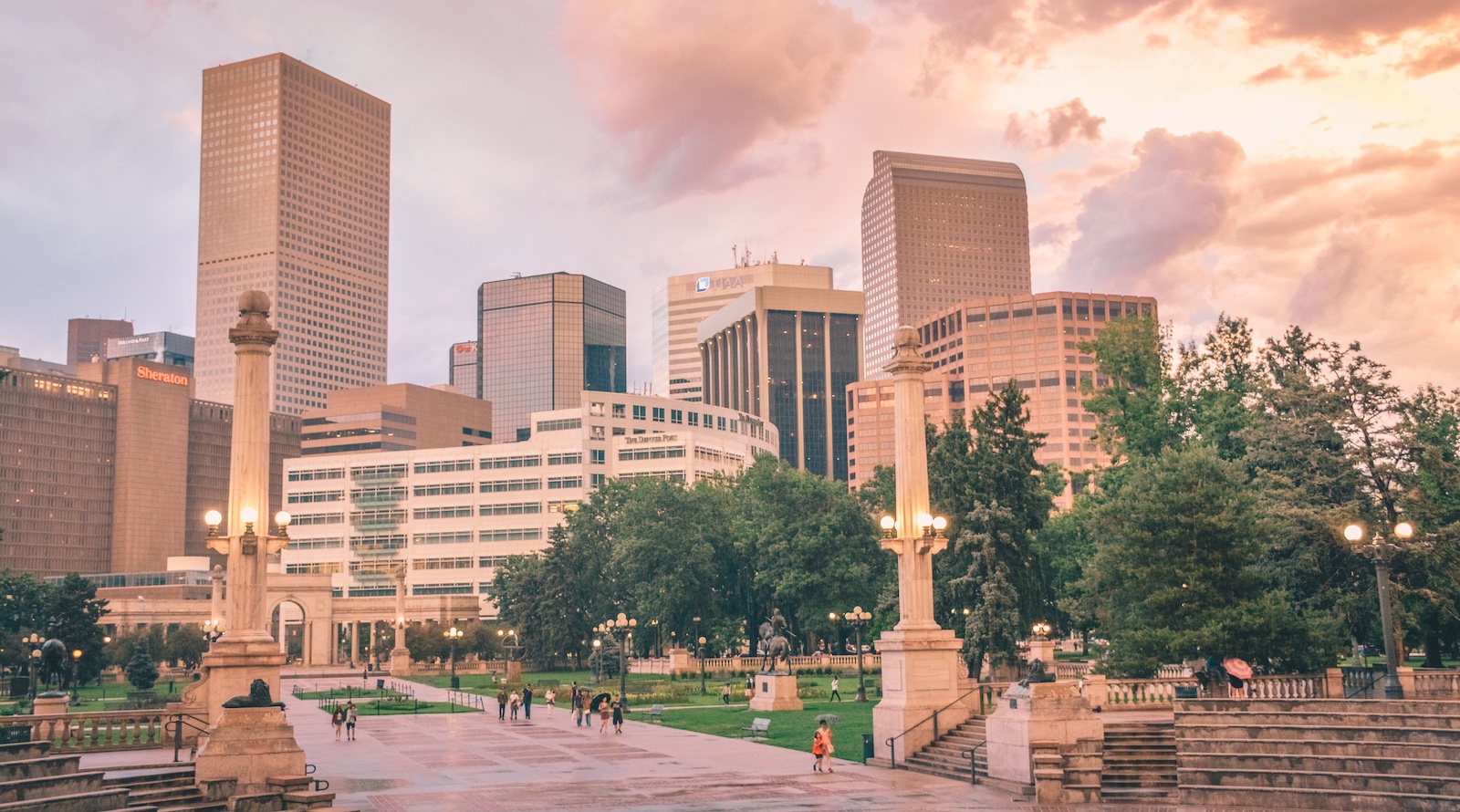
When smoke from distant wildfires turned Denver's sky orange and gave the city some of the worst air quality on Earth last summer, local leaders knew they had to act. Now a Colorado court has confirmed they have the right to act.
A state district judge has thrown out a lawsuit that tried to block Denver's clean energy building rules. The case was backed by corporate landlord groups, the National Propane Gas Association, and the Colorado Restaurant Association. They argued that federal law should stop the city from requiring homes and businesses to cut pollution from gas stoves, furnaces, and water heaters.
The court disagreed. Judge sided with Denver and with the Sierra Club, an environmental nonprofit that joined the case to defend the city's rules. The ruling says federal law does not stop local governments from setting their own pollution standards for buildings.
"Everyone deserves to breathe clean air, and Denver's codes will help businesses and residents save money and improve public health," said Dylan Plummer, who leads the Sierra Club's Clean Heat Campaign.
Emma Hardy, a lawyer with the nonprofit Earthjustice, called the decision an important win. "The court in Colorado joined numerous other courts across the country that have recently recognized that federal law does not prevent states and local governments from adopting laws that encourage building electrification and limit the use of certain gas appliances," she said.
Courts in New York, Washington D.C., Maryland, Illinois, and California have reached similar conclusions since 2024. Those rulings all confirm the same thing: cities and states can require cleaner buildings even if the fossil fuel industry doesn't like it.
Plummer was blunt about what she thinks is really going on. "These baseless lawsuits are a fossil fuel industry-funded strategy designed to fight regulation, and delay common sense policies to modernize homes and buildings and reduce energy costs," she said.
Denver's updated energy code passed in 2023. It encourages buildings to swap gas-burning heaters for electric heat pumps, which are more efficient and don't produce as much pollution. The idea is to help homes and businesses handle extreme heat and wildfire smoke while cutting energy bills.
The building rules weren't written in a vacuum. Industry groups had input during the process. Now that they're law, Denver joins a growing list of cities and states pushing to cut the pollution that comes from heating and cooling buildings.