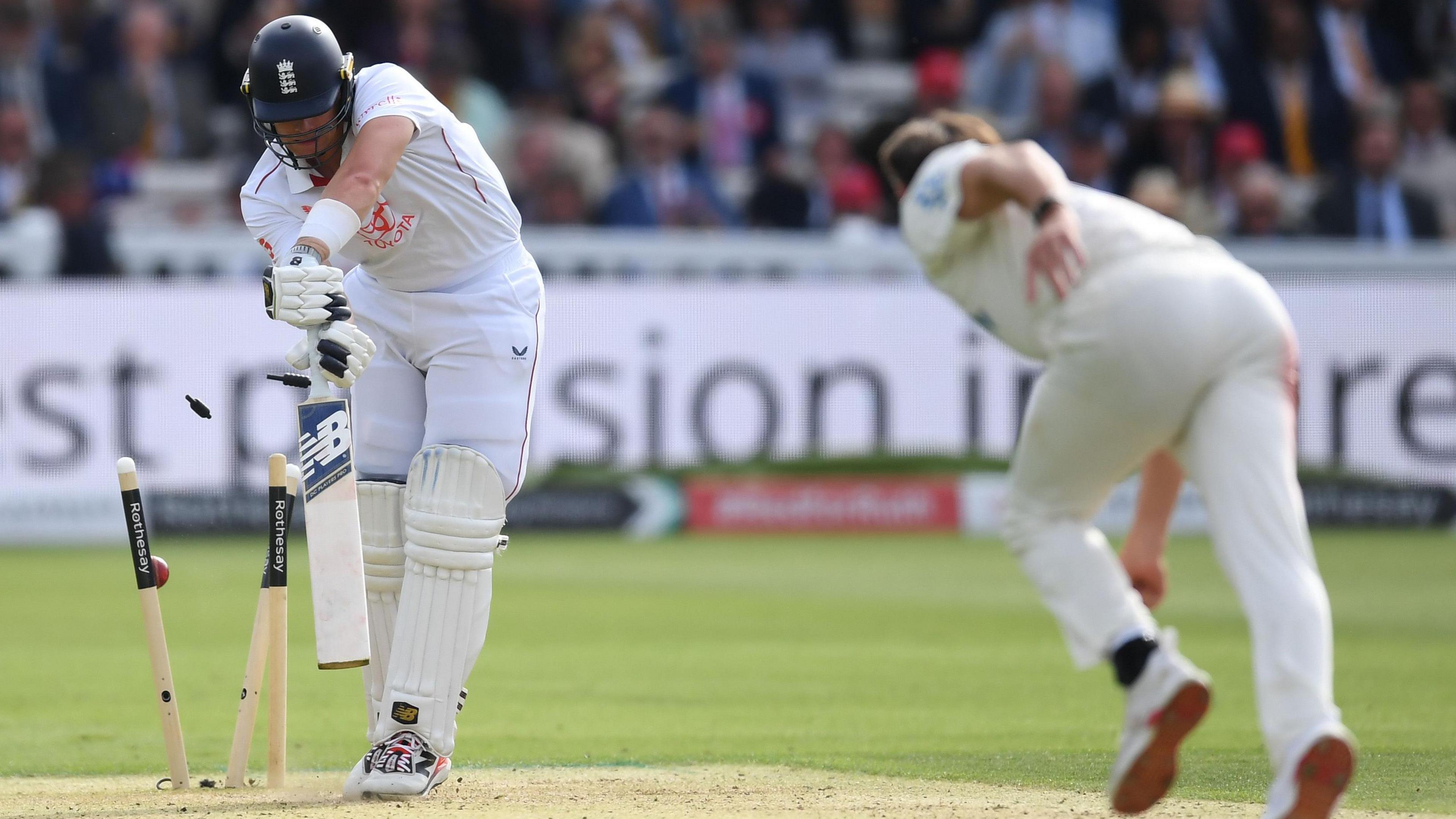
Ollie Robinson bowled a triple-wicket maiden in his first over after more than two years away from international cricket—a comeback so perfect it seemed scripted. The seamer's return to Test cricket at Lord's was the story of England's commanding victory over New Zealand, a match where the English bowlers dominated so completely that Kane Williamson's touring side never stood a chance.
This Test mattered because it came at a moment of transition for English cricket. The team needed to prove it could win without relying entirely on the attacking blitz of Bazball, and instead on the kind of sustained excellence that turns matches into demonstrations of superiority. With Ollie Robinson sidelined for over two years, his availability was uncertain. His performance answered every question at once.
Robinson took seven wickets in the match, setting the tone from his very first over with three wickets off consecutive balls—not a single run conceded. Gus Atkinson, the seamer who has made Lord's something of a personal fiefdom, was equally devastating. He claimed two for nine in England's first innings before a stunning second-innings haul of five for thirty, his fourth five-wicket haul in just three Tests at cricket's most famous ground. Across his Lord's career, Atkinson has taken twenty-six wickets at an average of 9.5, a record that approaches the sublime.
The pitch itself favored the bowlers almost intolerably. Kane Williamson, one of Test cricket's greatest batters, managed only three runs across the match—a duck followed by eighteen in the second innings. Tom Latham was so undone by the conditions that he played what was described as the loosest of loose drives, gifting England a wicket on a surface where bowlers needed no assistance. Even New Zealand's best efforts felt futile. Nathan Smith, perhaps their least-heralded seamer heading into the match, took nine wickets, including six for seventy in England's second innings, proving he could move the ball both ways and consistently hit the perfect area despite the overwhelming advantage his teammates enjoyed.
Harry Brook, true to the Bazball philosophy of counter-attack, made a half-century in the first innings to drag England past one hundred, squandering luck along the way after being dropped twice. Emilio Gay's debut was encouraging—he made a game-high fifty-seven in the second innings after being flattened on his first ball in Test cricket, showing both skill and grit. Jamie Smith recovered from a poor leave early in the match to make thirty-nine, steadying England's second innings after losing four wickets for one run.
For New Zealand, Kyle Jamieson offered rare resistance after finally moving past injury troubles that had sidelined him. He made the honours board with a five-wicket haul in the first innings, and even added some lusty blows with the bat to keep the Kiwis competitive on first-innings scoring. Will O'Rourke, a similarly tall seamer but bowling around ten miles per hour quicker than Jamieson, felt he deserved more than his four wickets after bowls of genuine hostility.
The victory belonged entirely to England's bowlers, who proved that Robinson's comeback was no flash in the pan and that English cricket could win matches through sheer, relentless excellence.