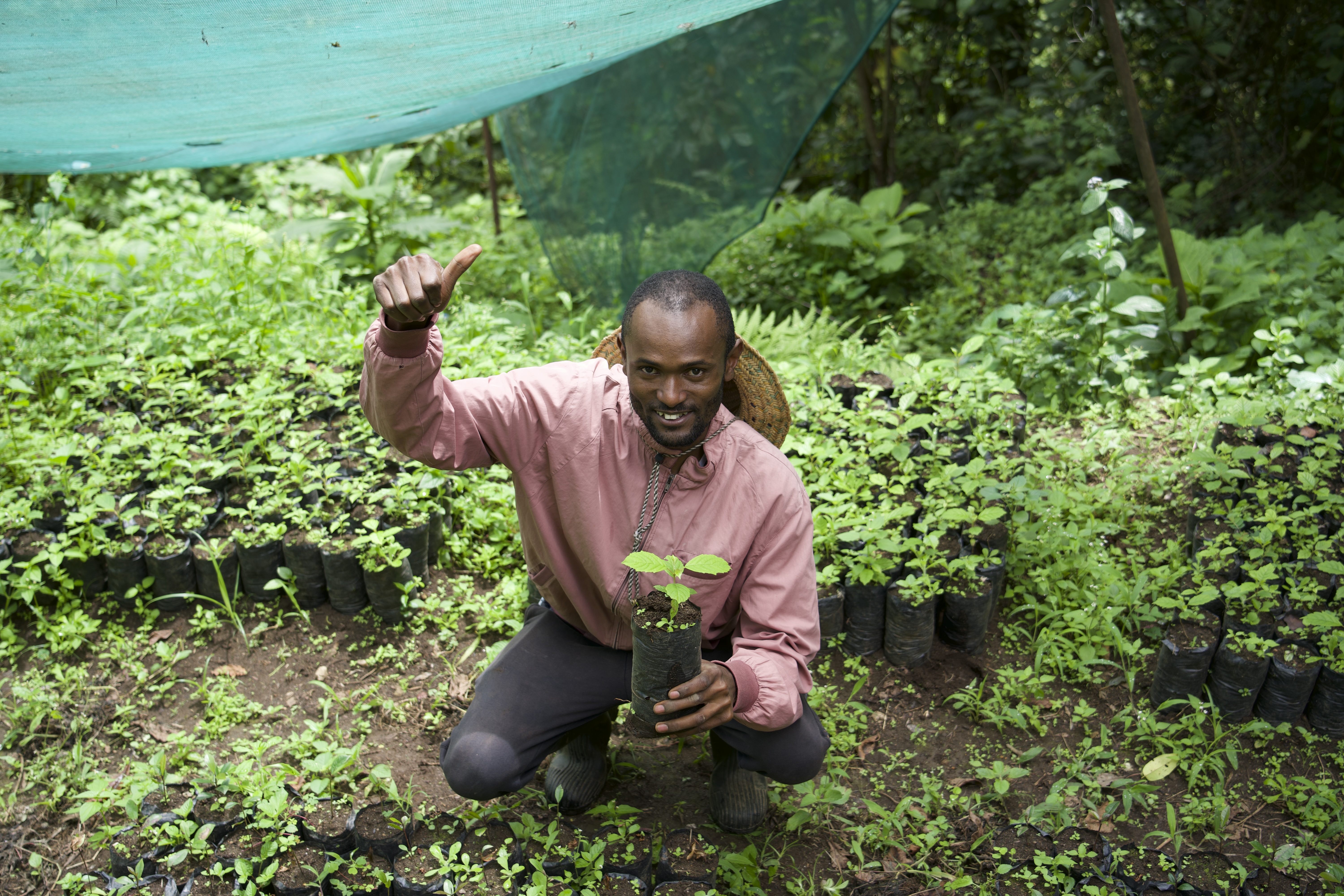
In the mist-shrouded hills of Taita Taveta County, Ernest Maghanga stands among saplings he helped plant in the scorched remnants of Vuria Forest—a landscape that nearly burned away forever. The forest that rises above the communities of Wundanyi Sub-County is far more than woodland; it is a water system, a sanctuary for endangered birds found nowhere else on Earth, and the foundation of survival for thousands of households across Mwanda Mgange Ward.
The dangers came swiftly. A devastating fire tore through part of Vuria Forest, the first such blaze in more than 30 years, fueled by prolonged drought and bone-dry vegetation. Climate change is intensifying longer dry seasons and rising temperatures across the region, threatening the fragile ecosystem and the more than 20 springs and streams that originate from the forest. The fire threatened the habitat of endangered species like the Taita apalis and Taita thrush—birds that exist nowhere else on Earth—while exposing the vulnerability of a landscape already under pressure from illegal logging and encroachment.
But what could have been a story of collapse became one of community resilience. Ernest Maghanga, now Chairperson of the Vuria Community Forest Association (CFA), mobilized neighboring communities to create emergency fire breaks and contain the flames before they reached deeper biodiversity zones. When the immediate crisis passed, restoration began in earnest. With support from the African Wildlife Foundation under a project funded by the Embassy of Sweden in Kenya, more than 100 community members joined Ernest in planting over 2,500 indigenous trees across the burned areas. The choice to restore with native species was deliberate: rebuilding habitat, restoring ecosystem functions, and strengthening resilience against future climate shocks.
What emerges from this effort is a model of how climate action works best: through partnership and deep community participation. The CFA has nearly doubled its membership from just over 200 members in 2024 to almost 400 today, with growing involvement from youth, women, elders, and people with disabilities. Training on gender equity and social inclusion, implemented through AWF and CIFOR-ICRAF under a UK PACT project, transformed the organization from the inside out, broadening participation in conservation and strengthening local governance.
The work now extends far beyond the burned forest. Across five zones, CFA members manage community and individual tree nurseries, supplying seedlings for restoration across the landscape. More than 150 members have been trained in agroforestry, integrating fruit trees, indigenous species, and selected exotic varieties into their farms. This approach simultaneously restores degraded land, improves household incomes and food security, and reduces pressure on the forest itself through alternative livelihoods and energy solutions.
For Ernest, the transformation reflects a deeper truth about conservation in the age of climate change: "This forest is the heart of our community. Restoring it means protecting our water, our biodiversity, and our future." What began as an emergency response to fire has become a blueprint for how communities facing ecological crisis can become architects of renewal—one sapling at a time.