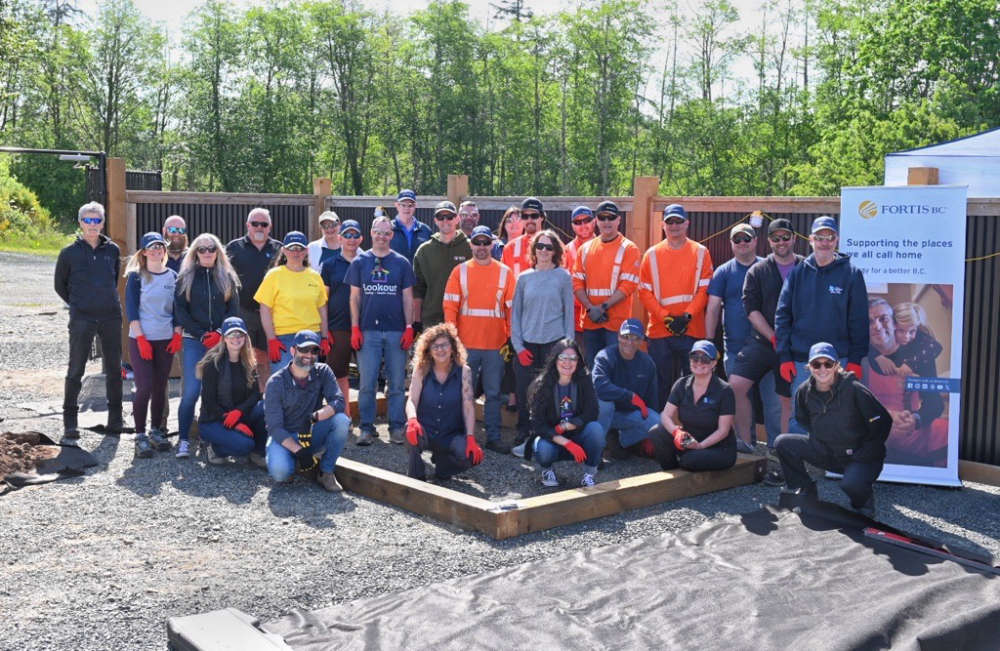
When residents at Homewood supportive housing in Campbell River step outside now, they'll find raised garden beds, a working greenhouse, and soil ready for seeds—a shared outdoor space built by volunteers who came together with a simple belief: that growing food together builds community. The 48-unit facility, which opened in November 2024 to house people transitioning from shelters or encampments, now has something many supportive housing sites lack: a place where residents can nurture plants, each other, and a stronger sense of belonging.
The garden exists because three organizations decided to bet on what happens when people experiencing homelessness are given the chance to tend growing things. FortisBC, the City of Campbell River, and Lookout Housing and Health Society partnered to make it real. FortisBC employees, city staff, Lookout team members, and residents themselves volunteered to install the greenhouse, build raised beds, prepare soil, and plant food crops—work that transformed a patch of land into what organizers describe as a space for food-based learning, mental wellness, and genuine connection.
It's easy to overlook the radical simplicity of a community garden at a supportive housing site. But consider what it offers: residents gain agency over something living, a daily reason to engage with neighbours, and tangible proof that their community is investing in their wellbeing. Lookout Housing and Health Society, which operates the initiative, sees the garden as a tool for purpose and belonging—two things that research consistently shows matter as much as shelter itself for people rebuilding their lives.
FortisBC funded the full project through its province-wide Community Giving Days program, which channels resources into local initiatives focused on safety, education, and community wellbeing. The decision to invest here, at Homewood specifically, suggests a recognition that supportive housing works best when it includes the ingredients of real living: space to grow, work to do, and people doing it together.
What makes this story worth watching is the partnership model itself. When a utility company, a city government, and a housing nonprofit align around a single resident-focused goal, barriers shrink. The greenhouse isn't fancy. The garden won't solve the region's housing crisis. But it demonstrates something Campbell River's city officials highlighted: partnerships can build supportive spaces and strengthen entire communities for the future. In a landscape where so many stories about homelessness focus on crisis and deficit, a community garden at a supportive housing site offers something different—a small, stubborn insistence that people experiencing homelessness deserve spaces to cultivate growth, literally and figuratively.
Homewood residents are now part of something tangible. They have soil under their fingernails, plants to water, a greenhouse to maintain, and neighbours to share the work with. That matters. It always has.