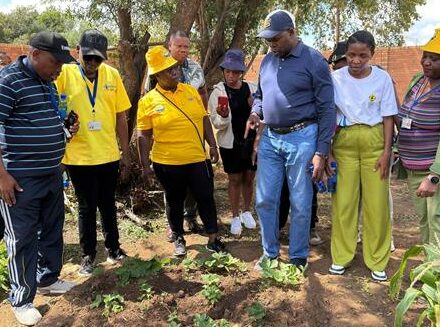
Across South Africa's West Rand, churches and local institutions are quietly becoming cornucopias—transforming empty plots into thriving vegetable gardens that feed hungry neighbours and restore a sense of dignity to families struggling with food insecurity.
The One Garden Initiative, launched by the Mogale City Business Committee and AMF: Green Church, represents a shift in how communities are tackling hunger. Rather than waiting for external aid, local stakeholders are partnering to establish gardens at churches and institutions, turning these spaces into centres of nourishment and practical learning. What began as a simple vegetable garden concept has blossomed into a broader mission to strengthen community resilience across the region.
Gideon Phiri, chairperson of the Mogale City Business Committee, articulated the initiative's vision clearly: churches and institutions should become "centres of hope, nourishment and productivity within their communities." The project moves beyond simply growing food. It weaves together nutrition education, skills training, and community partnership—addressing food security as a multifaceted problem that requires both immediate relief and long-term empowerment.
The initiative already demonstrates tangible impact. In Westonaria, the MCBC and AMF: Green Church launched the One Garden Initiative as a proof of concept. The success there prompted expansion into Kagiso, where organisers partnered with the Dr Martinez Ramiretz Clinic to harvest and distribute fresh vegetables to patients and nearby residents. These weren't mere food parcels—Phiri described the harvest as representing "health, dignity and community empowerment," acknowledging that food security extends beyond calories to encompass human worth and agency.
The timing of this initiative matters. As food prices continue rising and household budgets tighten across South Africa, community gardens offer a counterweight to economic pressure. They create space for families to improve their own nutrition while building connections with neighbours around a shared purpose. For vulnerable residents, the difference between a clinic visit without nutritional support and one paired with fresh vegetables can be transformative.
What distinguishes the One Garden Initiative is its explicit focus on sustainability and replicability. Organisers aren't simply handing out produce; they're teaching families practical gardening and sustainability skills, enabling communities to feed themselves. The long-term vision calls for expanding the network—encouraging more organisations, businesses, and community stakeholders to establish their own gardens and become part of a broader ecosystem of food security.
The West Rand communities participating in this initiative are demonstrating that food insecurity need not be a permanent condition. When churches pool resources with local committees, when clinics partner with gardeners, when neighbours learn to grow together, the results ripple outward. Fresh vegetables reach tables that might otherwise lack them. Skills pass from experienced gardeners to families seeking independence. Communities grow stronger.
As this initiative continues to expand beyond Westonaria and Kagiso, it offers a replicable model for other regions facing similar pressures. The lesson is simple but profound: sometimes the most powerful response to hunger is to plant something, nurture it together, and share the harvest.