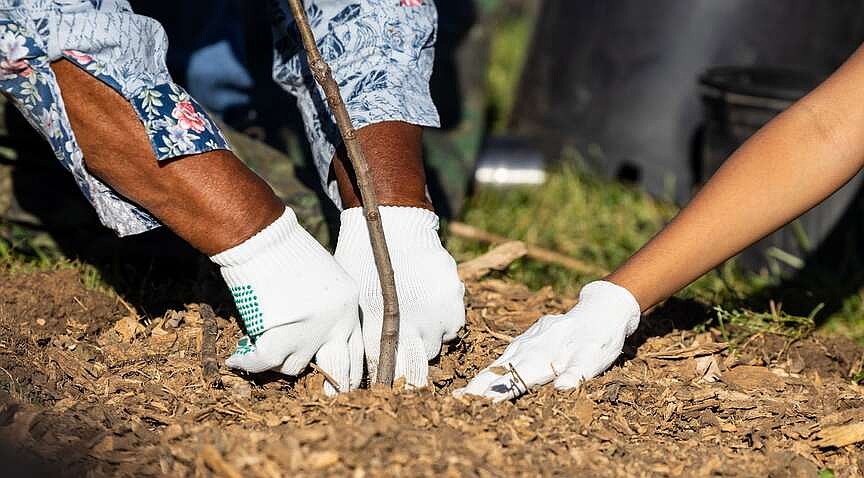
In Columbia, Missouri, Bill McKelvey watched community gardens transform vacant lots and churchyards into places where neighbors became stewards of shared land. The senior project coordinator at University of Missouri Extension knew something crucial: good intentions alone don't sustain gardens over time. So he wrote the Community Gardening Toolkit, a practical guide grounded in research and real-world experience that helps communities across Missouri move beyond startup enthusiasm to lasting impact.
"When shared land becomes a garden, it becomes a place where community can take root," said Tamra Reall, an MU Extension horticulture specialist. From rural towns to small cities and urban neighborhoods, community gardens are flourishing by pairing green space with shared purpose. They transform underused land into visible, cared-for places where people grow food, flowers and crops together—an approach that matters especially in communities where access to private growing space is limited. The toolkit provides a flexible framework that helps groups clarify expectations, make collaborative decisions and plan for sustainability in their own local context.
The gardens bring people together across ages, backgrounds and life experiences in ways that strengthen both individuals and neighborhoods. Children learn where food comes from while adults share knowledge gained over years of growing. Last year alone, more than 2,000 MU Extension Master Gardener volunteers contributed almost 150,000 hours of service valued at over $5 million, providing research-based information and helping gardeners solve problems throughout the growing season.
The social benefits run parallel to concrete gains in food security and health. Harvests are often shared among gardeners, exchanged with neighbors or donated to local food pantries, reducing barriers to healthy eating. "Every harvest reflects an investment in health, environment, and community resilience," Reall said. The physical activity of gardening itself improves health, while the fresh produce increases access to nutritious food—benefits that Jo Britt Rankin, an MU Extension professional in health and human sciences, emphasized extend beyond individual wellness. "Gardens provide opportunities for people to gather in their community while increasing their access to healthy food, participating in physical activity and spending time with family, friends and neighbors," Rankin said.
Community gardens also deliver measurable environmental gains. They improve soil health, increase biodiversity, reduce stormwater runoff and help moderate neighborhood temperatures, contributing to the kind of long-term community resilience that matters statewide. These environmental benefits compound the gardens' value in neighborhoods already facing environmental challenges.
"Community gardens demonstrate what is possible when shared land is paired with research-based guidance and strong local leadership," McKelvey said. "Communities across Missouri are growing much more than food. They are growing stronger, more connected places." The toolkit, available for free download at extension.missouri.edu/publications/mp906, reflects this broader vision—not gardens as isolated projects but as infrastructure for community participation, leadership and connection. Across Missouri, shared stewardship is taking root.