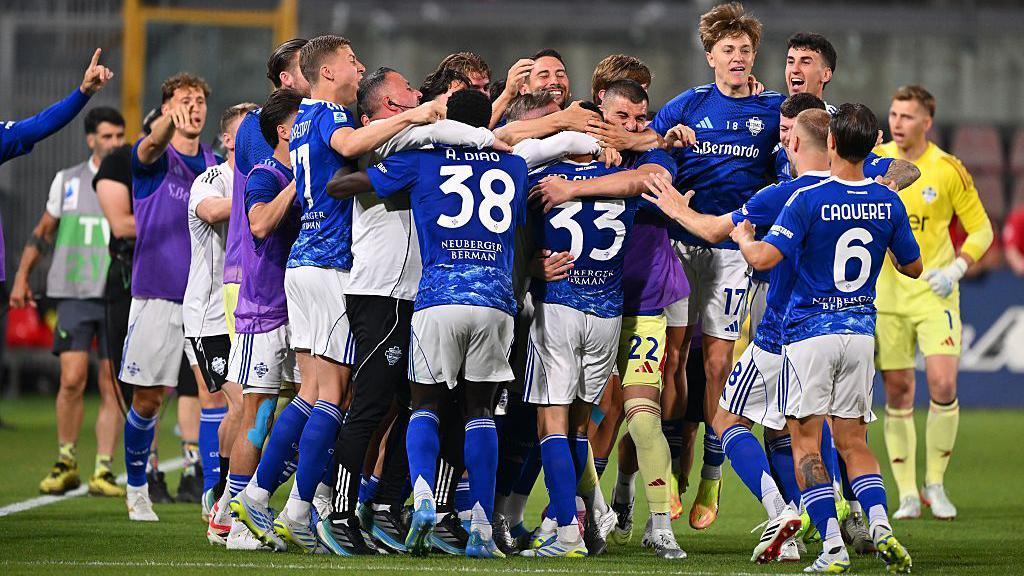
On the final day of Serie A's season, Cesc Fabregas guided Como to a 4-1 victory over Cremonese — a result that sent shockwaves through Italian football, qualifying his team for the Champions League for the first time in the club's 113-year history. The win wasn't just a triumph for a small-town club punching above its weight; it was a reckoning that knocked Europe's glamour franchises out of continental competition.
Como's achievement matters because it rewrites the script of Italian football hierarchy. This was supposed to be the season of traditional powers — AC Milan, Juventus, and Roma had long established themselves in Europe's premier competition. Yet on one April evening, a club in just their second season back in Italy's top flight climbed to fourth place and claimed a spot that had been reserved for the usual suspects.
The mathematics were tight going into the day. Como knew they needed to win and pray for fortune elsewhere. Jesus Rodriguez and Tasos Douvikas scored early to put them in command before Jamie Vardy was fouled in the penalty area, giving Federico Bonazzoli a chance to reduce the deficit. Then came the pivotal moment: a controversial penalty with 20 minutes remaining that triggered chaos. Cremonese midfielder Alberto Grassi was sent off for his protests, while substitutes Milan Djuric and David Okereke were also handed red cards as tensions boiled over. Lucas da Cunha added a fourth late on, sealing the historic achievement.
Elsewhere, the dominoes fell perfectly for Como's cause. Roma beat 10-man Hellas Verona to claim third place, while AC Milan — one of Europe's most decorated clubs with seven Champions League titles — lost 2-1 to Cagliari. That double blow meant Como leapfrogged Milan into the top four. The two victories for Roma and Como simultaneously eliminated Juventus, the nine-time Serie A champions who started the day in sixth place and needed a miracle. When Juventus drew 2-2 with Torino (despite Dusan Vlahovic giving them a two-goal lead), their fate was sealed. Next season, they'll play in the Europa League instead.
What makes Como's story remarkable, according to Fabregas himself, is the method and the personnel. The former Arsenal, Chelsea, and Barcelona midfielder, now 39, reflected on the achievement with evident pride: "It's up there with all my achievements for how it was done and with whom we did it, because we did it with very young players, almost all of them are under 23 years old." This wasn't a club built on vast spending or a parade of aging superstars; it was constructed from youth, ambition, and the guidance of a midfielder who had won it all.
Como's journey from Serie B obscurity to European football represents something increasingly rare in modern football: the unpredictable triumph, the moment when a smaller institution outthinks and outworks the establishment. The club returns to the Champions League for the first time, carrying with them the momentum of believers who proved that history can be rewritten in a single afternoon.