When you scroll through an app or ask a chatbot a question, your request zips to a giant building full of servers — a data center — that works hard to process it. Those servers get hot. Really hot. Keeping them cool can eat up to 40% of a data center's total energy use, a massive drain on power and money.
Now, researchers have found a way to cut that cooling bill dramatically by borrowing a trick from nature: storing cold underground.
A new study from the National Laboratory of the Rockies (NLR) shows that data centers could slash their annual electricity costs for cooling by 70% — saving roughly $20 million per year at a typical 1-gigawatt facility — by capturing cold air in winter or cool nights and stashing it deep underground. The stored chill sits in subsurface reservoirs or boreholes until summer, when it's released to cool servers without running energy-hungry chillers.
"It's a pressing issue," said Guangdong Zhu, a senior researcher at NLR's Center for Energy Conversion and Storage Systems. "Providing alternative methods to maintain cooling systems can benefit everyone from building operators to consumers."
The team modeled cold underground thermal energy storage, or cold UTES, at 12 real data centers in two different climates: Arizona and Virginia. Working with partners at Lawrence Berkeley National Laboratory, the University of Chicago, and Princeton University, they found that shifting cooling to off-peak hours like nights could dramatically lower energy bills while putting less strain on the power grid.
Reducing utility costs is only part of the picture. By relying on stored cold instead of giant mechanical chillers, facilities could also avoid buying and maintaining expensive equipment. The researchers estimated cold UTES could cut building grid infrastructure and fuel costs by $90 million to $390 million over time for a 1-gigawatt hyperscaler — industry speak for the massive data centers that power cloud computing and AI.
"This included an NLR-developed techno-economic model to simulate the annual performance of site cooling with and without cold UTES," said Josh McTigue, an NLR senior researcher who led the technical work. "With this, we were able to assess the energy consumption and cost of cooling over its lifetime."
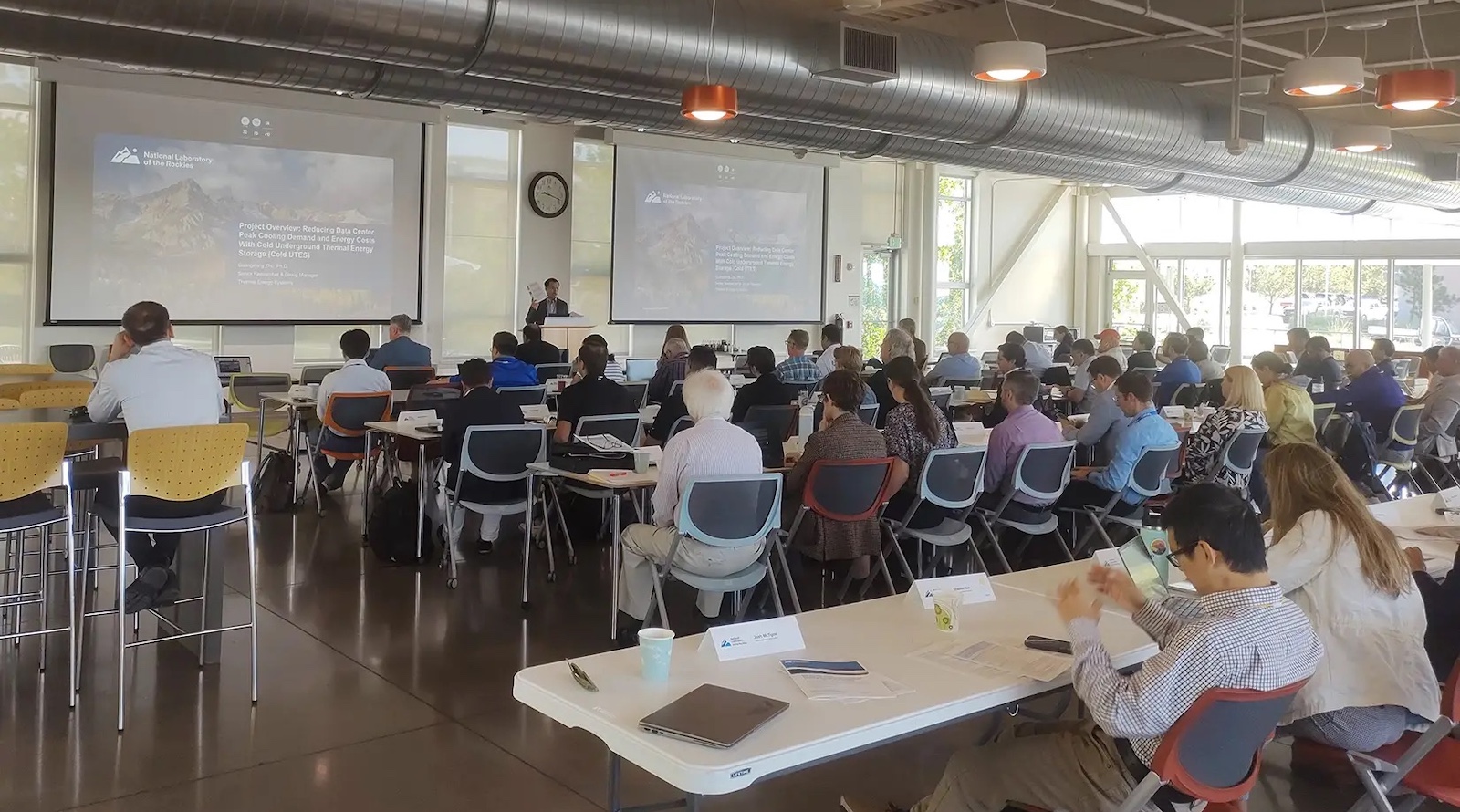
The findings were shared at a workshop in June 2026 at NLR's campus in Golden, Colorado, drawing more than 100 researchers, industry partners, and developers. The group discussed moving from analysis to real-world pilot projects, hoping to prove the technology can work at commercial scale.
For data center operators racing to build more computing power for AI and cloud services, cooling costs have become a major headache. Cold underground storage offers a way to keep servers running without guzzling electricity — and without guzzling water, another scarce resource. The technology is still being tested, but the early numbers suggest it could be a game-changer for an industry that runs around the clock.