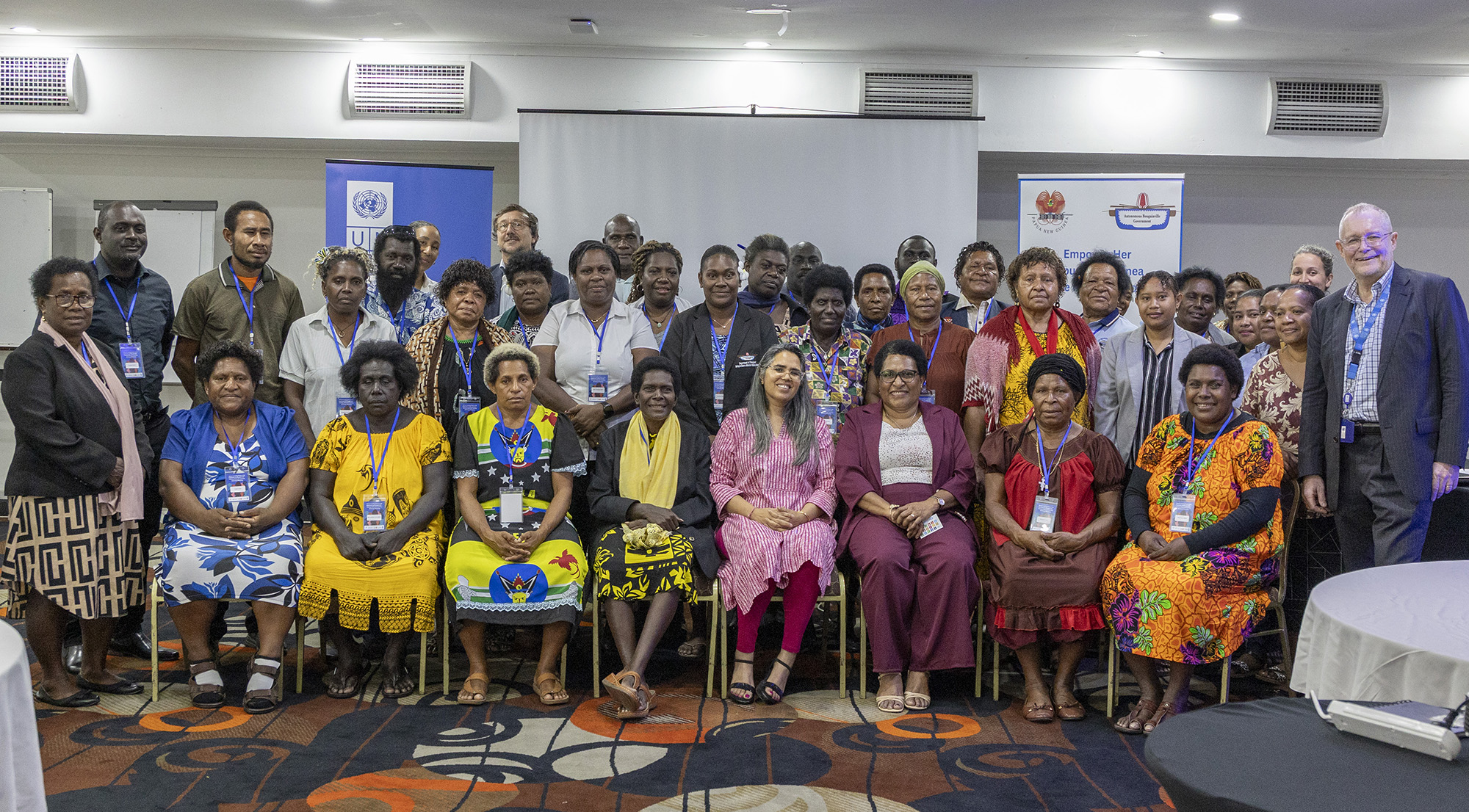
Rose Pihei, Deputy Speaker of the Bougainville House of Representatives, still remembers the quiet courage of a woman in a remote village who stood between two warring clans with nothing but a Bible and a plea for peace. That same spirit filled the rooms of a Port Moresby conference hall last week, where over 30 women peacebuilders from Bougainville and Papua New Guinea’s Highlands gathered for a transformative three-day workshop. Organized under the ‘Empower Her – Papua New Guinea Peace Initiative’ and funded by the UN Peacebuilding Fund, the event created a rare and vital space for women to exchange strategies, deepen their knowledge, and strengthen their collective role in preventing violence and building lasting peace.
In a country where women are disproportionately affected by conflict, electoral violence, and gender-based violence, their formal inclusion in peace processes has long been limited. Yet, as Ms. Shalini Bahuguna, United Nations Resident Coordinator in Papua New Guinea, emphasized in her opening remarks, women are not just victims—they are leaders, mediators, and decision-makers. The workshop, jointly implemented by UNDP, UN Women, OHCHR, and UNFPA, was designed to affirm that truth. By grounding discussions in the Women, Peace and Security (WPS) Agenda, participants explored practical tools for conflict prevention, mediation, and reconciliation—tools they’ve often honed through lived experience rather than formal training.
Hon. Rose Pihei, also the Women’s Member for Bougainville South, reflected on this reality: many women begin peace work without official support or training, driven solely by love for their communities. Her words resonated through the room—"It only takes a heart to start making a difference." Over three days, women shared stories from the frontlines: mediating land disputes, de-escalating youth violence, and rebuilding trust after years of tension. The workshop also advanced UNDP’s Infrastructures for Peace framework, weaving stronger connections between grassroots leaders, civil society, and formal institutions.
The impact of such collaboration is measurable not just in policy, but in lives changed. When women are equipped and recognized as peace leaders, early warnings become early actions, and local solutions take root. This initiative, backed by the UN Peacebuilding Fund and national partners, is helping to shift the narrative—from exclusion to empowerment, from reaction to prevention.
As the women left Port Moresby, notebooks full and networks expanded, they carried more than new skills. They carried a shared conviction: that peace in Papua New Guinea will not be imposed from above, but built from the ground up—one courageous conversation at a time.