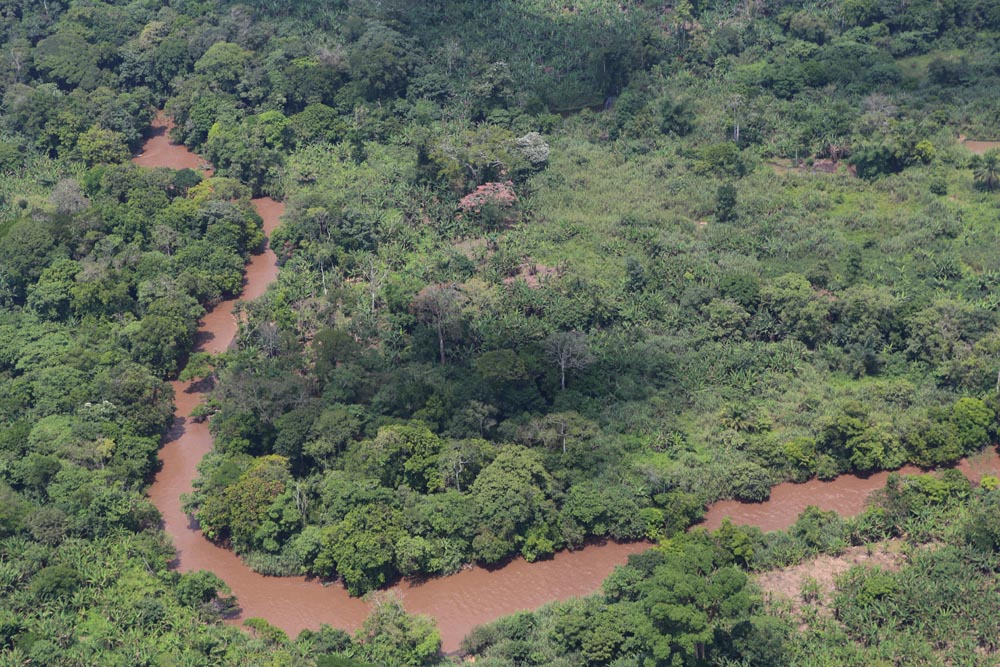
Gangala Yafali Mangusa Jr. walks the forest trails of Bamasobha, the land his ancestors were forced to leave behind in the 1970s when Maiko National Park was established in the Democratic Republic of Congo. Today, he leads the 29,000-hectare Bamasobha Local Community Forest Concession (CFCL), where patrols under his command monitor illegal hunting, logging, and mining—activities that once threatened both the forest and the people who depend on it. This reversal of history is more than symbolic; it’s a quiet revolution in conservation, one that’s restoring both forest cover and trust. For decades, communities like Mangusa Jr.’s were excluded from decisions about the land they had stewarded for generations, often facing violent crackdowns by park rangers from the Congolese Institute for Nature Conservation (ICCN). “At one point, park rangers came and set up camp, forbidding people from entering the forest and eating meat, even though these Indigenous communities had been living off meat and fruit for generations,” he recalls. The resentment festered, fueling conflict and displacement.
Now, with support from the Peasants’ Association for the Rehabilitation and Protection of Pygmies (PREPPYG), the Bamasobha community has drafted its own management plan—one that carves the forest into production and conservation zones, balancing ecological protection with livelihood needs. The results are striking: satellite data from Global Forest Watch shows deforestation in the concession plummeted from 940 hectares in 2024 to just 120 hectares in 2025. This success is part of a broader shift in the DRC, where community-led conservation is gaining ground as a viable alternative to top-down protected areas. Between Kahuzi-Biega National Park and Itombwe Nature Reserve, the NGO Strong Roots Congo is helping to establish a 1-million-hectare biodiversity corridor composed of dozens of CFCLs, empowering local communities to manage their ancestral forests.
Olivier Ndoole Bahemuke, a forest governance analyst, sees this model as transformative. When communities are given authority over their lands, he says, conservation becomes not an imposition but a continuation of tradition. Yet challenges persist. Armed groups in the region have displaced community members, and outsiders sometimes infiltrate the conservation zones to hunt. Still, the momentum is undeniable. The Bamasobha CFCL is proof that healing historical wounds can yield tangible environmental gains. As more communities reclaim stewardship, the forests are responding—not just with reduced tree loss, but with renewed resilience. This isn’t just conservation with people; it’s conservation by people, rooted in memory, justice, and a deep bond with the land.