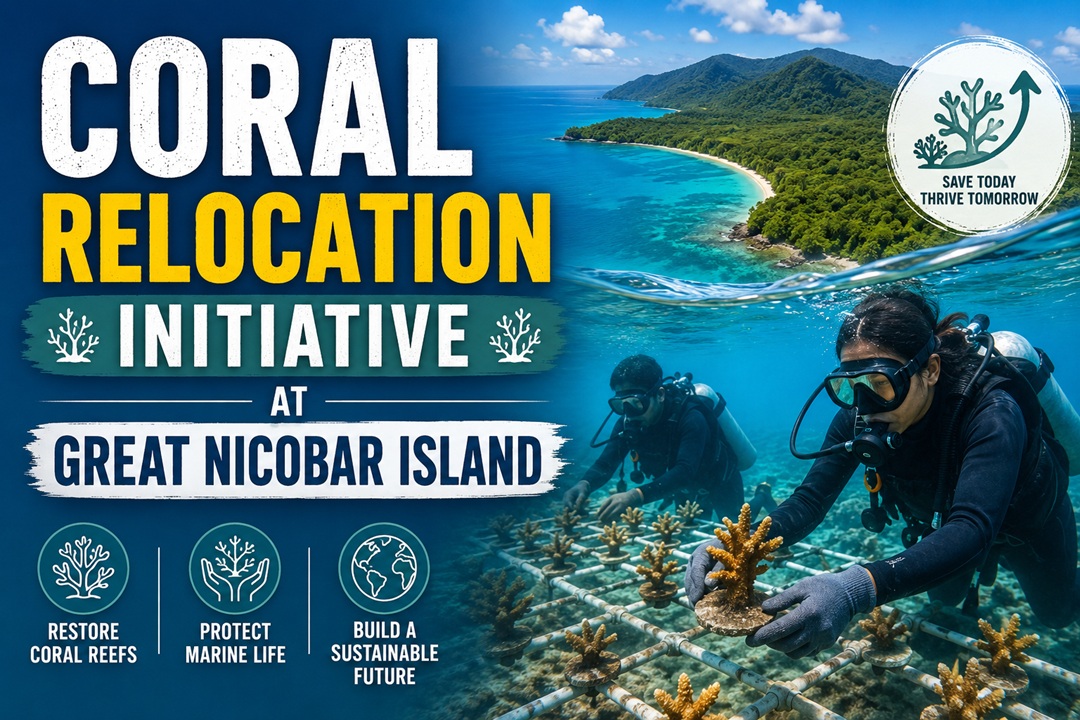
Sixteen thousand corals, each a fragile constellation of living polyps, have found a new home off the western coast of Great Nicobar Island, plucked from the path of progress in Galathea Bay to give them a fighting chance at survival. This quiet but monumental act of ecological triage is part of a broader effort to preserve marine life in the face of a proposed international transshipment port, a development poised to reshape the island’s coastline. Led by the Zoological Survey of India (ZSI), the relocation isn’t just about moving coral—it’s about honoring a legal and moral commitment to protect one of Earth’s most biodiverse yet vulnerable ecosystems.
Coral reefs, though covering less than 1% of the ocean floor, sustain nearly a quarter of all marine species. They are the rainforests of the sea, ancient structures built over millennia by tiny polyps that secrete calcium carbonate into intricate, life-supporting lattices. In India, they’re legally protected under Schedule I of the Wildlife (Protection) Act, 1972—affording them the same status as tigers and elephants. Yet, development pressures often place them in harm’s way. The relocation from Galathea Bay is a proactive response, ensuring that as construction advances, biodiversity doesn’t have to retreat.
Four carefully selected sites along Great Nicobar’s western shore now host the transplanted corals, chosen for their similar water depth, sunlight exposure, temperature, and current patterns—conditions critical to coral survival. The effort also includes giant clams and is guided by strict compliance with Environmental Clearance conditions and Coastal Regulation Zone norms. To ensure accountability, three independent monitoring committees have been established: the Biodiversity Conservation Committee, the Environmental Pollution Monitoring Committee, and the Tribal Welfare and Community Affairs Committee. These bodies will track not only the corals but also the fate of other threatened species like the Nicobar Megapode, Leatherback Turtle, and Robber Crab.
This isn’t India’s first coral rescue. The Gulf of Kachchh project has already demonstrated that relocation can work, with over 16,000 corals successfully restored. In the Andamans, coral fragments have been grafted onto artificial reefs since 2017, while in Sindhudurg, concrete frames seeded with coral are slowly becoming living reefs. These precedents offer hope, but success hinges on continuous scientific monitoring—tracking growth, survival rates, and adaptation over time.
The stakes are high, but so is the potential. Coral reefs absorb up to 97% of wave energy, shielding coastlines from cyclones and storm surges. By moving these corals, India isn’t just complying with regulations—it’s investing in resilience. As the world grapples with climate change and habitat loss, efforts like this prove that development and conservation don’t have to be mutually exclusive. They can, and must, grow side by side.