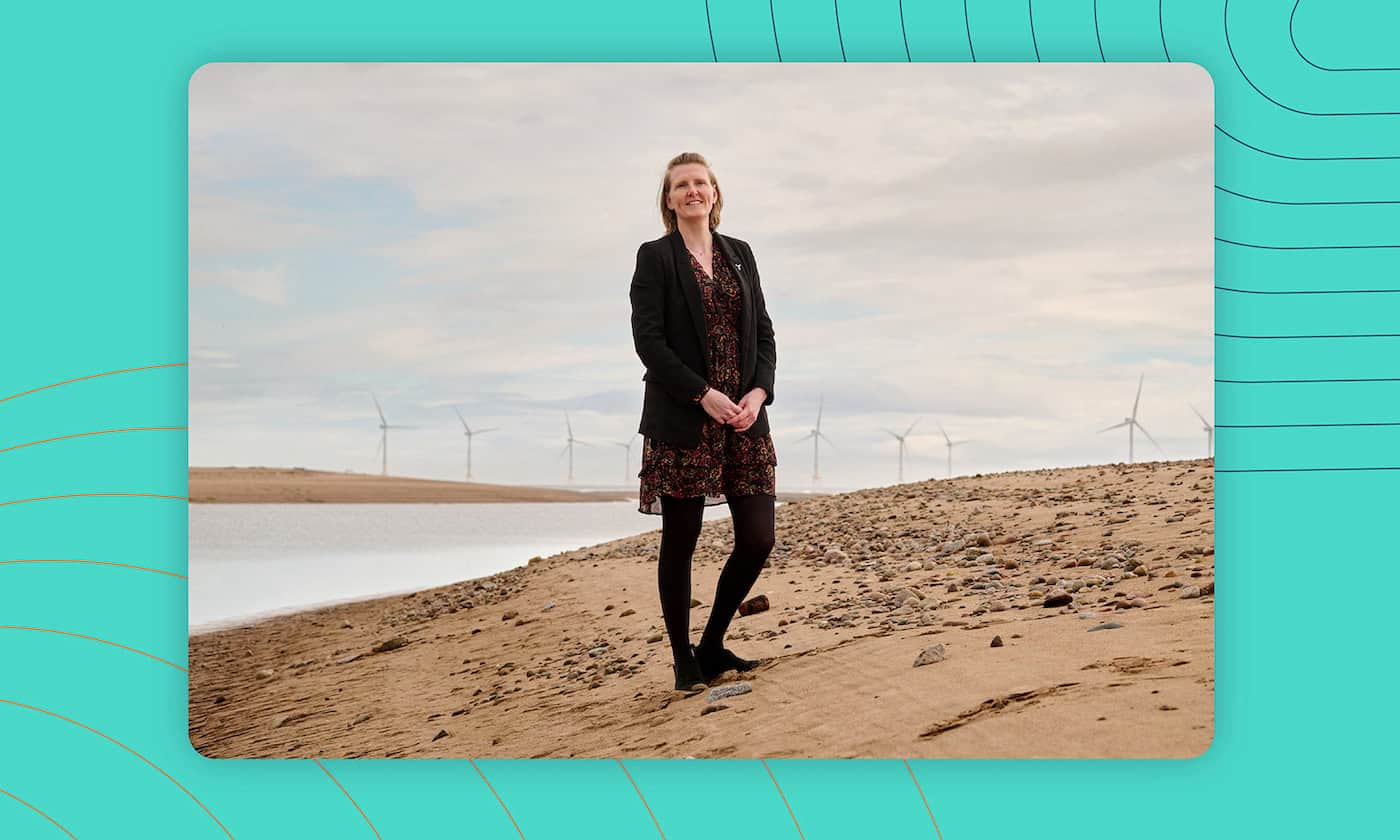
Lynne McIntosh-Grieve, a six-foot-tall blonde Scottish engineer, once stood out like a sore thumb in a room full of candidates at Rolls-Royce's Derby assessment centre, surrounded by confident graduates from Oxford and Cambridge. Today, she stands on the Aberdeenshire coast as head of programme delivery at the Offshore Wind Growth Partnership, helping shape Britain's renewable energy future—a role that would have seemed unimaginable to the deindustrialised town of Clydebank where she grew up.
Her journey reveals something vital about clean energy innovation: it's being powered not by a single pipeline of specialists, but by problem-solvers and practical thinkers trained in aerospace, manufacturing, and engineering across industries. The UK faces a massive staffing challenge ahead. According to the National Grid, by 2050 the workforce needed to deliver net zero will number around 400,000 people, of which 260,000 will be entirely new roles. That's a staggering skill gap—one that workers like McIntosh-Grieve, bringing cross-sector expertise, are helping to bridge.
McIntosh-Grieve's path shows how this transition works in practice. Born in Clydebank in the late 1980s, when the once-thriving industrial town that built Singer sewing machines and John Brown shipyards was deindustrialising rapidly, she found opportunity through exceptional teachers who pushed their pupils to aim high. She won a place at the University of Strathclyde for a master's in mechanical engineering, but academic life felt too removed from the real world. When she spotted a flyer for a Rolls-Royce summer placement in the university common room, she seized it—despite feeling utterly out of place among the polished candidates around her. "I spoke and sounded different to everyone else," she recalls. Yet her obvious practical skills and infectious enthusiasm secured the placement. After graduating with a first-class degree, she joined Rolls-Royce in 2010 as a graduate trainee, working on compressor airfoils—critical components of gas turbine engines—and quickly becoming known as a "fixer" who could walk into struggling supply-chain businesses, understand their processes, and problem-solve her way forward. The work even took her to India, where her appearance as a young Scottish woman in a factory environment proved eye-opening for everyone involved.
By 2015, sensing the company's direction shifting after redundancies rippled through, McIntosh-Grieve moved to the University of Strathclyde's Advanced Forming Research Centre, part of the High Value Manufacturing Catapult. This government-backed initiative, part of Innovate UK's nine catapults nationwide, provides cutting-edge R&D facilities designed to help British business recover its innovative edge. The work involved hot metal forging—"lots of bashing big bits of metal"—with applications spanning aerospace, civil nuclear power, and medical technologies. Within a month, she was promoted to team lead, managing people far more experienced than herself, another steep learning curve that built her leadership alongside her technical expertise.
What McIntosh-Grieve's story demonstrates is that the renewable energy sector isn't just absorbing workers from other fields—it's transforming them into leaders who can translate the problem-solving instincts and sophisticated manufacturing knowledge from aerospace and other heavy industries into clean energy innovation. As the UK races toward net zero, these cross-industry thinkers aren't gap-fillers: they're the architects of the transition itself.