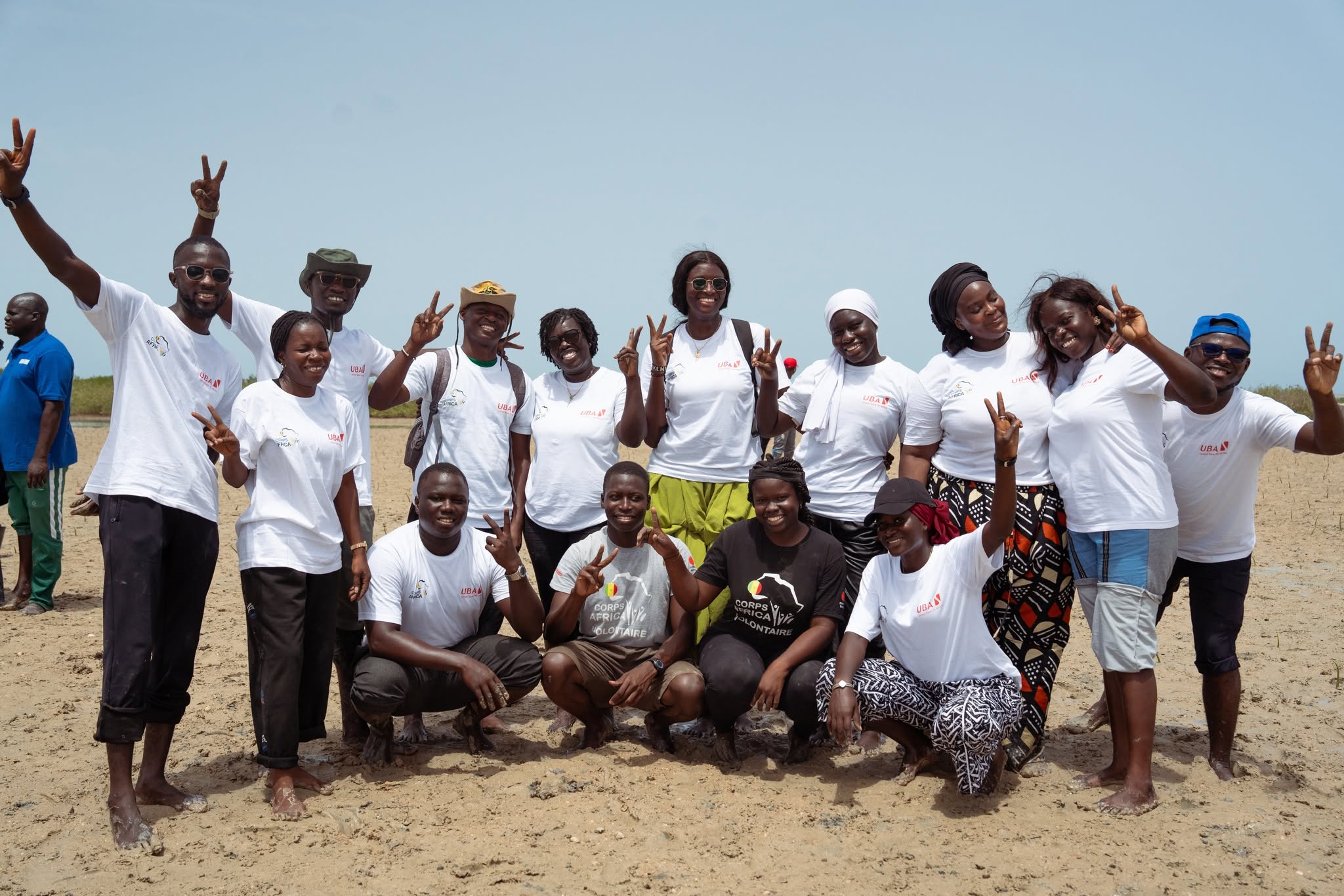
Sarata KONE-THIAM, Regional CEO West Africa at UBA Group, waded into the muddy shoreline of Joal-Fadiouth with a young mangrove sapling in hand, joining a growing line of volunteers planting hope one tree at a time. In a single day of collective action, more than 2,000 mangrove trees took root across one hectare of degraded coastal land in this historic Senegalese commune, reigniting a vital ecosystem under threat from rising seas and erosion. The effort, led by CorpsAfrica/Senegal in partnership with UBA Sénégal and local organization AGIRE, wasn’t just about reforestation—it was a declaration of resilience from a community on the frontlines of climate change.
Mangroves are nature’s frontline defense. In Joal-Fadiouth, where saltwater creeps into farmland and tides gnaw at the edges of homes, these dense coastal forests serve as natural barriers against flooding, absorb vast amounts of carbon, and shelter fish, crabs, and birds that sustain local livelihoods. Their loss has been devastating, but this restoration project is reversing the trend through community-led action. With climate impacts intensifying across West Africa, initiatives like this offer a scalable model of adaptation that centers local knowledge and youth leadership.
The planting event, held during Environment Month under the 2026 global theme “Now for Climate Change,” brought together CorpsAfrica Volunteers, alumni, community members, and corporate partners in a powerful display of shared responsibility. These volunteers—many of them young Senegalese leaders—are at the heart of what makes the project transformative. As part of the Year of the Volunteer, their involvement underscores a growing truth: sustainable change doesn’t come from distant institutions alone, but from people rooted in the places they serve. By working side by side with fishers, farmers, and local organizers, they’re proving that climate resilience is built locally.
Beyond the saplings now swaying in the coastal breeze, the project planted awareness. Workshops and community dialogues accompanied the planting, deepening understanding of how mangroves protect coastlines, sequester carbon, and support food security. This dual focus—on ecological restoration and education—ensures that the impact will endure long after the event ends. With support from UBA Sénégal and AGIRE, the initiative also strengthened local capacity to monitor and maintain the restored area, fostering ownership that will sustain the forest for generations.
As Senegal faces increasing pressure from coastal erosion and salinization, efforts like this one in Joal-Fadiouth offer a blueprint for action that is both grounded and scalable. The mangroves planted today will grow into a living shield—protecting land, capturing carbon, and empowering communities. And as more partners step forward, the vision of a greener, more resilient coast moves from possibility to reality.