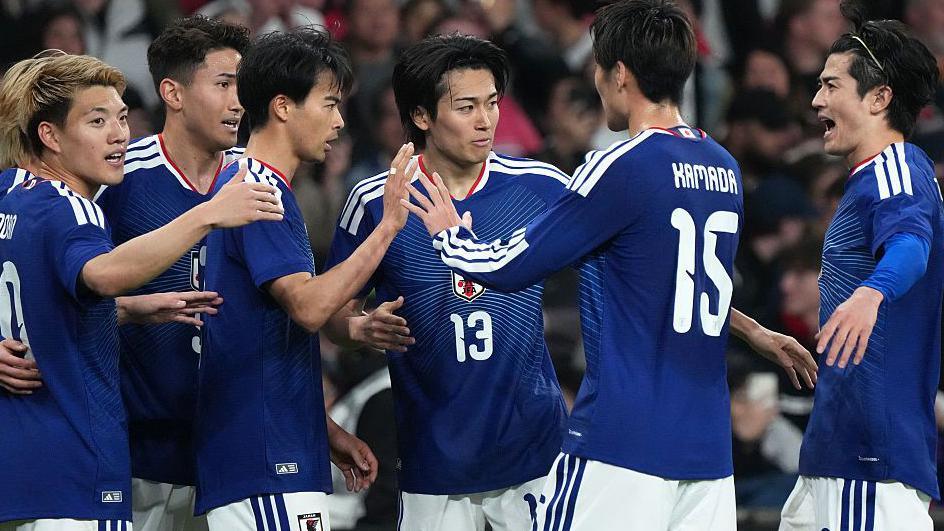
When Japan's Daichi Kamada and Ao Tanaka take the field against the Netherlands on Sunday night, they will carry with them something the Samurai Blue have never quite achieved: a genuine shot at a World Cup quarter-final. Four years of preparation, recent victories over Germany, England, and Brazil, and a squad brimming with European experience have combined to create an unexpected moment of possibility for a nation that has reached the knockout stage four times but never advanced beyond the round of 16.
The 2022 World Cup in Qatar left Japan with familiar heartbreak. Despite topping their group with wins over Germany and Spain—a result that stunned the football world—they fell to Croatia on penalties in the round of 16. This time feels different. Manager Hajime Moriyasu has assembled a 26-player squad that represents an unprecedented blend of quality and seasoning, with 19 players now entering their second World Cup after gaining crucial experience in Qatar. "For me, reaching the quarter-finals—a stage we've never reached or even experienced before—is the main goal," said former Southampton defender Maya Yoshida, 37, who captained Japan in 2022 and has travelled to North America as a non-playing support player.
What makes Japan's position so intriguing this time is the sheer number of their players competing in Europe's elite competitions week in and week out. Kamada plies his trade at Crystal Palace while Tanaka plays for Leeds United, but the deeper truth is systemic: Japanese football has built an infrastructure that feeds talent into the continent's top leagues at a rate unimaginable two decades ago. Yoshida himself highlighted this generational shift, noting that players like Shunsuke Nakamura and Hidetoshi Nakata opened the door in earlier years, and "now the door is even wider." That daily exposure to world-class opposition translates directly onto the international stage.
The numbers back up the confidence. Japan enters the tournament unbeaten in their last nine matches against European opposition—a streak that includes wins over two of Europe's highest-ranked nations in England and Germany, alongside a victory over Brazil. In qualifying for the 2026 World Cup, they secured their spot with an "almost perfect" campaign and became the first non-host nation to book their place in the finals. Manager Moriyasu has made no secret of his ambitions, telling World Soccer Magazine that his goal is to lead Japan "to be one of the best of the best" and that winning the World Cup remains firmly in the squad's sights.
Grouped with the Netherlands, Sweden, and Tunisia, Japan face a path that could reward their preparation and poise. The expanded 48-team format means more dark horses than ever before have a realistic shot at deep runs, but few teams combine Japan's recent form, European seasoning, and psychological fortitude quite as effectively. Former England striker Chris Sutton, who correctly predicted Japan's shock win over Germany in 2022, told BBC Sport that the Samurai Blue "have got some excellent technical players and will be dangerous, whoever they play."
For a nation that has knocked on the door four times without ever entering, this World Cup feels like something more than false hope. It feels like readiness.