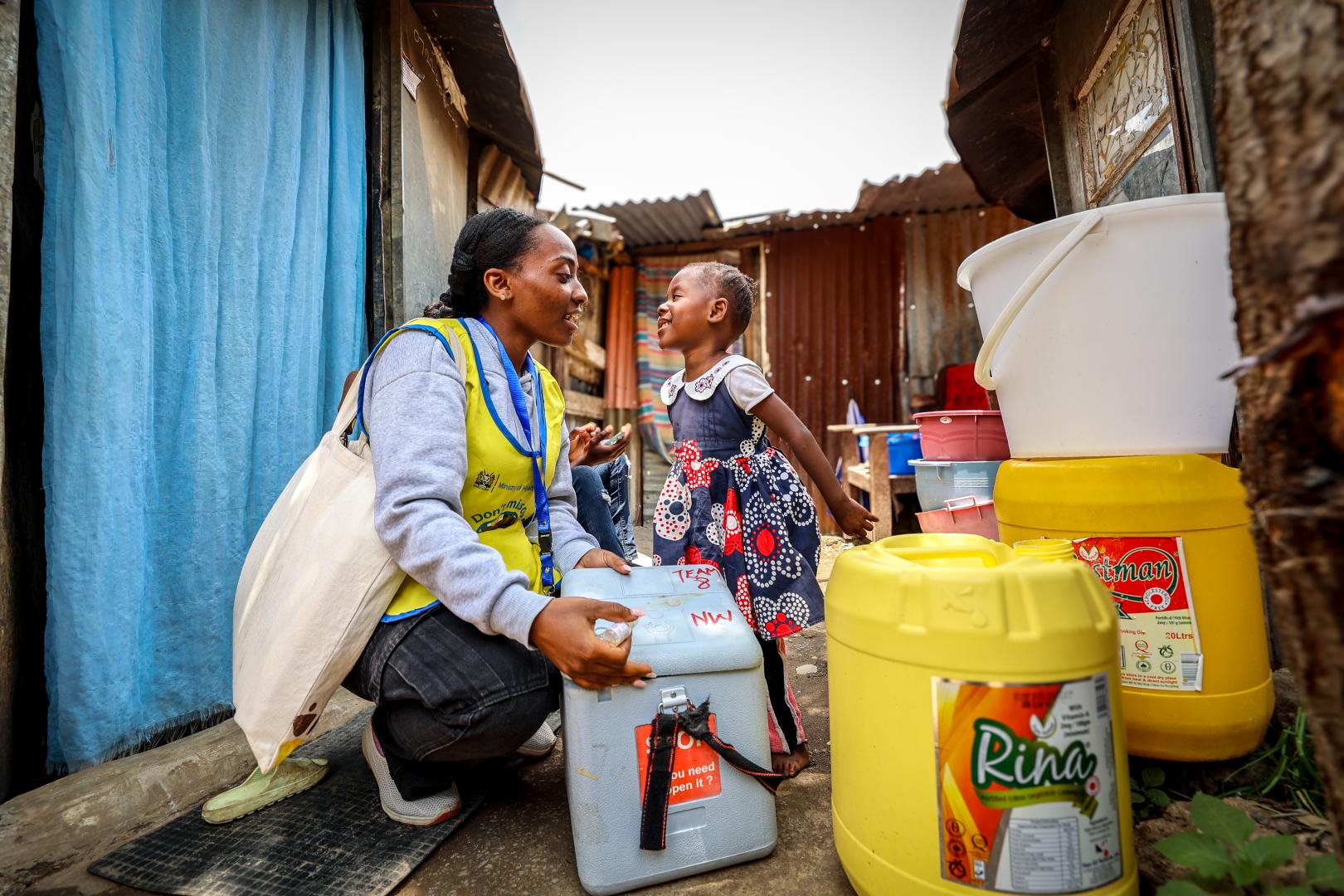
In a classroom-turned-vaccination-post in northern Kenya, a health worker gently lifts a child’s sleeve, preparing to administer a polio vaccine—part of a quiet but determined campaign that has already protected 6.5 million children across Kenya and Uganda since 2024. This moment, repeated countless times across borders, reflects a deeper resolve now echoing through government halls in Geneva, where health ministers from Djibouti, Ethiopia, Kenya, Somalia, South Sudan, and Yemen gathered on 20 May 2026 to reaffirm their shared mission: ending variant poliovirus transmission by 2027. Convened on the sidelines of the Seventy-ninth World Health Assembly and co-led by WHO Africa and Eastern Mediterranean offices, the Interministerial Meeting on Polio in the Horn of Africa and Yemen spotlighted both the fragility and resilience of eradication efforts in one of the world’s most complex health landscapes.
The region faces steep challenges—porous borders, humanitarian crises, insecurity, and persistent immunity gaps fuel the spread of circulating variant poliovirus (cVDPV). In Somalia, a cVDPV2 outbreak has lingered since 2017, while Yemen has seen 452 children paralyzed since 2021, mostly in the war-affected northern governorates. Yet, amid these struggles, progress is measurable and hard-won. Kenya has gone polio-free since July 2024. Ethiopia reported a 98% drop in cVDPV1 and cVDPV2 detections in 2025. Djibouti has recorded no variant poliovirus cases since May 2025. These gains were cemented by synchronized campaigns, like the one launched by Ethiopia and South Sudan after cVDPV1 surfaced near their shared border—proof that coordination can outpace contagion.
"Polio eradication remains our highest priority," declared Somalia’s Health Minister, H.E. Ali Haji Adam, underscoring efforts to reach zero-dose children and improve access to remote communities. Ethiopia’s Minister of Health, H.E. Mekdes Daba, echoed the sentiment, praising ground-level collaboration with partners like Rotary, whose volunteers continue to support vaccination efforts despite risks. The WHO Regional Director for Africa, Dr. Mohamed Janabi, issued a sobering reminder: "At a time of competing health emergencies and financial pressures, we cannot lose sight of what is at stake: protecting every child." With global polio funding declining, ministers called for increased domestic investment and sustained political will to close operational gaps.
The road ahead remains narrow. Success hinges not just on vaccines, but on trust, access, and unity across borders where children move freely but disease does not discriminate. Yet, as surveillance strengthens and campaigns align, the vision of a polio-free Horn of Africa and Yemen is no longer a distant dream—but a goal within reach, one child, one border, one dose at a time.