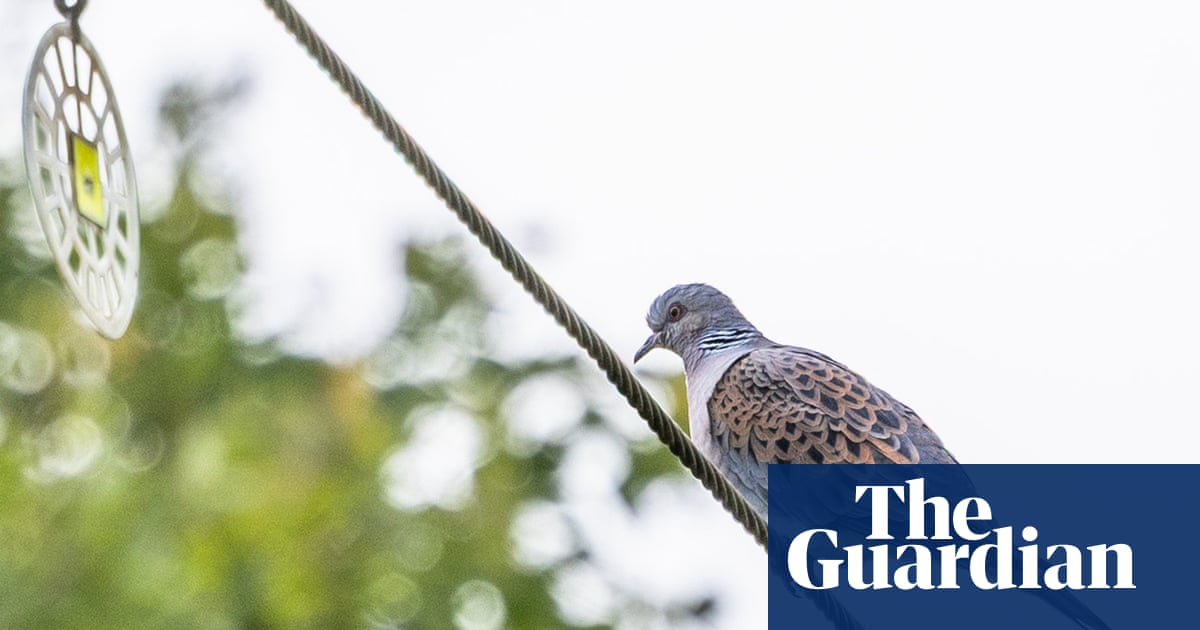
A single turtle dove perches on a telegraph wire at the Maxey Cut in Cambridgeshire, its rust-red feathers still marked with the dust of a 3,000-mile migration from west Africa—a journey that only weeks ago saw thirty of its kind resting on wires in Crete before the final, treacherous stretch across mainland Europe. This weary traveller has beaten the odds that fell on so many before it: the hunter's gun, the storms, the vast empty stretches where a small bird can simply disappear. Its arrival matters more than a singular sighting might suggest, because it represents something quietly extraordinary happening in the English Midlands.
The Maxey Cut itself is a testament to restoration and second chances. Built seventy years ago as a flood-relief channel to protect fen-edge towns like West Deeping and Deeping St James, this waterway was designed to serve a purely functional purpose—holding back winter water that might otherwise drown the lowlands. But the land through which it runs had been reshaped by gravel quarrying, and what emerged from careful restoration was something far richer than engineering specs: a patchwork of flowery grassland, willow, reedbeds and open water that has become a haven for wildlife. A new interpretive trail opened here earlier this month, inviting anyone who walks the Maxey Cut to encounter what this fen-edge landscape holds.
For the turtle dove, this restored habitat means survival. The species is critically endangered in the UK, with populations that have plummeted by about 99% since the 1960s—a staggering collapse that makes each sighting feel precious. Yet the Maxey Cut still offers what these birds need to breed. A supplementary feeding scheme, supported by Operation Turtle Dove and administered locally by the Langdyke Countryside Trust, is actively improving breeding success for the species, turning habitat into genuine possibility. That low, tender purring sound that drew the diarist here—almost lost in the greater chorus of sedge warblers, willow warblers, and Cetti's warblers—is the sound of a critically endangered species finding foothold in a landscape built for it.
The benefits ripple far beyond one bird or even one species. Sensitive management of the river by the Environment Agency, creating pools, riffles and meanders while removing obstacles to fish movement, has also helped other threatened species flourish, including sea trout and common eel. This is restoration that works across scales and species, where one act of landscape healing creates conditions for many.
The turtle dove that rests now on a telegraph wire at the Maxey Cut—with its neat black-and-white collar and travel-worn feathers—carries a story that extends far beyond Cambridgeshire. It escaped the hunter's gun. It crossed a continent. It found a landscape that had been restored precisely for birds like itself. And in finding it, we are reminded that even in the face of a 99% population collapse, even after such catastrophic loss, recovery remains possible where humans choose to make space for it.