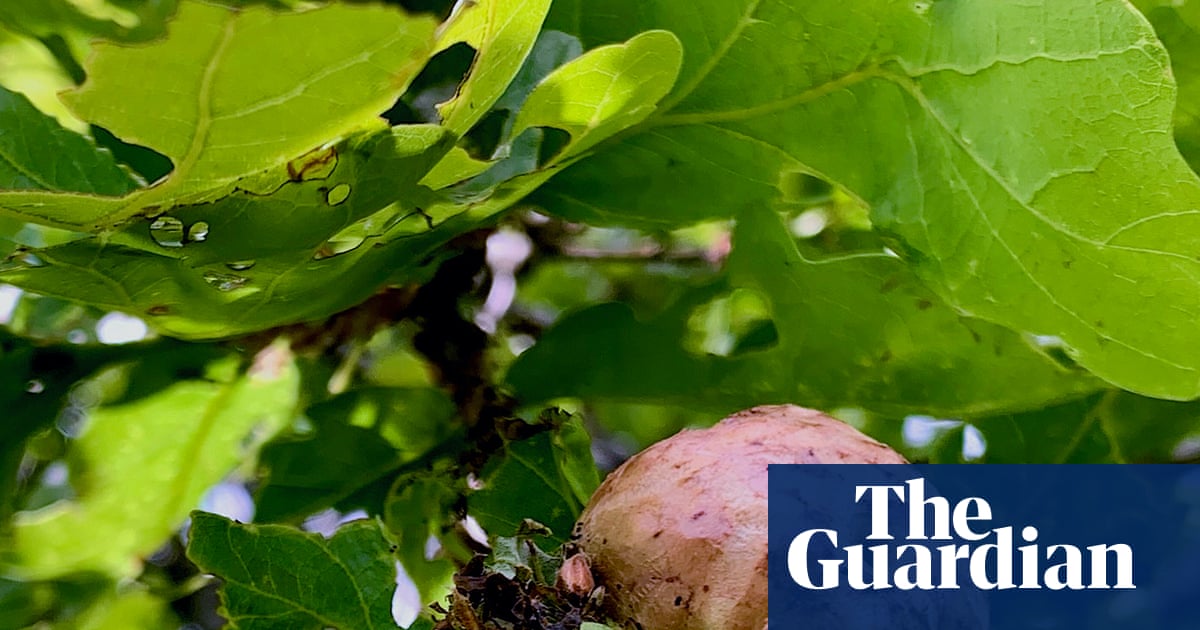
On May 29th, 1660, King Charles II escaped from parliamentarians by hiding in an oak tree at Boscobel in Shropshire—a moment of refuge that became so memorable it inspired a public holiday, decreed by the restored monarch himself. But the real hidden lives at Boscobel are far stranger than any royal tale: they exist inside oak apples, the bumpy, apple-like galls that swell from the tree's leaves and roots, teeming with a bustling world of wasps, fungi, and parasites that few people ever notice.
Oak apples are not fruit at all, but rather elaborate structures built by the tree itself—a defence-like reaction triggered by a single act of biological invasion. A month ago, wingless female oak apple gall wasps, Biorhiza pallida, burrowed up from underground galls in the oak's roots and climbed the tree. Each female then injected a cluster of eggs and a drop of venom into a leaf bud. The tree, responding to this chemical assault, began producing cells at a furious rate, swelling around the intruding eggs until the bud had transformed into something resembling a shiny cherry. Now, in late May, those cherries have turned brown and mottled, expanding into proper little apples.
Inside each gall, a complete ecosystem thrives. The original Biorhiza larvae feed in individual chambers within the apple, sustained by the tumour-like growth the tree has involuntarily produced. But they are far from alone. Other species of inquiline gall wasps live commensally alongside them—making their own homes within the structure. Even more remarkable, hyperparasitic wasps have evolved to prey on the Biorhiza larvae themselves, their own offspring feeding on these already parasitic insects. Fungi and microbes form their own specialized communities within the apple, turning each gall into a miniature world of interdependence and competition.
The signs of adult emergence are already visible. Exit wounds dot the surface of many galls, where the metamorphosed wasps—now winged and ready to breed—have chewed their way free. The shiny-brown males flew off weeks ago in search of females. The females, meanwhile, climbed down to the soil to find rootlets where they would lay a single egg, beginning the cycle anew. Next year's galls are already being initiated beneath the earth.
For three centuries, oak apple day has faded from public memory. Charles II's oak escape became historical footnote, the monarchical mandate that created the holiday forgotten. Yet standing beneath the ancient oak at Boscobel today, surrounded by singing thrushes and lambs dozing in warm grass, there is something almost magical about the invisible turmoil happening within those humble galls—parasites within parasites, wasps within apples, entire universes built from a single drop of venom. Perhaps it is time to reconsider what we celebrate. Rather than a king's narrow escape, oak apples invite us to marvel at the restoration of nature itself: the intricate, ruthless, astonishing architecture of life that has thrived for centuries within reach of anyone willing to look closely.