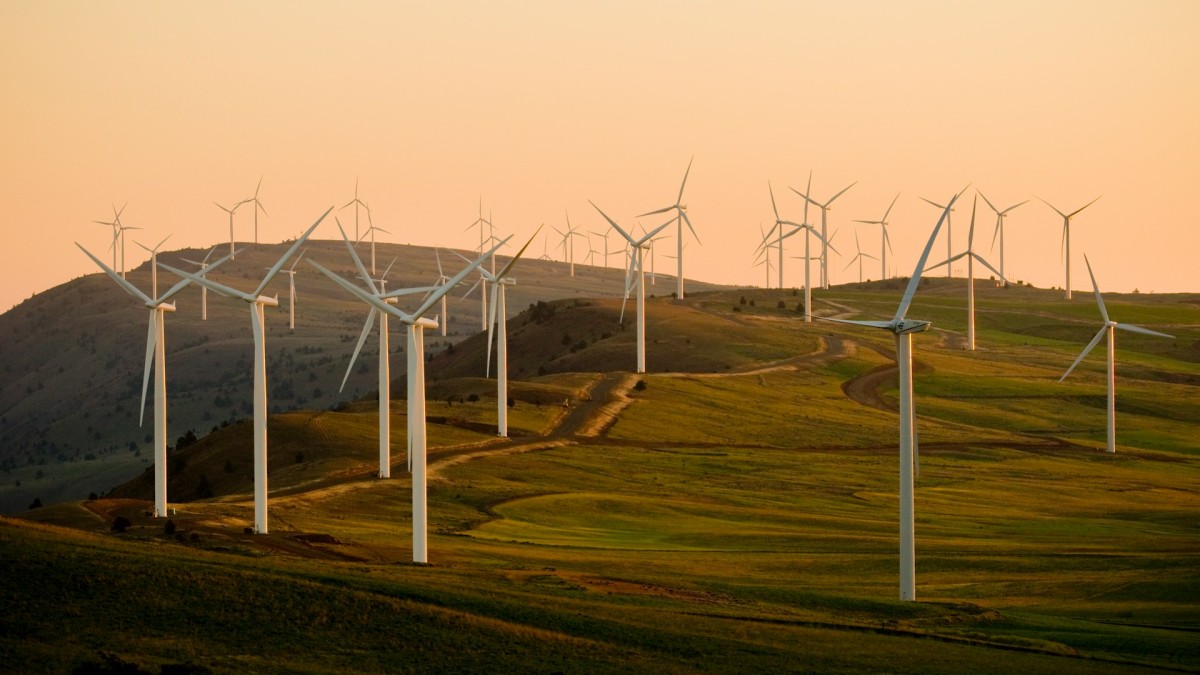
Andrew Reagan stood outside a federal courthouse in Boston last week, the wind whipping through his coat, as he heard the news: 30 gigawatts of stalled wind projects might finally have a path forward. A U.S. federal appeals court had just dealt a decisive blow to former President Donald Trump’s attempt to freeze wind power permitting, ruling his January 2025 executive order “arbitrary and capricious” — a legal death knell that signals the resilience of America’s clean energy momentum, even in the face of political headwinds.
For over a decade, Trump has positioned himself as wind power’s most vocal opponent, calling turbines “losers” and vowing to block every project. In early 2026, his administration canceled about 8 gigawatts of clean energy developments and even struck a controversial $1 billion deal with French energy giant TotalEnergies to halt offshore wind expansion — a move critics called a taxpayer-funded boost to fossil fuels. But the courts are pushing back, and the market is moving faster than politics can contain.
A new joint report from the Environmental Defense Fund (EDF) and Atlas Public Policy reveals a striking counter-narrative: despite the administration’s efforts, a record 79.7 gigawatts of clean power are projected to come online in 2026 alone. That’s enough to power over 23 million homes. Even more telling, developers plan to invest $377 billion in new clean energy projects across the U.S. through 2031, a clear signal that capital is betting on renewables as the economy’s next engine.
Yet challenges remain. In May 2026, the U.S. Department of Defense abruptly halted its review of more than 150 onshore wind projects, stalling 30 gigawatts of potential capacity — the equivalent of shutting down 20 large coal plants. National security concerns have been cited, but clean energy advocates warn that delays could cost billions and slow decarbonization at a critical moment. Still, the broader trend is undeniable. Solar photovoltaics are booming, supply chains are adapting, and the economics of renewables continue to outpace fossil fuels, especially as global energy markets reel from disruptions in the Strait of Hormuz.
“This industry is unstoppable,” Reagan said. “Trump can slow it down, but he can’t stop it — and in trying, he’s only making America less competitive.”
The court’s ruling isn’t just a legal win; it’s a reaffirmation that clean energy is no longer a political experiment. It’s the foundation of a new energy era — one that’s being built project by project, watt by watt, regardless of who’s in office.