After 22 years under Arsène Wenger, Arsenal found itself in freefall. Josh Kroenke, co-chair of the Kroenkes Sports and Entertainment group that took full control of the club in 2018, remembers the moment clarity arrived: a 4-0 loss to Chelsea in the 2019 Europa League final in Baku, a humbling defeat he describes as the "worst 45 minutes of the season." It was there, in that low moment, that the path forward became clear—and it led to a Spanish former Arsenal player named Mikel Arteta, who would eventually transform the Gunners into Premier League title contenders.
The decision to hire Arteta in December 2019 was a gamble. The manager had never held a senior role before, and early results justified the doubters: two eighth-place finishes despite a 2020 FA Cup win left many questioning whether the Kroenkes had made a terrible mistake. But Kroenke sees something others missed. "Anybody that gets a chance to be around Mikel, you can buy into what he's selling pretty easily," he explained in a wide-ranging interview. "I think Mikel and his staff and our players are the ones that earned those rights to have the patience in those moments by the amount of work and energy they were putting in behind the scenes."
What changed? Kroenke credits an unlikely ally: the Covid-19 pandemic. When football shut down and games moved behind closed doors in 2020, Arteta gained something precious—space to build without the unbearable weight of expectant fans. "There was something about Mikel having a little bit of what I would say 'space' during Covid when there weren't fans around," Kroenke reflected. "There were some growing pains that went on during matches, different moments, and obviously we won the FA Cup, but to not have that extra pressure of fans being on top of you at different points in time when we were going through different growth phases was probably something I don't think any of us would acknowledge in the moment. But, looking back I think we can say 'maybe that was a little bit of a benefit'."
The transition to this new era had not been easy. The Kroenkes inherited a club in turmoil after two decades under one legendary manager. Taking the club private, overseeing Wenger's departure, and navigating the exit of chief executive Ivan Gazidis created a perfect storm of change. "For a club of our stature, change is going to be healthy but that was way too much change in way too short of a period of time," Kroenke acknowledged. The ownership faced fierce criticism from supporters through the "We Care, Do You?" movement, questioning their commitment to the club's future.
Yet in those uncertain early days, one brilliant insight emerged. After Baku, Kroenke asked academy manager Per Mertesacker a simple question: "Who's the best young defender in Europe?" That conversation would lead Arsenal to identify William Saliba, a decision that helped reshape the club's strategy from chasing quick fixes to building a sustainable foundation.
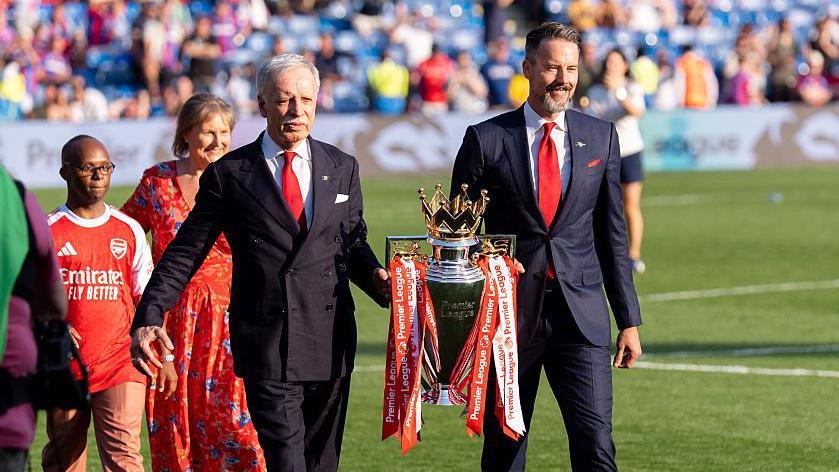
Now, six-and-a-half years into Arteta's tenure, Arsenal has claimed its first Premier League title in 22 years. The "sleeping giant," as Kroenke calls it, has awakened. The journey from despair in Baku to the Premier League trophy suggests that sometimes a club needs to break apart and rebuild—and sometimes it needs a pandemic, a first-time manager, and the faith to stick with a long-term vision when doubt feels easier than belief.