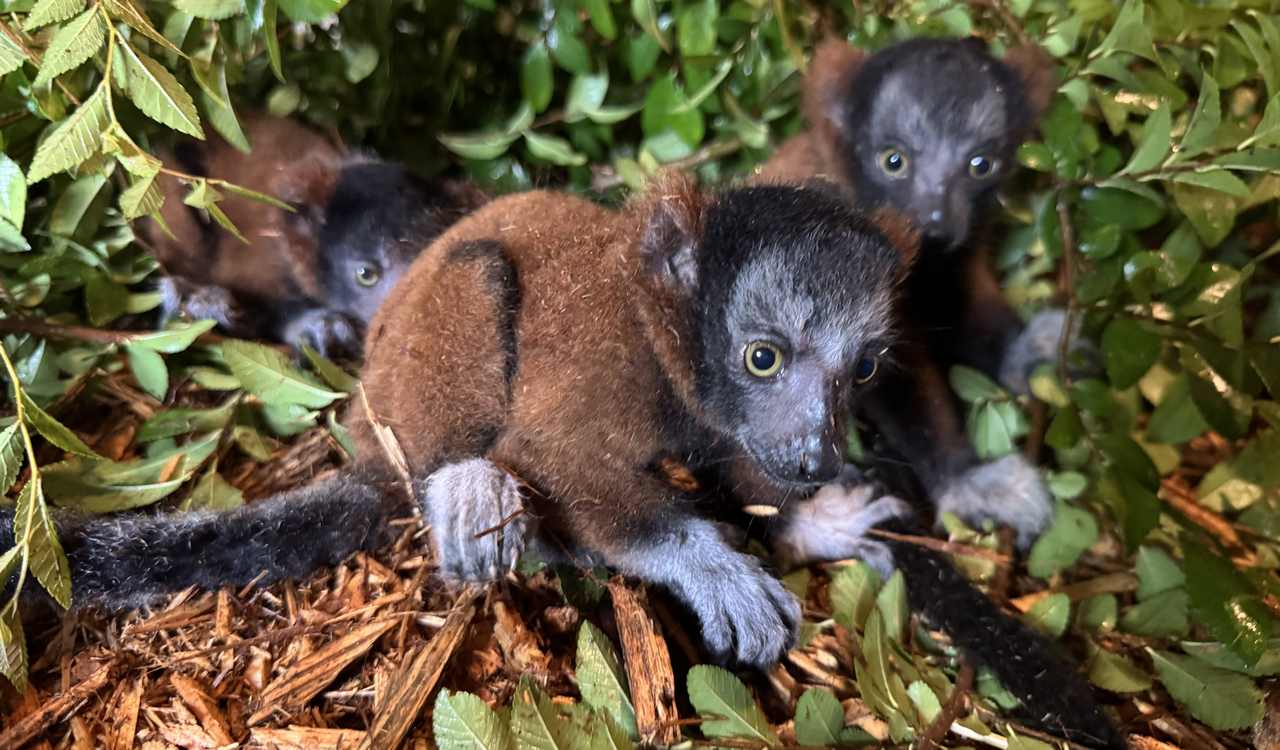
On April 25th, three red ruffed lemur infants named Taylor, Red, and Marjorie took their first breaths at Wild Adventures Theme Park in Valdosta, Georgia—triplets born into a species teetering on the edge of extinction, yet somehow finding hope in a theme park nestled between rides and habitats.
The births represent far more than a cute headline. Red ruffed lemurs are critically endangered, with fewer than 10,000 individuals surviving in the remote forests of northern Madagascar, habitats that are vanishing at an alarming rate. Every life born in captivity through programs like the one at Wild Adventures becomes part of a carefully orchestrated insurance policy—a genetic backup plan for when, and if, those forests can be reclaimed and restored.
Val and Doug, Taylor, Red, and Marjorie's parents, have been the stars of this conservation effort. For three consecutive years since 2023, Val has given birth at the Georgia facility, demonstrating just how productive a well-managed captive breeding program can be. The triplets now join their older siblings—Swiper, Raven, Beans, and Dennis—in what amounts to a multigenerational effort to preserve a species that few people outside conservation circles even know exists. Their births bring the global captive population to roughly 590 red ruffed lemurs, a modest number that nonetheless carries outsized significance for the species' survival.
What makes red ruffed lemurs remarkable extends far beyond their precarious status in the wild. Weighing in at 9.5 pounds, they rank among the largest living lemur species, and hold an unexpected distinction: they are the world's largest pollinator. As they feed on fruit and nectar in Madagascar's canopy, their fuzzy noses brush against flowers, transferring pollen from bloom to bloom—a role crucial to the forests they inhabit. Unlike most primate mothers, female red ruffed lemurs don't cling to their young during daily foraging expeditions. Instead, they employ a unique strategy found nowhere else among diurnal primates: they stow their infants in carefully constructed nests, departing to feed and returning to nurse their young. Some litters reach six infants at a time, making the species one of the most fecund lemurs alive.
For now, Taylor, Red, and Marjorie will grow up behind the scenes at Wild Adventures, their habitat located near the park's Giraffe Overlook. Soon, guests visiting the theme park will be able to watch the triplets with their parents, witnessing living proof that captive breeding, when done thoughtfully and collaboratively, can preserve species that extinction seems almost inevitable for. The young lemurs will become ambassadors in their own right—physical reminders that the fuzzy-nosed giant pollinators of Madagascar still have a future, as long as people continue to care.
The real work, of course, happens far from Georgia. Saving red ruffed lemurs ultimately means saving the forests they depend on. But programs like the one producing Taylor, Red, and Marjorie ensure that if those forests can be protected and restored, there will be lemurs ready to reclaim them.