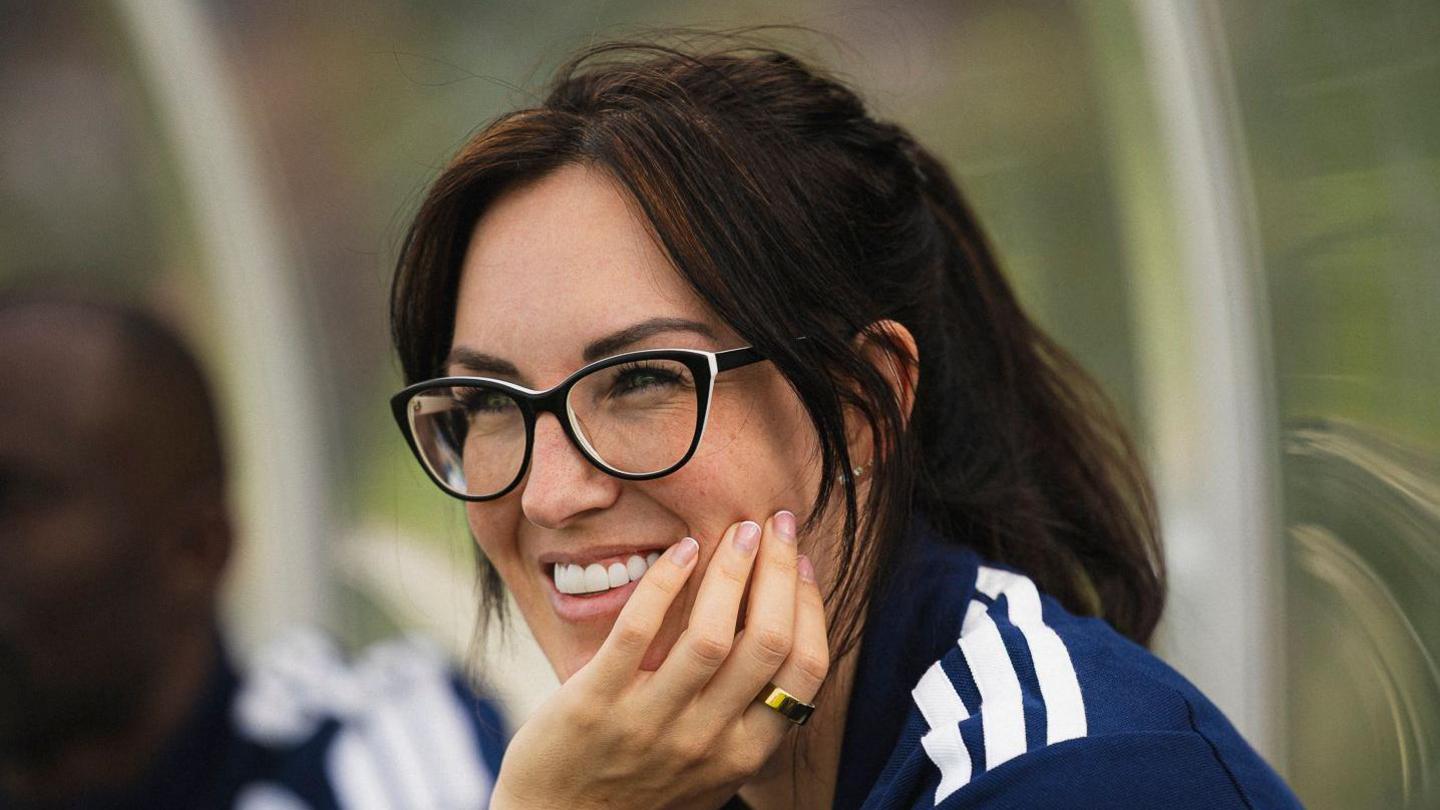
On a sun-drenched training pitch in Willemstad, Dr. Suzanne Huurman moves with quiet confidence among the players of Curaçao’s national men’s football team—47 men, one woman. As head of medical staff, she is not only tending to athletes on the world’s biggest stage, the 2026 World Cup, but also breaking barriers as the tournament’s only female head of medical staff and only the third in the event’s 96-year history. Curaçao, a Caribbean island of just 158,000 people, is the smallest nation by population ever to qualify—unbeaten in their campaign with seven wins and three draws—and Huurman’s presence is as historic as the team’s achievement. Her journey reflects both progress and persistent gaps in a field where women remain starkly underrepresented.
When FIFA informed Huurman she was the sole woman in her role across all 48 participating men’s teams, her response was characteristically grounded: “I didn’t realise in the beginning because it’s so normal to be the only, or one of the few, women in the room.” A Brazil-born physician who studied medicine in the Netherlands in 2008, Huurman has worked with elite clubs like Real Madrid, PSV Eindhoven, and the Netherlands U-16 boys’ team. Yet even in sports medicine, where she specialized in 2014, she noticed a sharp shift—what began as a 70-75% female-dominated medical school cohort became a field where only 20-30% of specialists were women.
The challenges are structural. Huurman points to football’s “always-on” culture—relentless travel, unpredictable schedules, and the difficulty of balancing family life, especially during pregnancy, when coverage is hard to arrange. “You have to prove yourself,” she says. “In the beginning, you always have a lot of people that say no, this cannot be possible. How can women work in a male environment?” Her presence with Curaçao’s 49-member delegation—she is the only woman—underscores how far representation has to go.
Yet change is stirring. At the 2026 World Cup, FIFA introduced new regulations requiring at least one female doctor and one female coach on staff for women’s tournaments. In a landmark moment during Curaçao’s match against Germany, an all-female external medical team took the field—featuring Huurman, Germany’s Dr. Silja Schwarz, FIFA match doctor Dr. Emma Lunan, and others—marking the first time in men’s World Cup history. Huurman sees promise in flexible models, like Sweden’s rotating medical staff system, which could make elite sports more accessible to women. “Agile working might suit female doctors better,” she suggests, even if the culture resists it.
Her message to those told they can’t succeed because of their gender is clear: “Prove them wrong.” And as Curaçao makes history on the pitch, Huurman is doing the same behind the scenes—one diagnosis, one breakthrough, at a time.