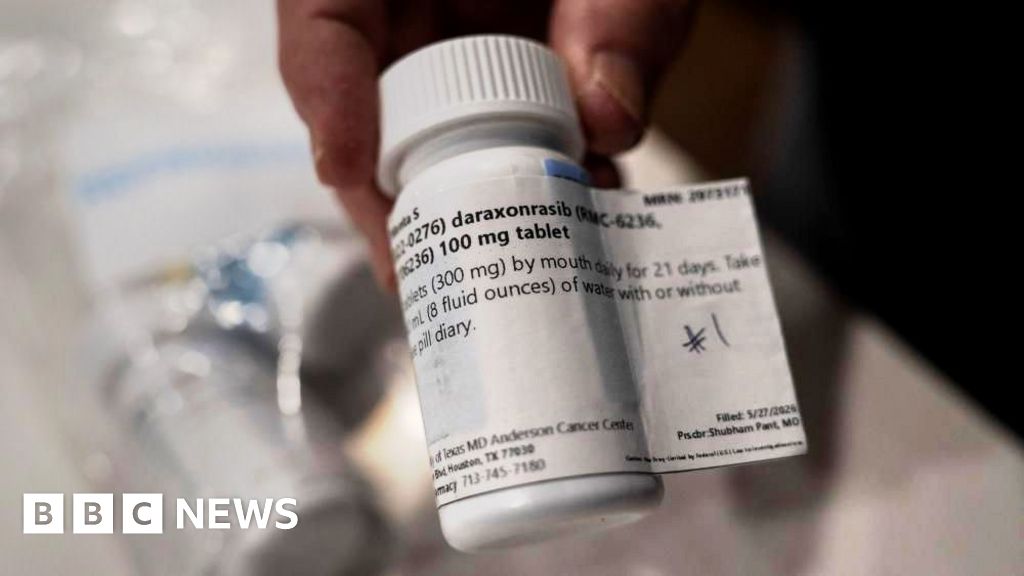
Rachna Shroff, chief of the division of haematology and oncology at the University of Arizona Cancer Centre, calls it landscape-changing—and for pancreatic cancer patients, those words carry the weight of genuine hope. A daily pill called daraxonrasib has nearly doubled survival time in advanced cases, extending life from an average of 6.6 months to 13.2 months, according to a 500-patient trial presented at the American Society of Clinical Oncology's annual meeting in Chicago.
Pancreatic cancer remains one of the deadliest diseases, claiming more than half of patients within three months of diagnosis. In Britain alone, 11,500 people receive a diagnosis each year, with around 10,200 deaths, according to Cancer Research UK. The disease is notoriously hard to catch early—symptoms like jaundice, unexplained weight loss, and fatigue often don't appear until cancer has progressed, and they can mimic less serious conditions. This cruel timing means most patients arrive at treatment options already severely ill.
Daraxonrasib works by targeting the root of the problem. The drug locks onto and shuts off the mutated KRAS gene, which appears in more than 90 percent of pancreatic tumors and drives their growth. By disabling this genetic accelerator, the pill helps prevent cancer from spreading. The mechanism itself represents a significant leap: for decades, the KRAS mutation was considered untouchable, an immutable part of cancer's biological code.
The trial tested 248 patients on daraxonrasib against 252 receiving standard chemotherapy. Most participants had tumors with specific KRAS mutations. The results were stark. Beyond extending survival time by more than six months on average, the daily pill caused substantially fewer severe side effects. Only 43.6 percent of patients on daraxonrasib experienced severe side effects, compared to 57.5 percent on chemotherapy. For patients already dealing with the psychological and physical toll of advanced cancer, this gentler profile matters deeply.
Anna Jewell, director of services, research and innovation at Pancreatic Cancer UK, described the findings as "some of the most exciting developments we have seen in pancreatic cancer for a very long time." She emphasized what those months truly represent: "More time with those we love most is truly priceless." The statement captures why this trial transcends clinical metrics. In a disease that historically offers so little runway, six additional months can mean anniversaries celebrated, conversations completed, presence with family and friends that might otherwise have been lost.
The challenge now lies in availability. The drug must navigate regulatory approval pathways and, ultimately, reach patients in clinics across different countries. Jewell's call to "ensure the most promising new treatments are available here in the UK" reflects a shared awareness: breakthrough science means little if it remains inaccessible to those who need it most.
For pancreatic cancer patients and their families, daraxonrasib represents something rarer than a cure—it offers possibility. In a disease that has historically offered so little time, the chance for doubled survival, combined with fewer debilitating side effects, reshapes what patients and doctors can hope for when facing diagnosis.