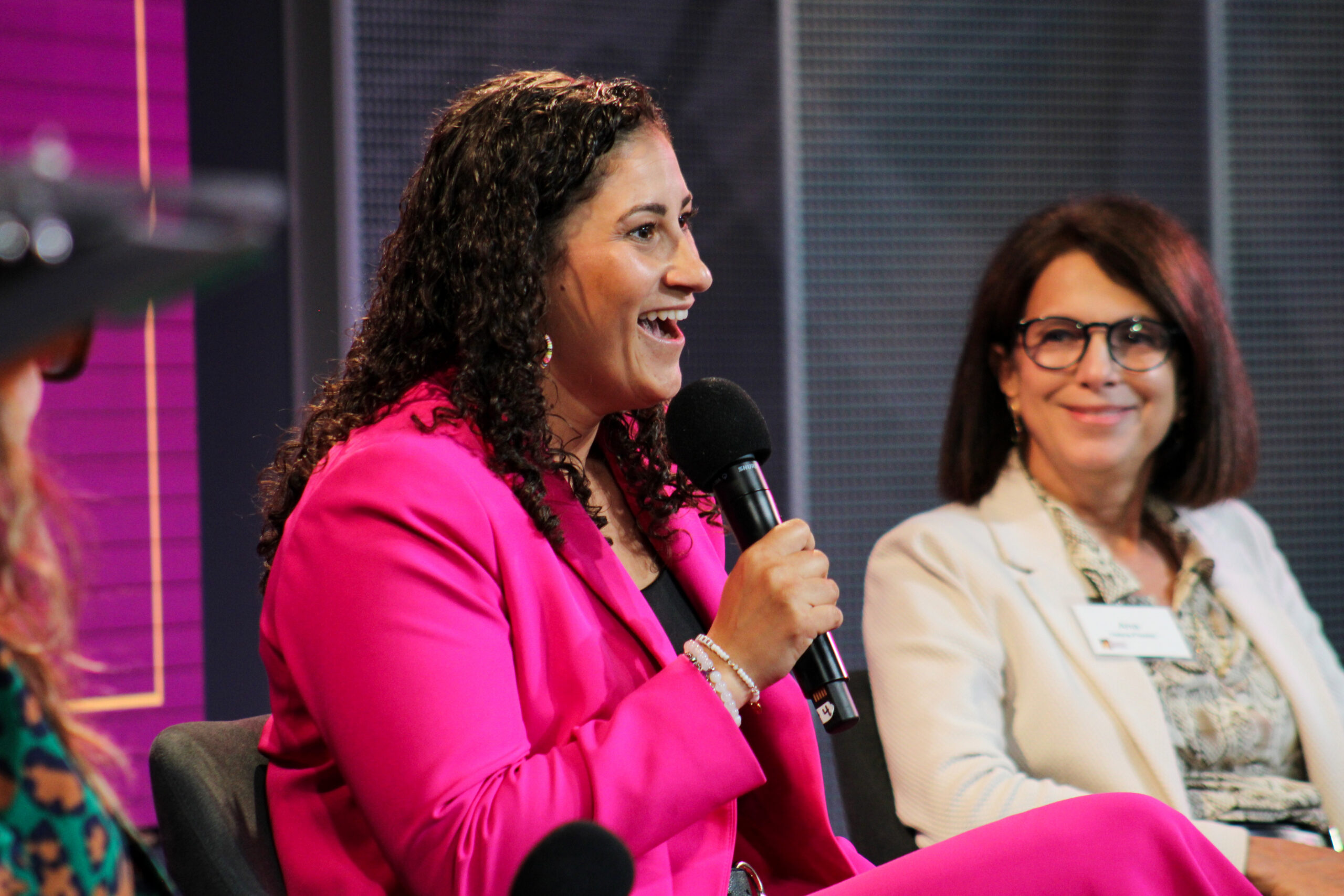
Beheshta, a 19-year-old from Kabul, stood at the microphone in WBUR CitySpace, her voice steady as she read from a story she’d written in a Lowell writing workshop: “America, I love you.” The room fell silent, then erupted in applause. It was June 10, 2026, and the International Institute of New England’s second annual WILLOW Fund panel was in full swing—a morning not just of celebration, but of deep reflection on the resilience and potential of refugee and immigrant women.
WILLOW—Women’s Initiative for Learning, Liberation, Opportunity, and Wellbeing—was launched in 2024 to address the disproportionate challenges faced by refugee women and girls, who make up half of the global refugee population. From unequal access to education and healthcare to the weight of caregiving responsibilities, these barriers are systemic. But so, too, are the solutions. Every ticket sold for the Boston event directly supports tailored programs for IINE clients, helping women like Beheshta rebuild lives marked not just by survival, but by agency and hope.
The heart of the morning came through Suitcase Stories®, a powerful storytelling project by IINE’s Refugee Youth program. Beheshta’s piece, “America, I Love You,” captured her journey from Taliban-controlled Afghanistan to a refugee camp, and finally to Lowell, Massachusetts—where, she said, “I have the freedom to make personal decisions about my clothes, my work, and my friends.” Her words echoed the core mission of WILLOW: liberation through opportunity.
The panel, moderated by Dr. Claudine Gay, the Wilbur A. Cowett Professor of Government at Harvard and daughter of Haitian immigrants, brought together four women whose lives and work embody that mission. Yves Salomon-Fernández, President of Urban College of Boston, spoke of education as a generational force: “You will see a student sitting at the kitchen table with her kids around her… those children are not going to be first-generation college students—they’re going to be legacy students.” Mariana Siqueira, Talent Acquisition Lead at Triumvirate Environmental and daughter of a Brazilian immigrant, emphasized how immigrant perspectives strengthen teams: “When you bring in someone who’s worked in a different country or culture, you get new ways of solving problems.” Ana Hebra Flaster, a Cuban refugee and award-winning author, shared how storytelling can reclaim identity, while Xan Weber, IINE’s Chief Advancement Officer, underscored the structural hurdles refugee women face as primary caregivers entering the workforce.
The message was clear: supporting refugee and immigrant women isn’t just an act of compassion—it’s an investment in families, communities, and the nation’s future. As IINE’s CEO Jeff Thielman reminded the audience, women are often the architects of resettlement, balancing language learning, employment, and family stability in a new culture. The WILLOW Fund doesn’t just open doors—it builds the foundation for lasting change. And as Beheshta’s story showed, sometimes the most powerful transformations begin with a single sentence: “I can independently chase my dreams and be in control of my own life.”