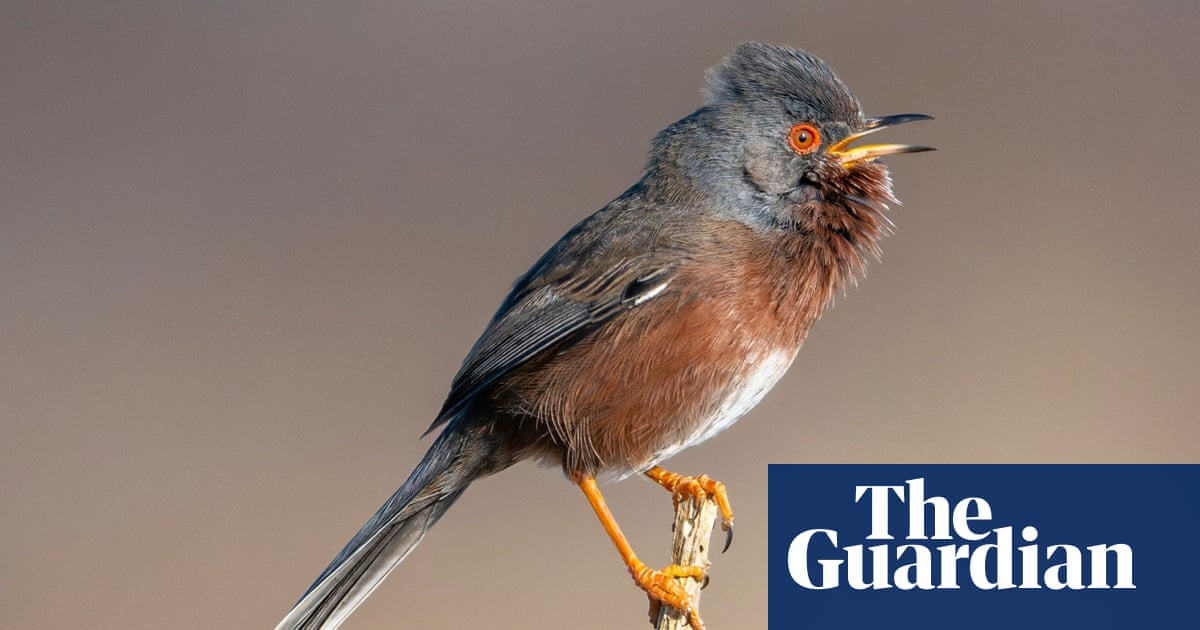
Peter Robertson pauses on the heath at RSPB Arne in Dorset, listening to the unmistakable scratchy song that once almost fell silent forever. The sound of Dartford warblers singing is everywhere now, he says—a statement that would have seemed impossible just decades ago, when these small, grey-brown birds with their distinctive red eye rings were on the brink of vanishing from England altogether.
The Dartford warbler's journey from the edge of extinction to recovery tells a story about what's possible when habitat restoration meets determination. In the 1960s, the species had crashed so dramatically that only a few pairs remained in Dorset. The birds are exquisitely sensitive to harsh winter weather and depend on dense gorse in mature heathland to nest and hunt for the spiders and caterpillars that make up their diet. As lowland heathland—their only home—shrank, so did their numbers.
Today, that narrative has shifted. A new survey reveals 264 pairs counted across RSPB nature reserves in 2025, marking the highest number ever recorded on these protected lands. That's a 44% increase over just five years. The recovery extends across 14 RSPB reserves, from the 97 pairs at RSPB Arne itself to smaller but equally meaningful populations at RSPB Aylesbeare in Devon (25 pairs), RSPB Minsmere and RSPB North Warren in Suffolk (41 and 17 pairs respectively), RSPB Farnham Heath in Surrey (23 pairs), and RSPB Broadwater Warren in Kent (15 pairs). Remarkably, the last two reserves were conifer plantations just two decades ago—a tangible reminder that degraded land can be rewilded.
The turnaround owes everything to deliberate, sustained effort. The RSPB and its volunteers have been methodically restoring heathland on nature reserves, removing conifer plantations that choked out native species, reverting arable land back to heath, and critically, connecting fragmented patches of gorse to create continuous habitat where Dartford warblers can establish territories and breed successfully. This work happens at landscape scale, not in small gestures. At RSPB Arne alone, the restoration has been transformative enough that Robertson can now hear the birds' songs ringing across the reserve.
The broader context makes this achievement even more significant. Lowland heathland is one of the UK's most threatened habitats, with 80% of it lost since the 1800s due to forestry and changing land use. The Dartford warbler's recovery is not just about one species bouncing back; it signals that strategic habitat restoration can reverse decades of decline. A UK-wide heathland birds survey estimates the total Dartford warbler population at approximately 4,100—a figure that would have seemed fantastical when the species teetered on extinction.
What makes this story particularly hopeful is that it's not finished. Every pair singing on those reserves today represents not just survival, but the space to thrive. The work to connect and enlarge fragmented patches of heathland continues, creating a landscape where these small, charismatic birds—with their russet breasts and long tails—can flourish. The scratchy song Peter Robertson now hears everywhere at RSPB Arne is a direct reward for the kind of patient, collaborative conservation work that often goes unseen.