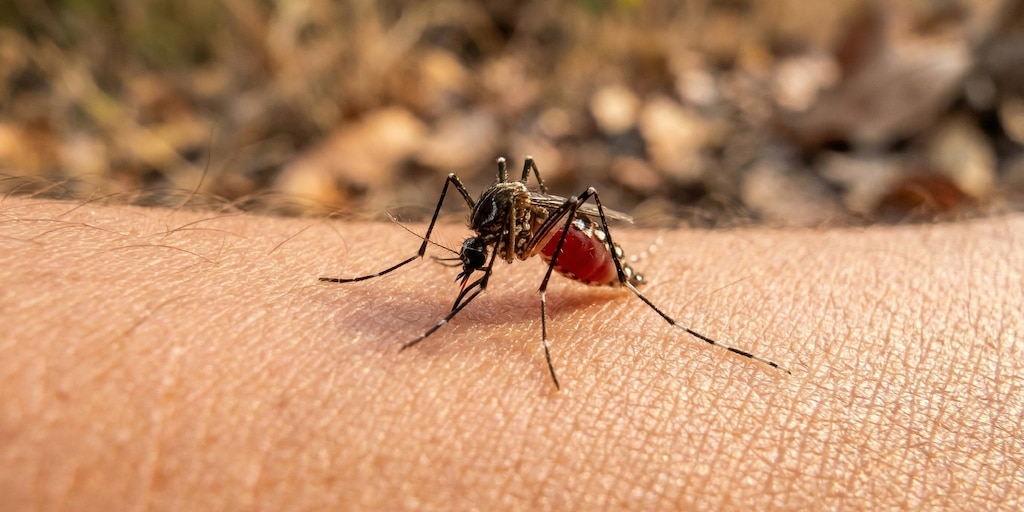
Every two minutes, a child dies of malaria somewhere in Africa. That is one reason scientists at the Walter and Eliza Hall Institute of Medical Research (WEHI) in Melbourne took a strange, hopeful idea seriously: what if the mosquito bite itself could become the vaccine? In a study published in the journal Science, they showed in mice that a single infected bite, paired with a new drug, can teach the immune system to completely defeat the parasite — and keep that protection for nearly two years.
Malaria kills more than 600,000 people a year, and most victims are children under five and pregnant women. Today's vaccines are powerful but hard to deliver in the places that need them most. They require high doses of specially weakened parasites, complicated manufacturing, and needles straight into a vein — infrastructure that is scarce where the disease hits hardest. The Melbourne team wanted to know if there was a simpler path.
Here is the clever trick. Normally, when an infected mosquito bites, it injects tiny parasite forms called sporozoites, which travel to the liver, mature, and then burst into the blood to cause illness. The researchers used two experimental compounds, WM382 and MK-7602, that block two master enzymes the parasite depends on. Trapped in the liver at the final stage of its growth, the parasite is stuck — too weak to escape into the blood, but alive long enough for the immune system to study it closely)Skip. The team calls this state "chemically attenuated": deliberately weakened by medicine instead of by genetic engineering.
That lesson sticks. The mice developed "sterile immunity" — a complete shield against reinfection that lasted up to 21 months, which equals roughly two whole malaria seasons. It worked after just one low-dose exposure, whether given by needle or by an actual mosquito bite, plus a simple oral dose of the drug. The immune response fired on two fronts: antibodies that target the parasite's surface protein, and CD8+ T cells, the immune system's trained killer cells. And the protection proved broader and longer-lasting than what most conventional vaccines produce.
"This represents a shift in how drugs could be used to prevent malaria," said Justin Boddey, the WEHI lab head who led the work. His team's phrase for the approach is poetic and precise: they have turned the mosquito bite — the very route of transmission — into "an act of vaccination."
The results are still in mice, and human trials lie ahead. But the idea matters because it sidesteps the costly infrastructure that blocks malaria prevention today, using the mosquito itself as the delivery vehicle. If it holds up in people, a walk through the bush at dusk could someday leave you not just bitten — but protected. That is the kind of future worth hoping for.