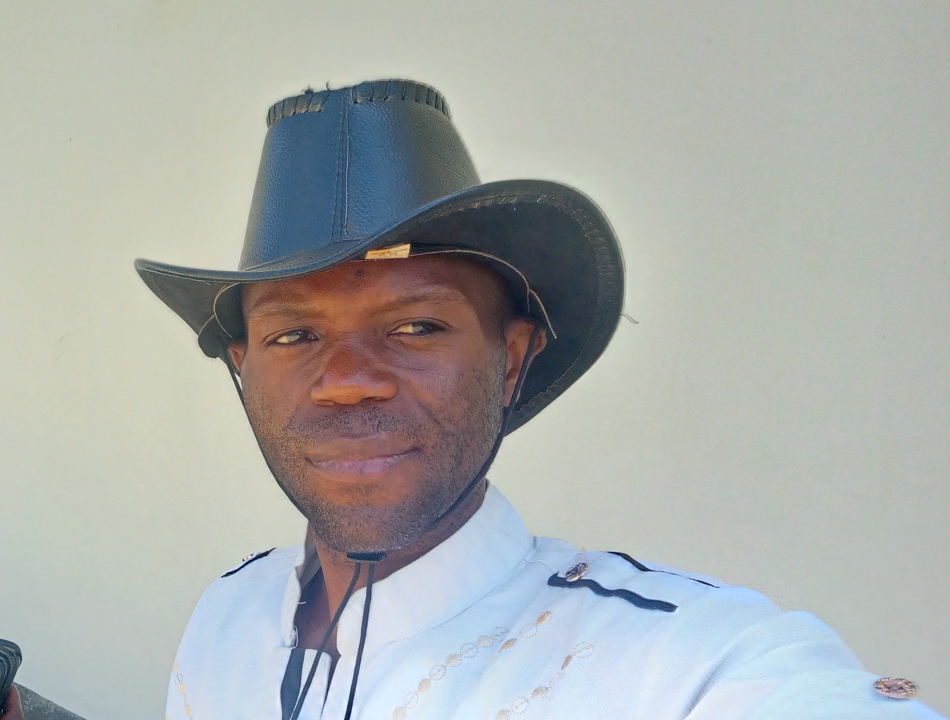
In the lush forests of North Kivu, Gangala Yafali Mangusa Jr. leads monthly patrols through the Bamasobha Local Community Forest Concession with members of his community, checking for illegal hunting and monitoring threats to biodiversity. His work represents a remarkable full circle: he is a descendant of Indigenous families forcibly evicted from these same forests decades ago when Maiko National Park was established in the 1970s—a park created to protect eastern lowland gorillas, okapi, chimpanzees and forest elephants, but at tremendous human cost.
When park rangers from the Congolese Institute for Nature Conservation arrived to enforce park boundaries in the Batike settlement, they forbade people from entering the forest and hunting meat, even though Indigenous communities had sustainably harvested these resources for generations. "That's what led to long-standing disagreements, forcing communities to move elsewhere, such as to Mangurejipa and other areas," Mangusa Jr. recalls. The displacement triggered deeper wounds: land disputes within communities, resource depletion from unsustainable extraction, and simmering tensions that lasted decades.
The transformation began when facilitators from the Peasants' Association for the Rehabilitation and Protection of Pygmies (PREPPYG) gradually engaged Mangusa Jr. and his community in a new vision for conservation. In 2018, rather than resist the forest's protection, the communities made a deliberate choice: they granted approximately 29,000 hectares to a community forest concession model that would allow them to manage the forest themselves. Five years of learning followed. By 2023, the Bamasobha communities developed their own management plan and established an inclusive local committee dedicated to balancing two equal priorities—protecting the forest and improving their own living conditions.
This balance is embedded in the concession's design. The forest is divided into zones: production and development zones support agriculture, charcoal production, fishing, and mining to sustain community livelihoods, while conservation, protection, and regeneration zones are strictly monitored and patrolled. Mangusa Jr., now in his 30s and heading the local management committee, conducts inspections once a month or once a quarter to prevent illegal hunting of protected animals and stop large-scale logging operations. The work is paying measurable dividends: satellite imagery shows forest loss in the Bamasobha CFCL dropped dramatically from 940 hectares in 2024 to just 120 hectares in 2025—a reduction of nearly 87 percent in a single year.
Conservation experts emphasize that sustainable forest protection depends on balancing biodiversity goals with improving the living conditions of Indigenous peoples and local communities. The Bamasobha model demonstrates this principle in practice. According to Claude Muhindo Sengenya, a community facilitator with PREPPYG, increased surveillance in conservation zones has helped reduce large-scale logging, and this protection has gradually boosted populations of certain animal species. For Mangala Jr. and his community, conservation is no longer something imposed from outside by armed rangers—it is their own choice, rooted in personal history and collective survival.